


Fusobacterium nucleatum potentiates intestinal tumorigenesis and modulates the tumor-immune microenvironment
- PMID: 23954159
- PMCID: PMC3772512
- DOI: 10.1016/j.chom.2013.07.007
Fusobacterium nucleatum potentiates intestinal tumorigenesis and modulates the tumor-immune microenvironment
Abstract
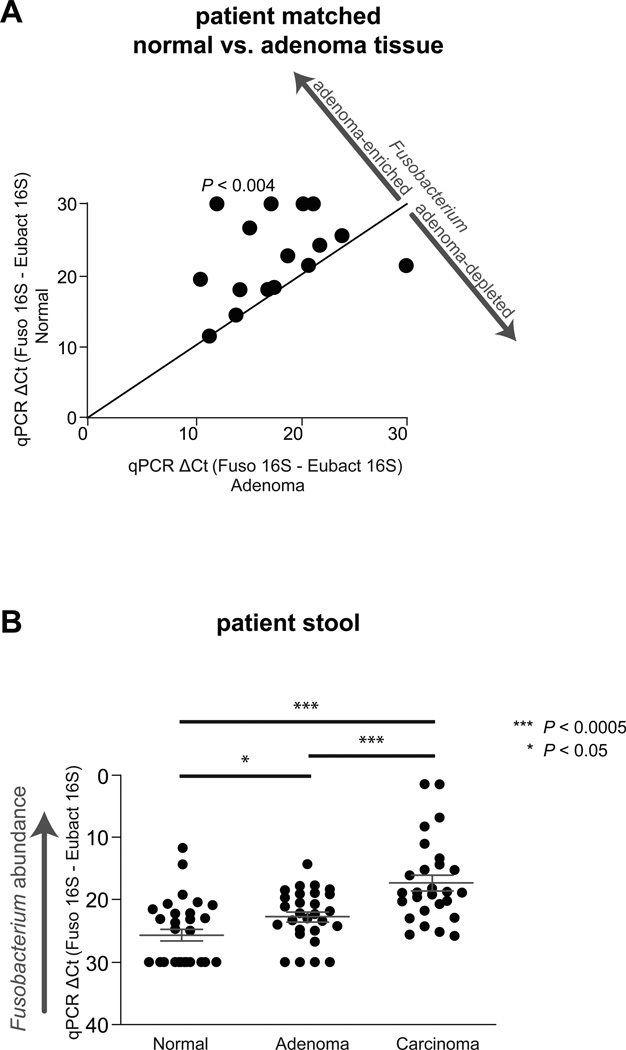
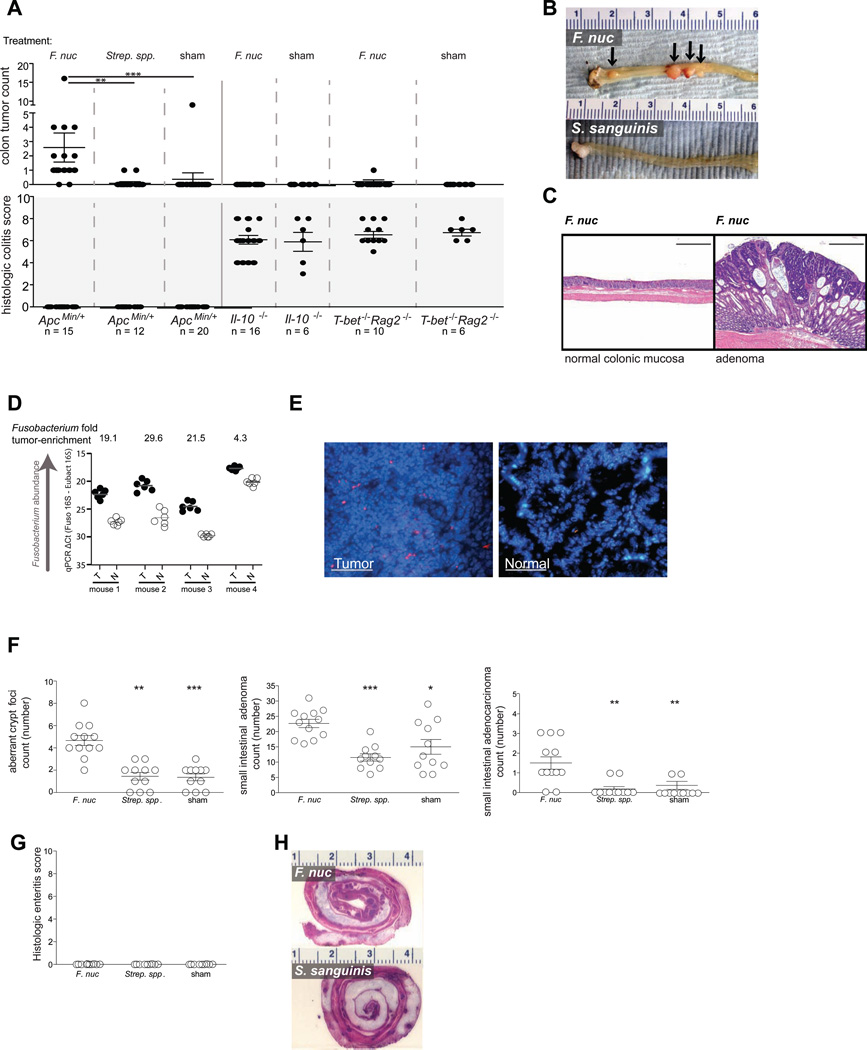
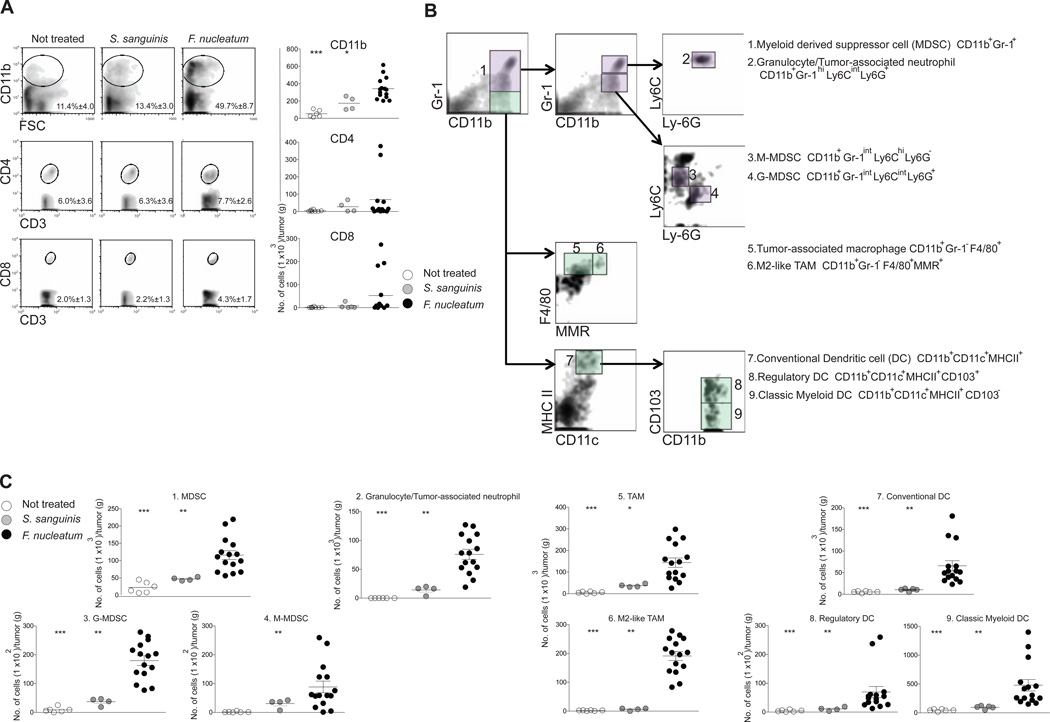
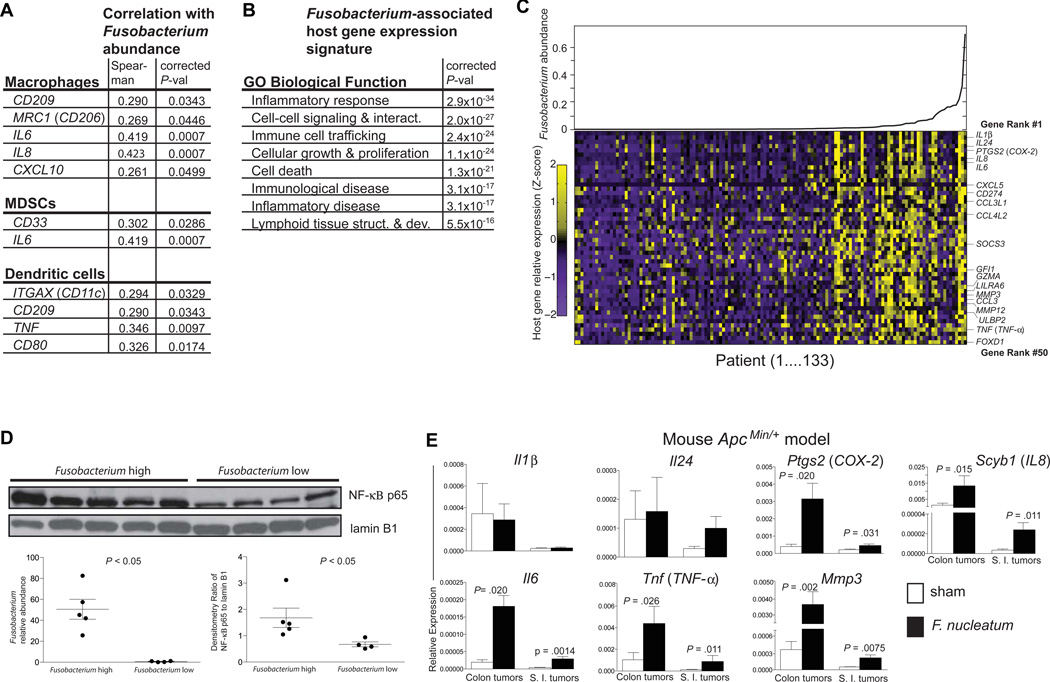
Increasing evidence links the gut microbiota with colorectal cancer. Metagenomic analyses indicate that symbiotic Fusobacterium spp. are associated with human colorectal carcinoma, but whether this is an indirect or causal link remains unclear. We find that Fusobacterium spp. are enriched in human colonic adenomas relative to surrounding tissues and in stool samples from colorectal adenoma and carcinoma patients compared to healthy subjects. Additionally, in the Apc(Min/+) mouse model of intestinal tumorigenesis, Fusobacterium nucleatum increases tumor multiplicity and selectively recruits tumor-infiltrating myeloid cells, which can promote tumor progression. Tumors from Apc(Min/+) mice exposed to F. nucleatum exhibit a proinflammatory expression signature that is shared with human fusobacteria-positive colorectal carcinomas. However, unlike other bacteria linked to colorectal carcinoma, F. nucleatum does not exacerbate colitis, enteritis, or inflammation-associated intestinal carcinogenesis. Collectively, these data suggest that, through recruitment of tumor-infiltrating immune cells, fusobacteria generate a proinflammatory microenvironment that is conducive for colorectal neoplasia progression.
Copyright © 2013 Elsevier Inc. All rights reserved.
Figures
Comment in
-
Fusobacterium spp. and colorectal cancer: cause or consequence?Trends Microbiol. 2013 Oct;21(10):506-8. doi: 10.1016/j.tim.2013.08.004. Epub 2013 Sep 9. Trends Microbiol. 2013. PMID: 24029382 Free PMC article.
References
-
- Boutaga K, van Winkelhoff AJ, Vandenbroucke-Grauls CMJE, Savelkoul PHM. Periodontal pathogens: A quantitative comparison of anaerobic culture and real-time PCR. FEMS Immunol. Med. Microbiol. 2005;45:191–199. - PubMed
-
- Cho KR, Vogelstein B. Genetic alterations in the adenoma--carcinoma sequence. Cancer. 1992;70:1727–1731. - PubMed
Publication types
MeSH terms
Substances
Grants and funding
- R01CA154426/CA/NCI NIH HHS/United States
- P30 DK043351/DK/NIDDK NIH HHS/United States
- U54HG003067/HG/NHGRI NIH HHS/United States
- K08 AI078942/AI/NIAID NIH HHS/United States
- P50CA127003/CA/NCI NIH HHS/United States
- R01 CA154426/CA/NCI NIH HHS/United States
- RC2CA148317/CA/NCI NIH HHS/United States
- T32 ES016645/ES/NIEHS NIH HHS/United States
- P50 CA127003/CA/NCI NIH HHS/United States
- CAF/10/15/CSO_/Chief Scientist Office/United Kingdom
- U54 HG003067/HG/NHGRI NIH HHS/United States
- RC2 CA148317/CA/NCI NIH HHS/United States
- K08AI078942/AI/NIAID NIH HHS/United States
- K24 DK098311/DK/NIDDK NIH HHS/United States
LinkOut - more resources
Full Text Sources
Other Literature Sources
Medical
Miscellaneous
