


Intermittent exercise in response to cigarette cravings in the context of an Internet-based smoking cessation program
- PMID: 23956792
- PMCID: PMC3743265
- DOI: 10.1016/j.mhpa.2012.02.001
Intermittent exercise in response to cigarette cravings in the context of an Internet-based smoking cessation program
Abstract
Background: Interventions using sustained aerobic exercise programs to aid smoking cessation have resulted in modest, short-term cessation rates comparable to conventional cessation methods. No smoking cessation trial to date has prescribed intermittent bouts of exercise in response to nicotine cravings.
Objectives: This pilot randomized controlled trial examined the feasibility and efficacy of an Internet-based smoking cessation program alone (CON) vs. the same Internet-based program + intermittent exercise in response to cigarette cravings (EX).
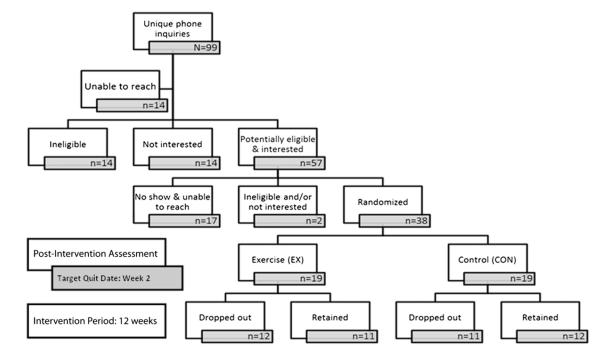
Study population: Participants (N = 38; mean age = 43.6 [SD = 11.5]; 60.5% women) were generally healthy, inactive adult smokers who desired to quit.
Results: The overall retention rate was 60.5% (n = 23), and no significant retention rate differences were found between groups (EX vs. CON). Although retained participants achieved a higher cessation rate (26.1%) than all enrolled participants (15.8%), adjusted intent-to-treat and per-protocol binary logistic regression analyses revealed no significant cessation rate differences between EX and CON groups. Linear regression results indicated that additional days of self-reported exercise on the study website during the intervention phase predicted significantly higher reduction rates among EX group participants, F(2, 16) = 31.08, p < .001.
Conclusions: Results were mixed with regard to the incremental benefit of exercise in the presence of the apparently valuable Internet-based smoking cessation program. The results support findings from related research and underscore the need for additional investigation into both the mechanisms underlying the effect of exercise on cigarette cravings and the challenges of poor adherence in the context of exercise-based smoking cessation interventions.
Keywords: Exercise; Internet; Intervention; Pilot; Randomized controlled trial; Smoking cessation.
Figures
References
-
- van Achterberg T, Huisman-de Waal GGJ, Ketelaar NABM, Oostendorp RA, Jacobs JE, Wollersheim HCH. How to promote healthy behaviours in patients? An overview of evidence for behaviour change techniques. Health Promotion International. 2010 doi:10.1093/heapro/daq050, Epub ahead of print. - PMC - PubMed
-
- Adams J. Understanding exercise dependence. Journal of Contemporary Psychotherapy. 2009;39:231–240. doi:10.1007/s10879-009-9117-5.
-
- Bandura A. Social foundations of thought and action: A social cognitive theory. Prentice-Hall; Englewood Cliffs, NJ: 1986.
-
- Barnes P. Physical activity among adults: United States, 2000 and 2005. US Department of Health and Human Services, CDC; Hyattsville, MD: 2007.
-
- Bock BC, Marcus BH, King TK, Borrelli B, Roberts MR. Exercise effects on withdrawal and mood among women attempting smoking cessation. Addictive Behaviors. 1999;24:399–410. - PubMed
Grants and funding
LinkOut - more resources
Full Text Sources
Miscellaneous