


Targeted therapy for squamous cell lung cancer
- PMID: 23956794
- PMCID: PMC3744181
- DOI: 10.2217/lmt.12.40
Targeted therapy for squamous cell lung cancer
Abstract
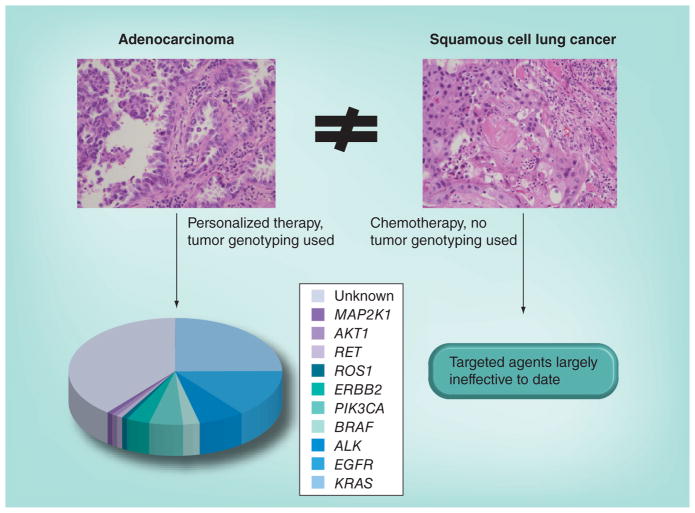
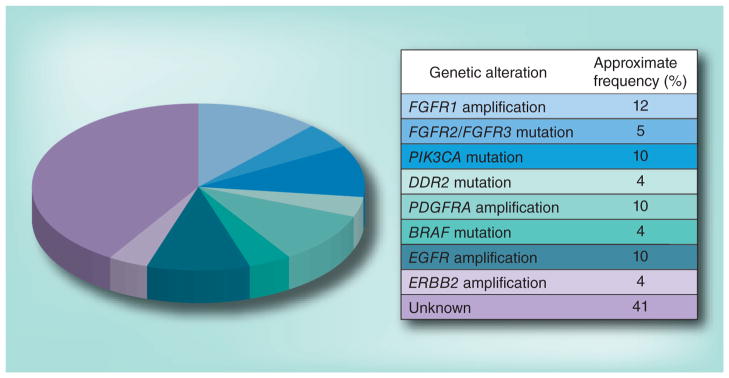
Lung squamous cell carcinoma (SqCC) is the second most common subtype of non-small-cell lung cancer and leads to 40,000-50,000 deaths per year in the USA. Management of non-small-cell lung cancer has dramatically changed over the past decade with the introduction of targeted therapeutic agents for genotypically selected individuals with lung adenocarcinoma. These agents lead to improved outcomes, and it has now become the standard of care to perform routine molecular genotyping of lung adenocarcinomas. By contrast, progress in lung SqCC has been modest, and there has yet to be a successful demonstration of targeted therapy in this disease. Here, we review exciting work from ongoing genomic characterization and biomarker validation efforts that have nominated several likely therapeutic targets in lung SqCCs. These studies suggest that targeted therapies are likely to be successful in the treatment of lung SqCCs and should be further explored in both preclinical models and in clinical trials.
Figures
References
-
- Haura EB, Camidge DR, Reckamp K, et al. Molecular origins of lung cancer: prospects for personalized prevention and therapy. J Thorac Oncol. 2010;5(6 Suppl 3):S207–S213. - PubMed
-
- Lynch TJ, Bell DW, Sordella R, et al. Activating mutations in the epidermal growth factor receptor underlying responsiveness of non-small-cell lung cancer to gefitinib. N Engl J Med. 2004;350(21):2129–2139. - PubMed
-
- Paez JG, Janne PA, Lee JC, et al. EGFR mutations in lung cancer. Correlation with clinical response to gefitinib therapy. Science. 2004;304(5676):1497–1500. - PubMed
Website
-
- National Cancer Institute. Surveillance, Epidemiology and End Results. http://seer.cancer.gov.
Grants and funding
LinkOut - more resources
Full Text Sources
Other Literature Sources
Miscellaneous
