


Micropatterned dermal-epidermal regeneration matrices create functional niches that enhance epidermal morphogenesis
- PMID: 23958778
- PMCID: PMC3818337
- DOI: 10.1016/j.actbio.2013.08.017
Micropatterned dermal-epidermal regeneration matrices create functional niches that enhance epidermal morphogenesis
Abstract
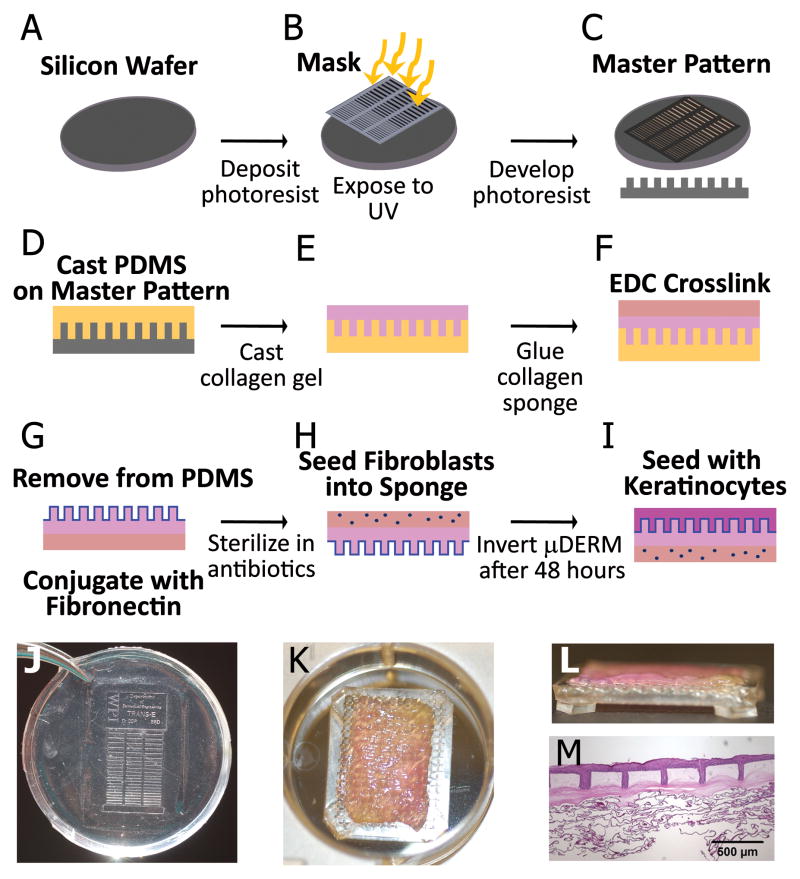
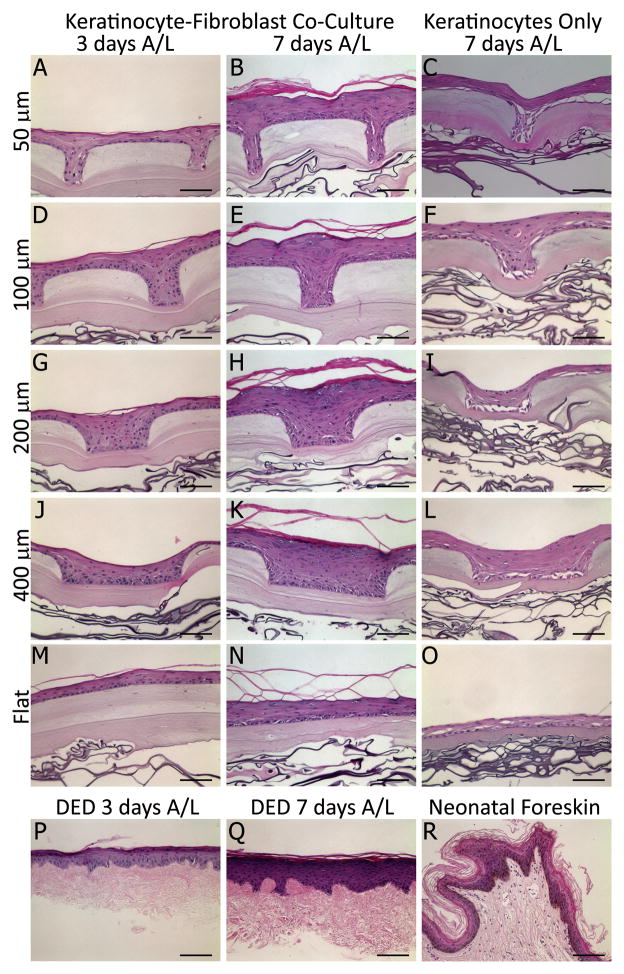
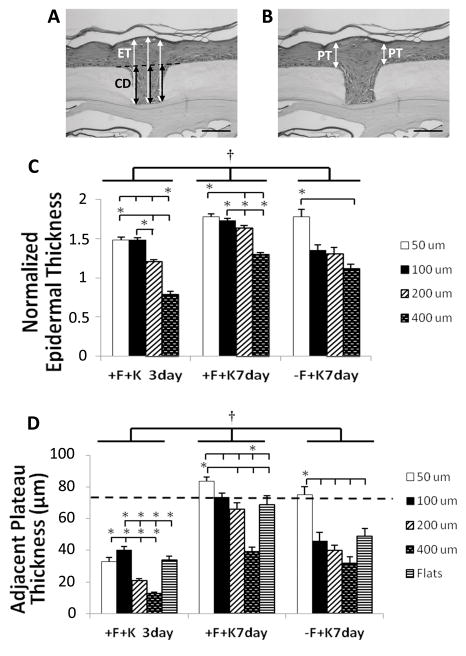
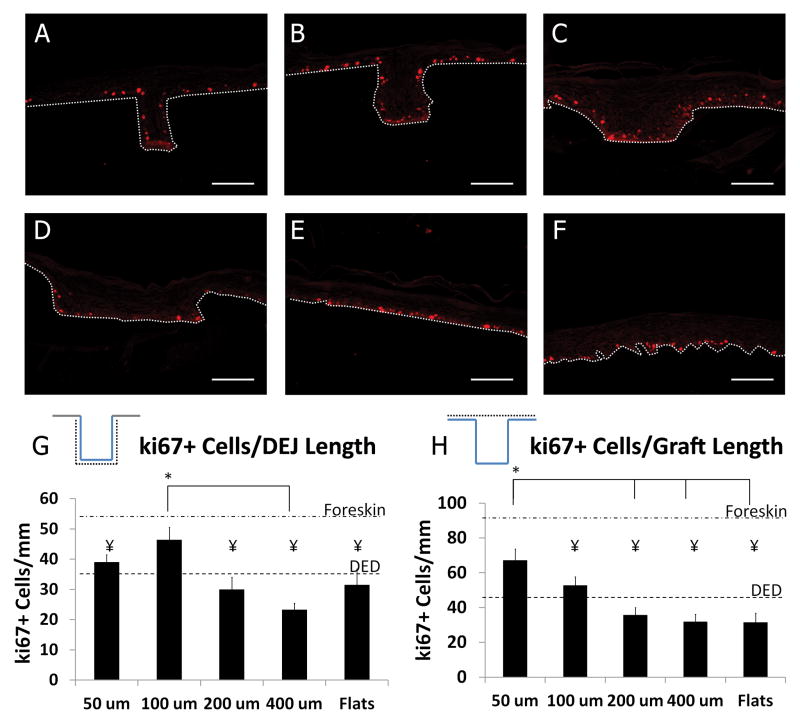
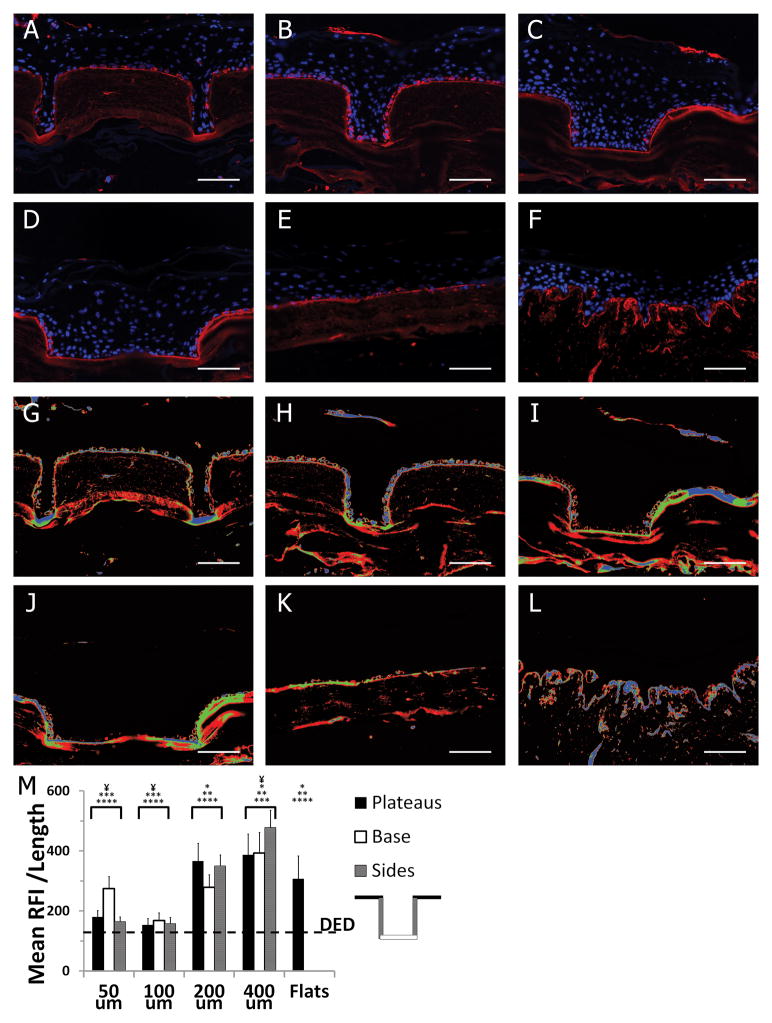
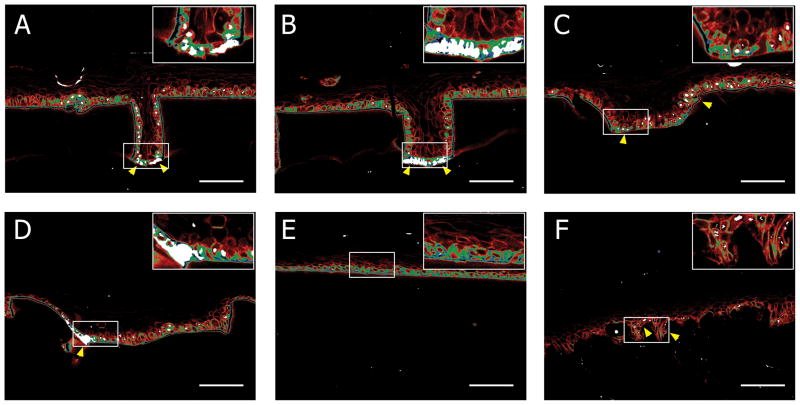
Although tissue engineered skin substitutes have demonstrated some clinical success for the treatment of chronic wounds such as diabetic and venous ulcers, persistent graft take and stability remain concerns. Current bilayered skin substitutes lack the characteristic microtopography of the dermal-epidermal junction that gives skin enhanced mechanical stability and creates cellular microniches that differentially promote keratinocyte function to form skin appendages and enhance wound healing. We developed a novel micropatterned dermal-epidermal regeneration matrix (μDERM) which incorporates this complex topography and substantially enhances epidermal morphology. Here, we describe the use of this three-dimensional (3-D) in vitro culture model to systematically evaluate different topographical geometries and to determine their relationship to keratinocyte function. We identified three distinct keratinocyte functional niches: the proliferative niche (narrow geometries), the basement membrane protein synthesis niche (wide geometries) and the putative keratinocyte stem cell niche (narrow geometries and corners). Specifically, epidermal thickness and keratinocyte proliferation is significantly (p<0.05) increased in 50 and 100 μm channels while laminin-332 deposition is significantly (p<0.05) increased in 400 μm channels compared to flat controls. Additionally, β1(bri)p63(+) keratinocytes, putative keratinocyte stem cells, preferentially cluster in channel geometries (similar to clustering observed in native skin) compared to a random distribution on flats. This study identifies specific target geometries to enhance skin regeneration and graft performance. Furthermore, these results suggest the importance of μDERM microtopography in designing the next generation of skin substitutes. Finally, we anticipate that 3-D organotypic cultures on μDERMS will provide a novel tissue engineered skin substitute for in vitro investigations of skin morphogenesis, wound healing and pathology.
Keywords: 3-D organ model; Dermal–epidermal junction; Keratinocyte function; Microtopography.
Copyright © 2013 Acta Materialia Inc. All rights reserved.
Conflict of interest statement
The authors state no conflict of interest.
Figures
References
-
- Macri L, Clark RA. Tissue engineering for cutaneous wounds: selecting the proper time and space for growth factors, cells and the extracellular matrix. Skin Pharmacol Physiol. 2009;22:83–93. - PubMed
-
- Carlson B. BioMarket Trends: Phalanx of Treatments Propels Burn Market: Recombinant Growth Factor Theapies Are Predicted to Be Up-and-Coming Players. Genetic Engineering and Biotechnology News. 2008
-
- Boyce ST. Design principles for composition and performance of cultured skin substitutes. Burns. 2001;27:523–33. - PubMed
-
- Sheridan RL, Tompkins RG. Skin substitutes in burns. Burns. 1999;25:97–103. - PubMed
Publication types
MeSH terms
Substances
Grants and funding
LinkOut - more resources
Full Text Sources
Other Literature Sources
