


Immunotherapy for tularemia
- PMID: 23959031
- PMCID: PMC3925717
- DOI: 10.4161/viru.25454
Immunotherapy for tularemia
Abstract
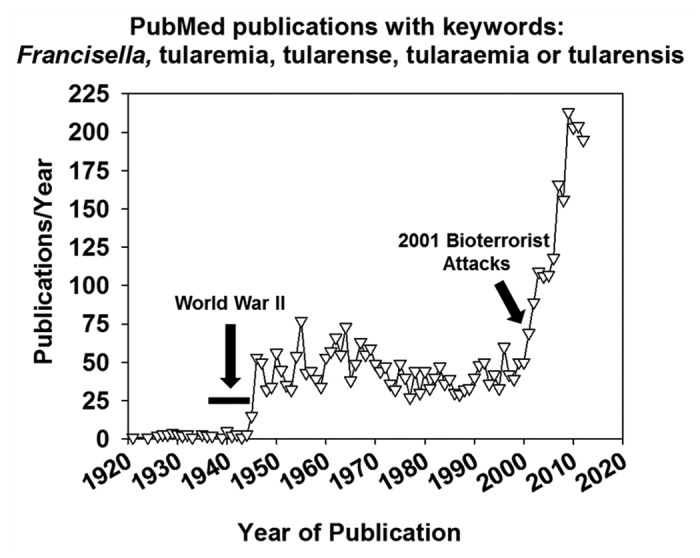
Francisella tularensis is a gram-negative bacterium that causes the zoonotic disease tularemia. Francisella is highly infectious via the respiratory route (~10 CFUs) and pulmonary infections due to type A strains of F. tularensis are highly lethal in untreated patients (> 30%). In addition, no vaccines are licensed to prevent tularemia in humans. Due to the high infectivity and mortality of pulmonary tularemia, F. tularensis has been weaponized, including via the introduction of antibiotic resistance, by several countries. Because of the lack of efficacious vaccines, and concerns about F. tularensis acquiring resistance to antibiotics via natural or illicit means, augmentation of host immunity, and humoral immunotherapy have been investigated as countermeasures against tularemia. This manuscript will review advances made and challenges in the field of immunotherapy against tularemia.
Keywords: Francisella; biodefense; immunity; immunotherapy; pathogen; tularemia.
Figures
References
Publication types
MeSH terms
Substances
Grants and funding
LinkOut - more resources
Full Text Sources
Other Literature Sources
