Review
. 2013 Aug 16;18(8):9797-817.
doi: 10.3390/molecules18089797.

Click chemistry in peptide-based drug design

Affiliations
Review

Click chemistry in peptide-based drug design

Huiyuan Li et al. Molecules. .

Abstract

Click chemistry is an efficient and chemoselective synthetic method for coupling molecular fragments under mild reaction conditions. Since the advent in 2001 of methods to improve stereochemical conservation, the click chemistry approach has been broadly used to construct diverse chemotypes in both chemical and biological fields. In this review, we discuss the application of click chemistry in peptide-based drug design. We highlight how triazoles formed by click reactions have been used for mimicking peptide and disulfide bonds, building secondary structural components of peptides, linking functional groups together, and bioconjugation. The progress made in this field opens the way for synthetic approaches to convert peptides with promising functional leads into structure-minimized and more stable forms.


Figures
Scheme 1
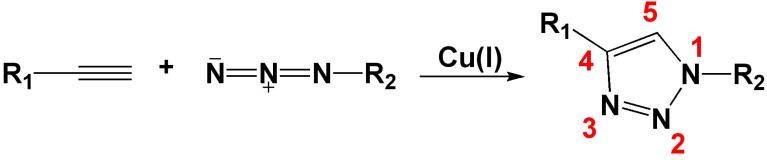
Scheme 1
Cu(I) catalyzed Huisgen 1,3-dipolar cycloaddition reaction.
Figure 1
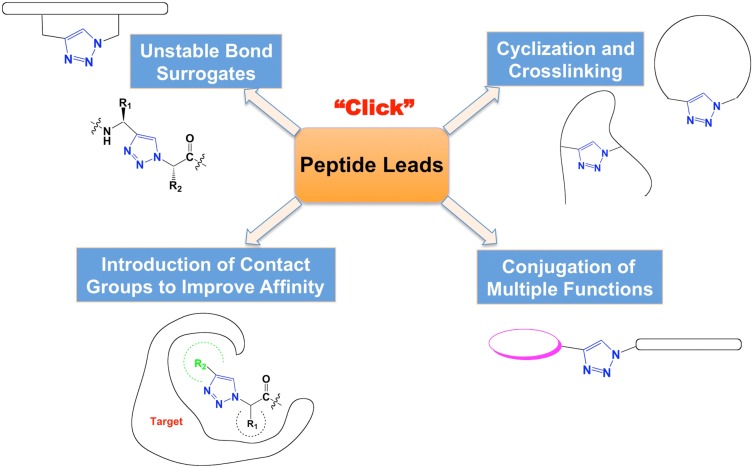
Figure 1
Types of click chemistry applications in peptide-based drug discovery.
Figure 2
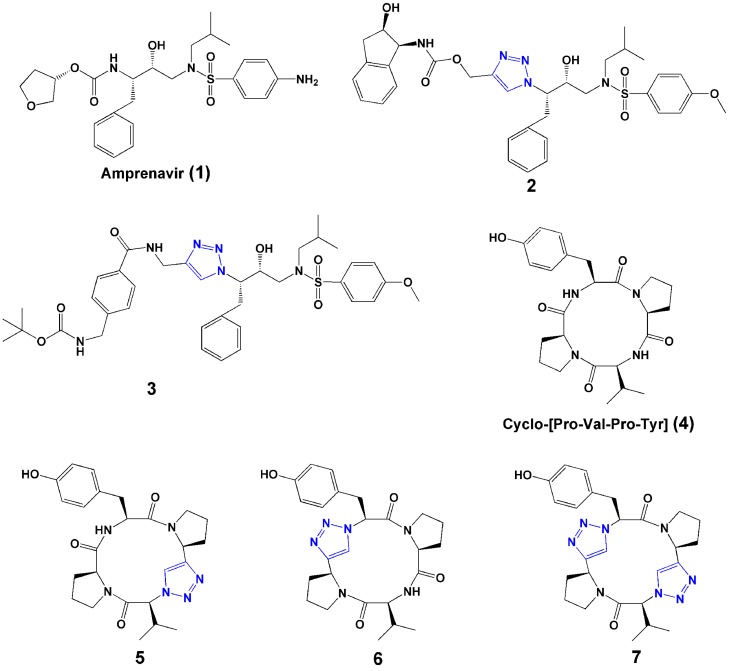
Figure 2
Selected examples of 1,2,3-triazoles used as surrogates of the amide bond.
Figure 3
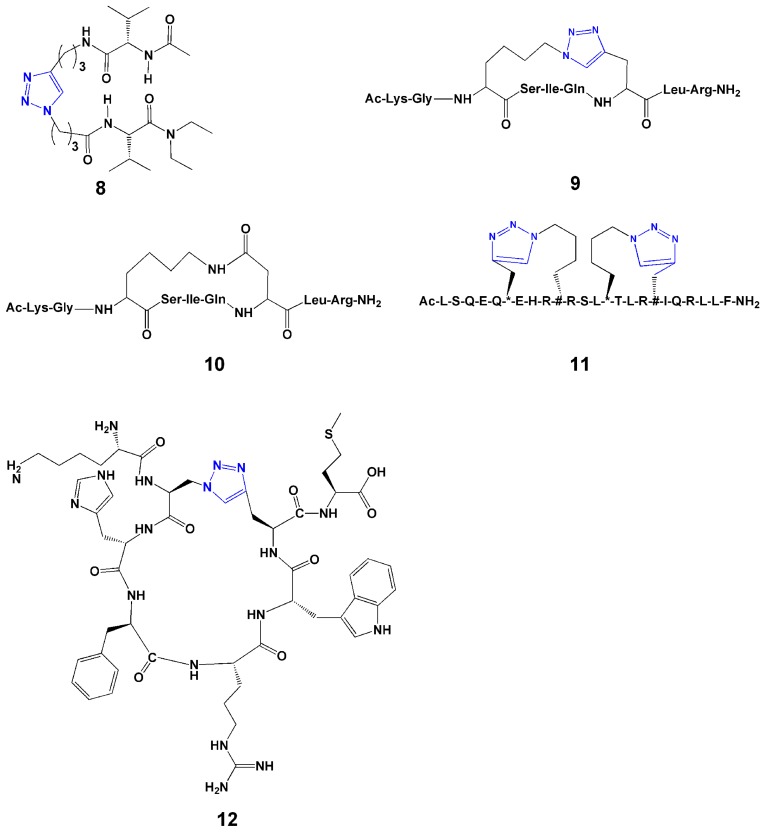
Figure 3
Selected examples of 1,2,3-triazoles used for secondary structure mimicry.
Figure 4
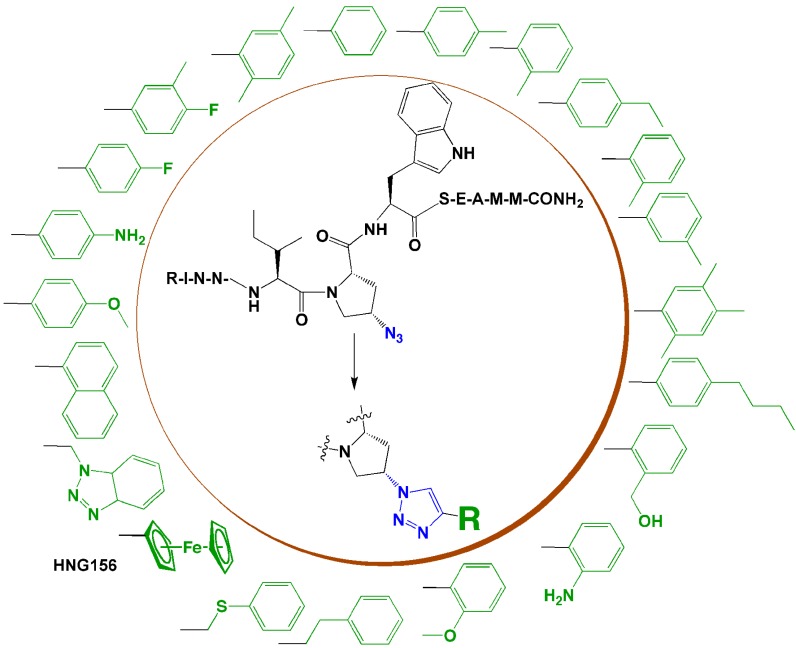
Figure 4
A family of HIV-1 Env antagonist 4-aryl 1,2,3-triazole peptides synthesized via click cycloaddition.
Figure 5
Figure 5
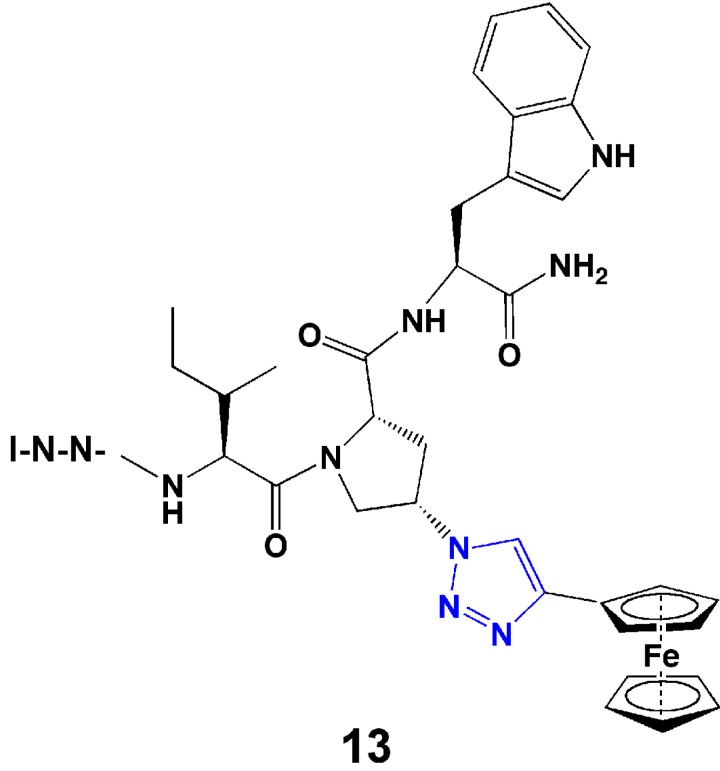
Structure of minimized peptide triazole, UM15.
Figure 6
Figure 6
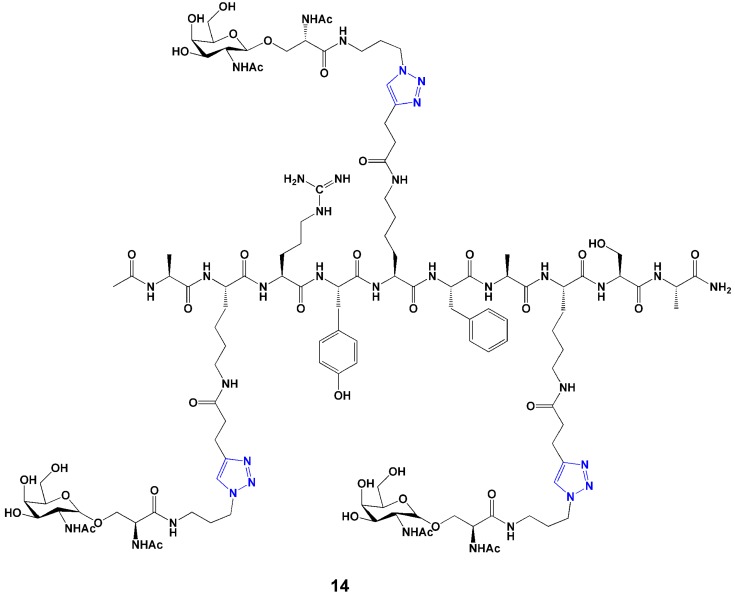
Structure of an anti-cancer carbohydrate-peptide vaccine candidate [56].

References

    1. Vlieghe P., Lisowski V., Martinez J., Khrestchatisky M. Synthetic therapeutic peptides: science and market. Drug. Discov. Today. 2010;15:40–56. doi: 10.1016/j.drudis.2009.10.009. - DOI - PubMed
    1. Merrifield R.B. Solid phase peptide synthesis. I. The synthesis of a tetrapeptide. J. Am. Chem. Soc. 1963;85:2149–2154. doi: 10.1021/ja00897a025. - DOI
    1. Dawson P.E., Muir T.W., Clark-Lewis I., Kent S.B. Synthesis of proteins by native chemical ligation. Science. 1994;266:776–779. - PubMed
    1. Kolb H.C., Finn M.G., Sharpless K.B. Click chemistry: Diverse chemical function from a few good reactions. Angew. Chem. Int. Ed. Engl. 2001;40:2004–2021. doi: 10.1002/1521-3773(20010601)40:11<2004::AID-ANIE2004>3.0.CO;2-5. - DOI - PubMed
    1. Tornoe C.W., Christensen C., Meldal M. Peptidotriazoles on solid phase: [1,2,3]-Triazoles by regiospecific copper(i)-catalyzed 1,3-dipolar cycloadditions of terminal alkynes to azides. J. Org. Chem. 2002;67:3057–3064. doi: 10.1021/jo011148j. - DOI - PubMed