


Whole-genome sequencing of gentamicin-resistant Campylobacter coli isolated from U.S. retail meats reveals novel plasmid-mediated aminoglycoside resistance genes
- PMID: 23959310
- PMCID: PMC3811239
- DOI: 10.1128/AAC.00669-13
Whole-genome sequencing of gentamicin-resistant Campylobacter coli isolated from U.S. retail meats reveals novel plasmid-mediated aminoglycoside resistance genes
Abstract
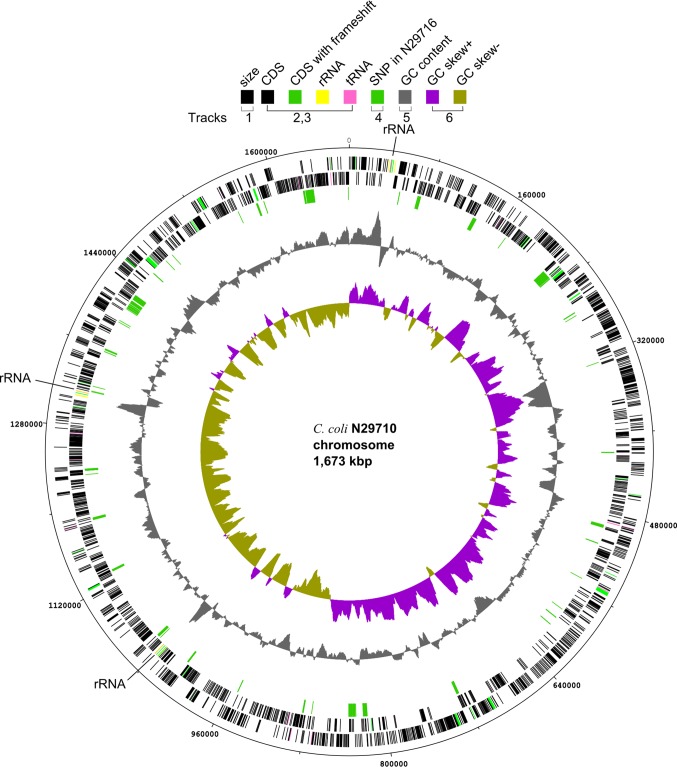
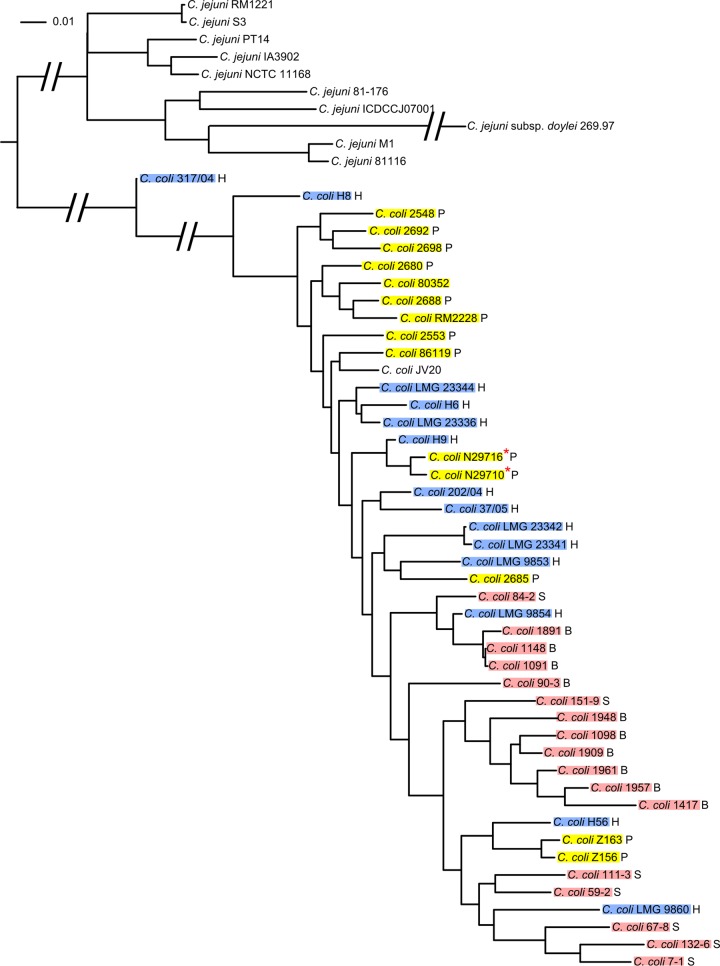
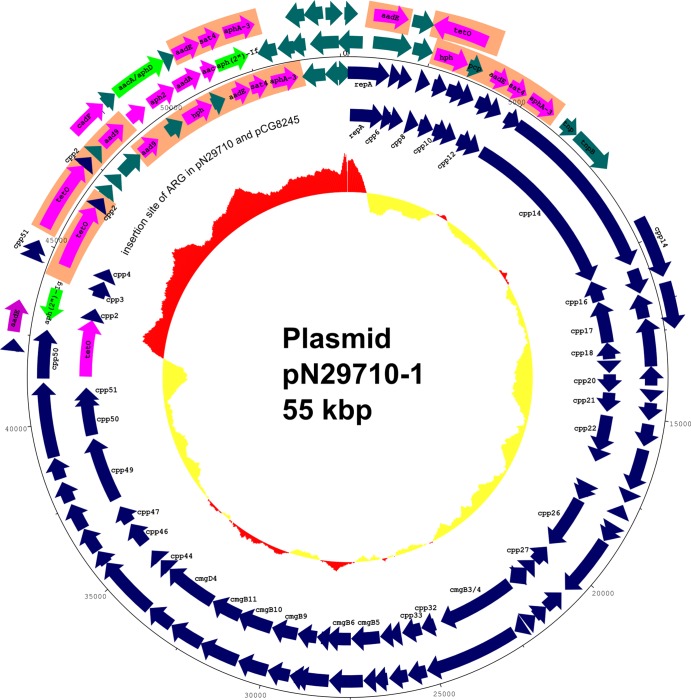
Aminoglycoside resistance in Campylobacter has been routinely monitored in the United States in clinical isolates since 1996 and in retail meats since 2002. Gentamicin resistance first appeared in a single human isolate of Campylobacter coli in 2000 and in a single chicken meat isolate in 2007, after which it increased rapidly to account for 11.3% of human isolates and 12.5% of retail isolates in 2010. Pulsed-field gel electrophoresis analysis indicated that gentamicin-resistant C. coli isolates from retail meat were clonal. We sequenced the genomes of two strains of this clone using a next-generation sequencing technique in order to investigate the genetic basis for the resistance. The gaps of one strain were closed using optical mapping and Sanger sequencing, and this is the first completed genome of C. coli. The two genomes are highly similar to each other. A self-transmissible plasmid carrying multiple antibiotic resistance genes was revealed within both genomes, carrying genes encoding resistance to gentamicin, kanamycin, streptomycin, streptothricin, and tetracycline. Bioinformatics analysis and experimental results showed that gentamicin resistance was due to a phosphotransferase gene, aph(2")-Ig, not described previously. The phylogenetic relationship of this newly emerged clone to other Campylobacter spp. was determined by whole-genome single nucleotide polymorphisms (SNPs), which showed that it clustered with the other poultry isolates and was separated from isolates from livestock.
Figures
References
-
- Centers for Disease Control and Prevention National Antimicrobial Resistance Monitoring System Enteric bacteria 2010 human isolates final report. http://www.cdc.gov/narms/pdf/2010-annual-report-narms.pdf Centers for Disease Control and Prevention, Atlanta, GA
-
- U.S. Food and Drug Administration National Antimicrobial Resistance Monitoring System NARMS retail meat annual report, 2011. http://www.fda.gov/AnimalVeterinary/SafetyHealth/AntimicrobialResistance... U.S. Food and Drug Administration, Washington, DC
Publication types
MeSH terms
Substances
LinkOut - more resources
Full Text Sources
Other Literature Sources
Medical
Molecular Biology Databases
Miscellaneous
