


Nonhuman primate model of schizophrenia using a noninvasive EEG method
- PMID: 23959894
- PMCID: PMC3780912
- DOI: 10.1073/pnas.1312264110
Nonhuman primate model of schizophrenia using a noninvasive EEG method
Abstract
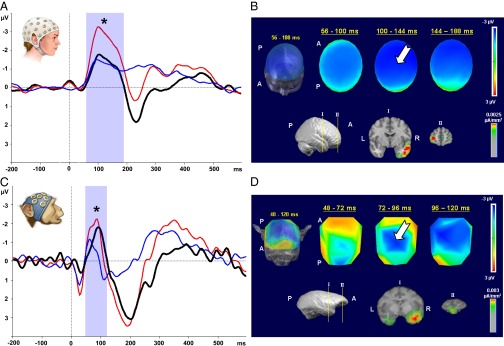
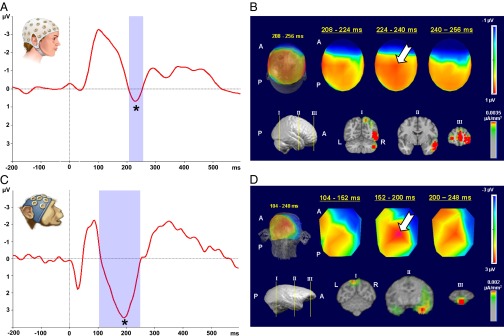
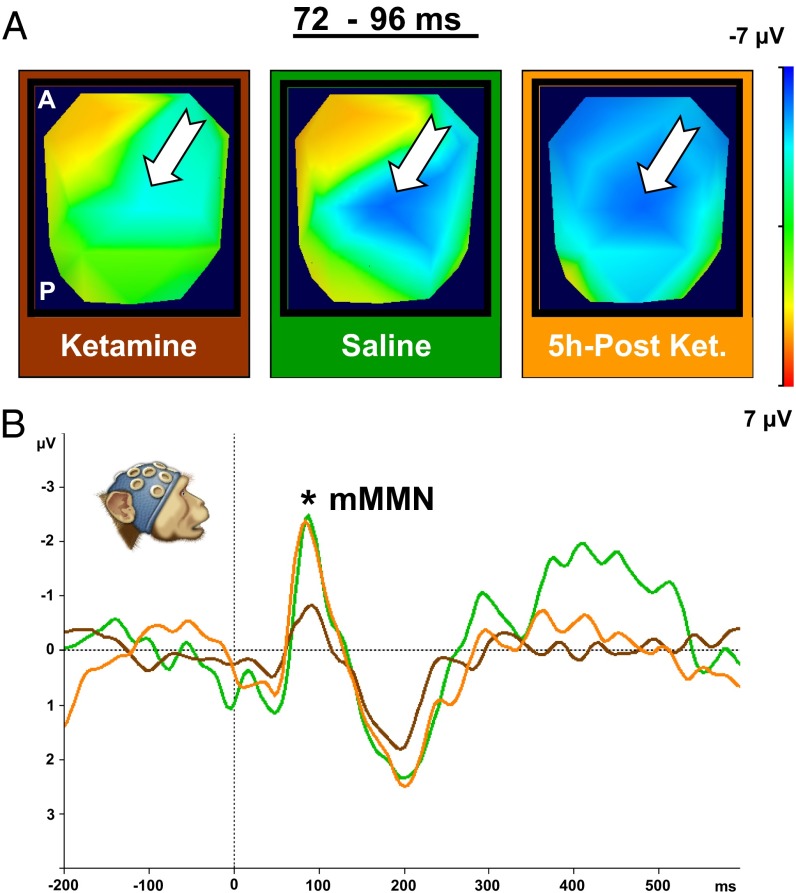
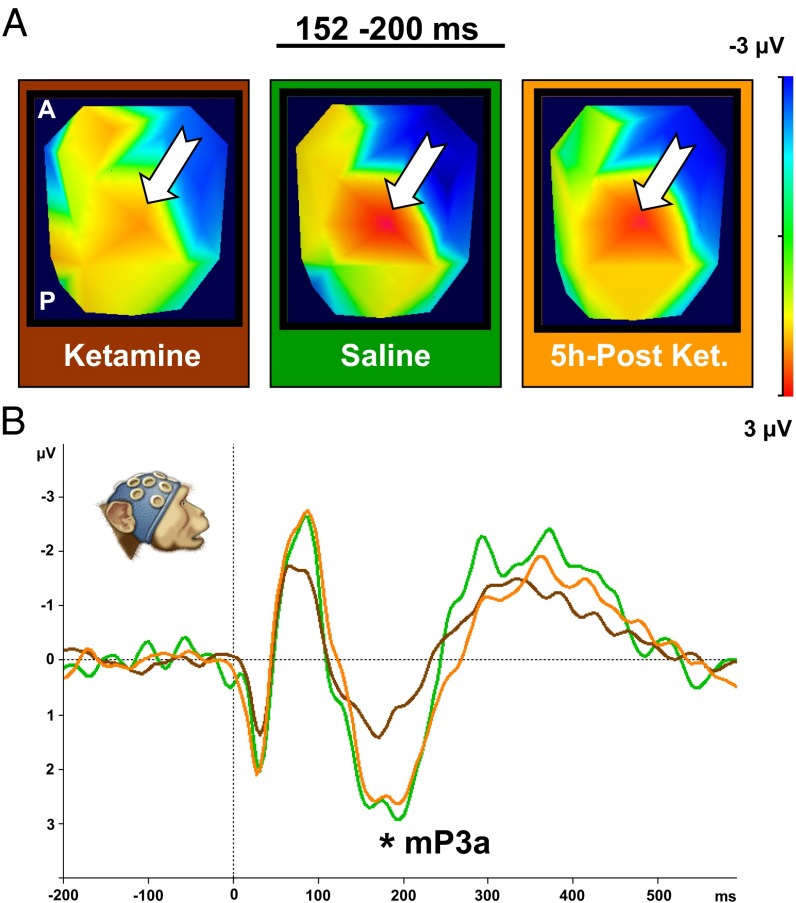
There is growing evidence that impaired sensory-processing significantly contributes to the cognitive deficits found in schizophrenia. For example, the mismatch negativity (MMN) and P3a event-related potentials (ERPs), neurophysiological indices of sensory and cognitive function, are reduced in schizophrenia patients and may be used as biomarkers of the disease. In agreement with glutamatergic theories of schizophrenia, NMDA antagonists, such as ketamine, elicit many symptoms of schizophrenia when administered to normal subjects, including reductions in the MMN and the P3a. We sought to develop a nonhuman primate (NHP) model of schizophrenia based on NMDA-receptor blockade using subanesthetic administration of ketamine. This provided neurophysiological measures of sensory and cognitive function that were directly comparable to those recorded from humans. We first developed methods that allowed recording of ERPs from humans and rhesus macaques and found homologous MMN and P3a ERPs during an auditory oddball paradigm. We then investigated the effect of ketamine on these ERPs in macaques. As found in humans with schizophrenia, as well as in normal subjects given ketamine, we observed a significant decrease in amplitude of both ERPs. Our findings suggest the potential of a pharmacologically induced model of schizophrenia in NHPs that can pave the way for EEG-guided investigations into cellular mechanisms and therapies. Furthermore, given the established link between these ERPs, the glutamatergic system, and deficits in other neuropsychiatric disorders, our model can be used to investigate a wide range of pathologies.
Keywords: brain; medicine; monkey; neurology; psychiatry.
Conflict of interest statement
The authors declare no conflict of interest.
Figures
Comment in
-
Mismatch negativity is a breakthrough biomarker for understanding and treating psychotic disorders.Proc Natl Acad Sci U S A. 2013 Sep 17;110(38):15175-6. doi: 10.1073/pnas.1313287110. Epub 2013 Aug 30. Proc Natl Acad Sci U S A. 2013. PMID: 23995447 Free PMC article. No abstract available.
References
-
- Rissling AJ, Light GA. Neurophysiological measures of sensory registration, stimulus discrimination, and selection in schizophrenia patients. Curr Top Behav Neurosci. 2010;4:283–309. - PubMed
-
- Javitt DC, Zukin SR. Recent advances in the phencyclidine model of schizophrenia. Am J Psychiatry. 1991;148(10):1301–1308. - PubMed
-
- Umbricht D, et al. Ketamine-induced deficits in auditory and visual context-dependent processing in healthy volunteers: Implications for models of cognitive deficits in schizophrenia. Arch Gen Psychiatry. 2000;57(12):1139–1147. - PubMed
-
- Sutton S, Braren M, Zubin J, John ER. Evoked-potential correlates of stimulus uncertainty. Science. 1965;150(3700):1187–1188. - PubMed
Publication types
MeSH terms
Substances
LinkOut - more resources
Full Text Sources
Other Literature Sources
Medical
