


Elevation in circulating biomarkers of cartilage damage and inflammation in athletes with femoroacetabular impingement
- PMID: 23959964
- PMCID: PMC4048958
- DOI: 10.1177/0363546513499308
Elevation in circulating biomarkers of cartilage damage and inflammation in athletes with femoroacetabular impingement
Abstract
Background: Femoroacetabular impingement (FAI) is one of the most common causes of early cartilage and labral damage in the nondysplastic hip. Biomarkers of cartilage degradation and inflammation are associated with osteoarthritis. It was not known whether patients with FAI have elevated levels of biomarkers of cartilage degradation and inflammation.
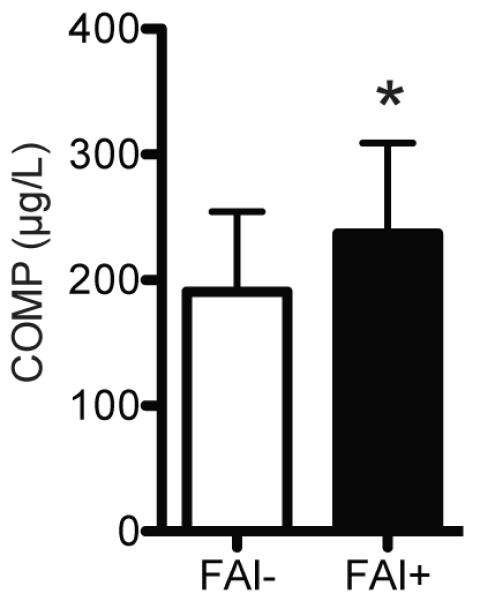
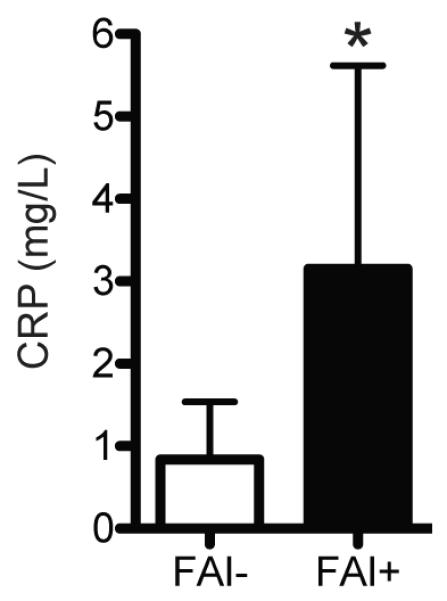
Hypothesis: Compared with athletes without FAI, athletes with FAI would have elevated levels of the inflammatory C-reactive protein (CRP) and cartilage oligomeric matrix protein (COMP), a cartilage degradation marker.
Study design: Controlled laboratory study.
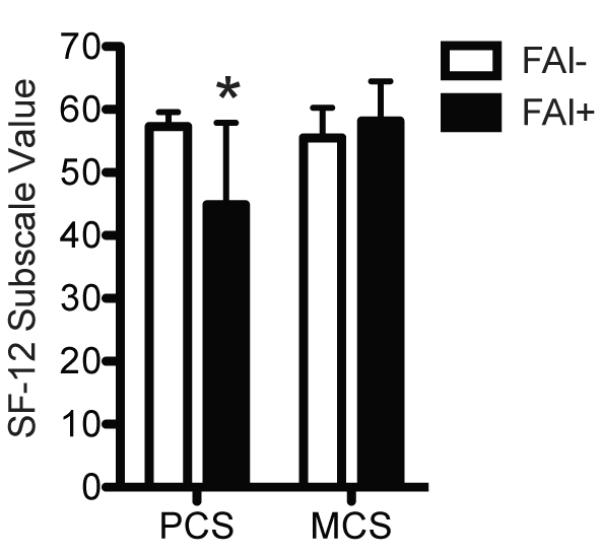
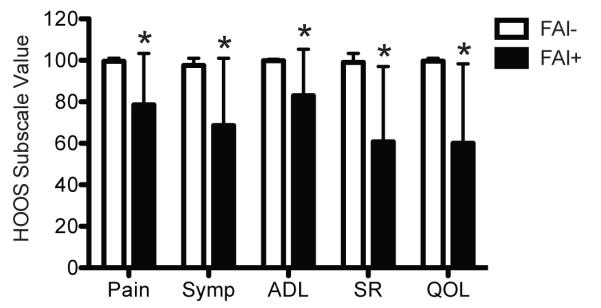
Methods: Male athletes with radiographically confirmed FAI (n = 10) were compared with male athletes with radiographically normal hips with no evidence of FAI or hip dysplasia (n = 19). Plasma levels of COMP and CRP were measured, and subjects also completed the Short Form-12 (SF-12) and Hip Disability and Osteoarthritis Outcome Score (HOOS) surveys.
Results: Compared with controls, athletes with FAI had a 24% increase in COMP levels and a 276% increase in CRP levels as well as a 22% decrease in SF-12 physical component scores and decreases in all of the HOOS subscale scores.
Conclusion: Athletes with FAI demonstrate early biochemical signs of increased cartilage turnover and systemic inflammation.
Clinical relevance: Chondral injury secondary to the repetitive microtrauma of FAI might be reliably detected with biomarkers. In the future, these biomarkers might be used as screening tools to identify at-risk patients and assess the efficacy of therapeutic interventions such as hip preservation surgery in altering the natural history and progression to osteoarthritis.
Keywords: C-reactive protein; HOOS; SF-12; cartilage oligomeric matrix protein; osteoarthritis.
Figures
References
-
- Allen D, Beaule PE, Ramadan O, Doucette S. Prevalence of associated deformities and hip pain in patients with cam-type femoroacetabular impingement. The Journal of bone and joint surgery. British volume. 2009;91(5):589–594. - PubMed
-
- American Academy of Orthopaedic Surgeons . The burden of musculoskeletal diseases in the United States : prevalence, societal, and economic cost. American Academy of Orthopaedic Surgeons; Rosemont, IL: 2008. ISBN 9780892035335.
-
- Apprich S, Mamisch TC, Welsch GH, et al. Evaluation of articular cartilage in patients with femoroacetabular impingement (FAI) using T2* mapping at different time points at 3.0 Tesla MRI: a feasibility study. Skeletal radiology. 2011 - PubMed
-
- Beck M, Kalhor M, Leunig M, Ganz R. Hip morphology influences the pattern of damage to the acetabular cartilage: femoroacetabular impingement as a cause of early osteoarthritis of the hip. The Journal of bone and joint surgery British volume. 2005;87(7):1012–1018. - PubMed
-
- Bedi A, Chen N, Robertson W, Kelly BT. The management of labral tears and femoroacetabular impingement of the hip in the young, active patient. Arthroscopy : the journal of arthroscopic & related surgery : official publication of the Arthroscopy Association of North America and the International Arthroscopy Association. 2008;24(10):1135–1145. - PubMed
Publication types
MeSH terms
Substances
Grants and funding
LinkOut - more resources
Full Text Sources
Other Literature Sources
Research Materials
Miscellaneous
