


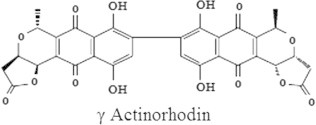
γ Actinorhodin a natural and attorney source for synthetic dye to detect acid production of fungi
- PMID: 23961232
- PMCID: PMC3730729
- DOI: 10.1016/j.sjbs.2013.01.004
γ Actinorhodin a natural and attorney source for synthetic dye to detect acid production of fungi
Abstract
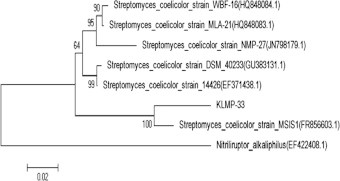
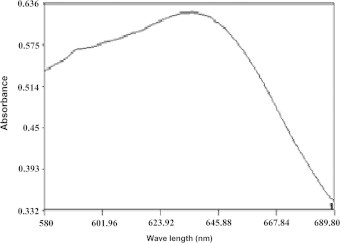
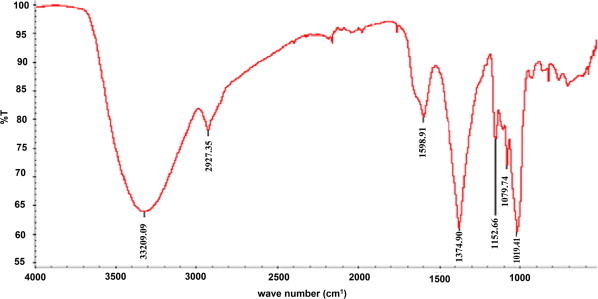
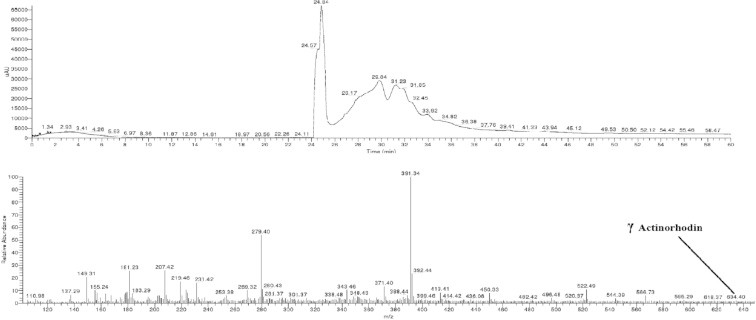
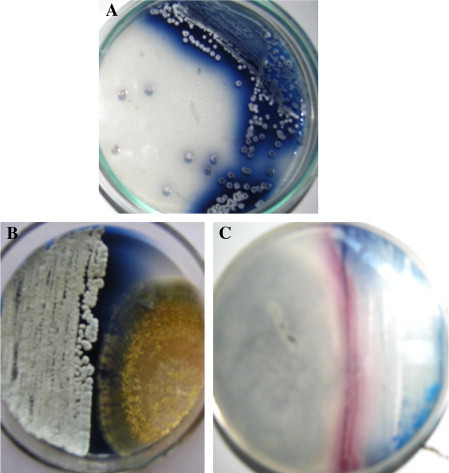
Colors from natural sources are gaining popularity because synthetic colors are carcinogenic. Natural colors are obtained from plants or microorganisms. Pigments produced by microorganisms have advantages over plant pigments, due to their ease of use and reliability. In the present study, a blue pigment producing actinomycete klmp33 was isolated from the Gulbarga region in India. The isolate was identified based on morphologic, microscopic, and biochemical characterization, and 16S rRNA sequencing. Phylogenetic analysis of the isolates showed a close relationship with Streptomyces coelicolor. Pigment produced by the isolate was analyzed using UV-visible spectroscopy, thin-layer chromatography, Fourier transform infrared and liquid chromatography/mass spectroscopy analysis, and was identified as γ actinorhodin. γ-Actinorhodin is used as a pH indicator which deviates from acid to non-acid. Moreover, it subrogates synthetic dye.
Keywords: Blue pigment; Streptomyces coelicolor; Synthetic color; pH indicator; γ Actinorhodin.
Figures

References
-
- Aneja K.R. New Age International Publishers; India: 2003. Experiments in Microbiology, Plants Pathology and Biotechnology.
-
- Anjaneya O., YogeshSouche S., Santoshkumar M., Karegoudar T.B. Decolorization of sulfonated azo dye Metanil Yellow by newly isolated bacterial strains: Bacillus sp. strain AK1and Lysinibacillus sp. strain AK2. J. Hazard. Mater. 2011;190:351–358. - PubMed
-
- Asgher M., Bhatti H.N., Shah S.A.H., Asad M.J., Legge R.L. Decolorization potential of mixed microbial consortia for reactive and disperse textile dyestuff. Biodegradation. 2007;18:311–316. - PubMed
-
- Bentley S.D., Chater K.F., Cerdeno-Tarraga A.M., Challis G.L., et al. Complete genome sequence of the model Actinomycete Streptomyces coelicolor A3(2) Nature. 2002;417:141–147. - PubMed
LinkOut - more resources
Full Text Sources
Other Literature Sources
