. 2013 Jul;17(4):568-79.
doi: 10.4103/2230-8210.113722.

Fetal endocrinology

Affiliations

Fetal endocrinology

Sunil Kumar Kota et al. Indian J Endocrinol Metab. 2013 Jul.

Abstract

Successful outcome of pregnancy depends upon genetic, cellular, and hormonal interactions, which lead to implantation, placentation, embryonic, and fetal development, parturition and fetal adaptation to extrauterine life. The fetal endocrine system commences development early in gestation and plays a modulating role on the various physiological organ systems and prepares the fetus for life after birth. Our current article provides an overview of the current knowledge of several aspects of this vast field of fetal endocrinology and the role of endocrine system on transition to extrauterine life. We also provide an insight into fetal endocrine adaptations pertinent to various clinically important situations like placental insufficiency and maternal malnutrition.

Keywords: Endocrinology; fetal; hypothalamic; pituitary.


Conflict of interest statement

Conflict of Interest: None declared

Figures

Figure 1
Figure 1
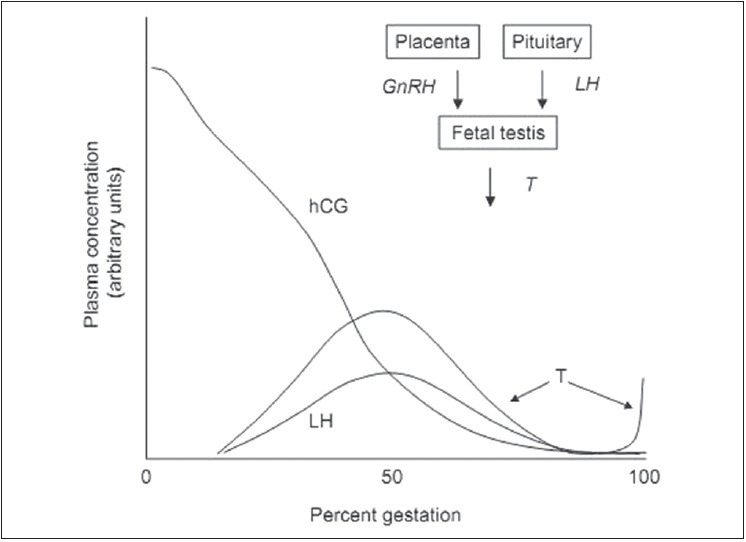
Schematic representation of the ontogeny of hCG, LH, and T in the plasma of a male fetus. The relationship of GnRH, LH and T is represented in the upper right corner of the fi gure. hCG: Human chorionic gonadotropin, LH: Luteinizing hormone, GnRH: Gonadotropin releasing hormone, T: Testosterone
Figure 2
Figure 2
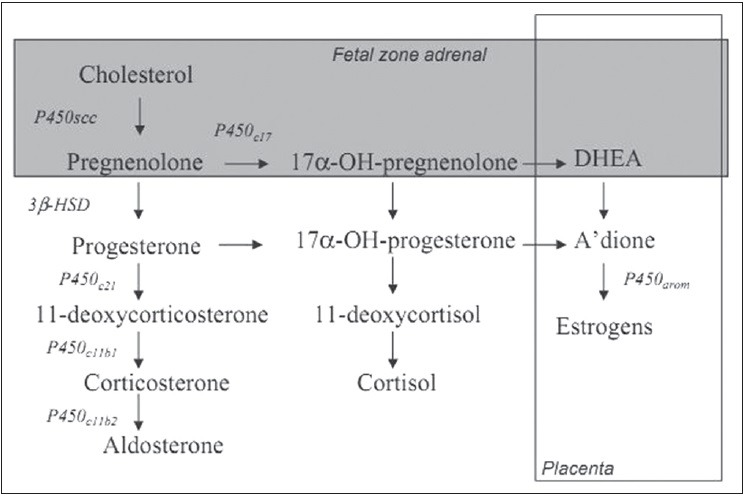
Steroid biosynthesis in the developing primate fetus. Steroidogenic enzymes are represented by the following abbreviations: P450c17 (17 and α-hydroxylase and 17,20-lyase activities); 3 and β-HSD (3 and β-hydroxysteroid dehydrogenase activity); P450c11b1 (11 and α-hydroxylase activity); P450c11b2 (aldosterone synthase activity); P450arom (aromatase activity). The fetal zone of the fetal adrenal cortex is capable of performing the reactions in the shaded area. The overlapping box (right) represents estrogen biosynthesis by the placenta. A-dione, androstenedione
Figure 3
Figure 3
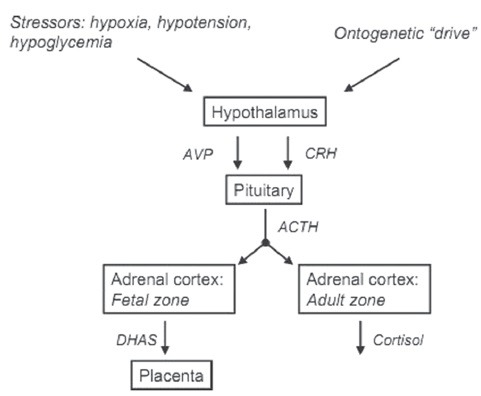
Relationship between hypothalamus, pituitary, and fetal and de and #64257; nitive zones of the fetal adrenal. Both zones of the fetal adrenal cortex are stimulated by ACTH secreted by the fetal anterior pituitary. The secretion of ACTH is stimulated acutely in response to stressors in utero, and chronically in a pattern that produces increased activity of the fetal hypothalamus–pituitary–adrenal axis independent of stressors at the end of gestation. CRH: Corticotropin releasing hormone, ACTH: Adrenocorticotropic hormone, DHAS: Dehydroepiandrosterone sulfate, AVP: Arginine vasopressin
Figure 4
Figure 4
The ontogeny of thyrotropin, T4, T3, and rT3 in fetal plasma. The relationship of thyrotropin, T4, T3, and rT3 is represented in the upper left corner of the fi gure. rT3- Reverse T3
Figure 5
Figure 5
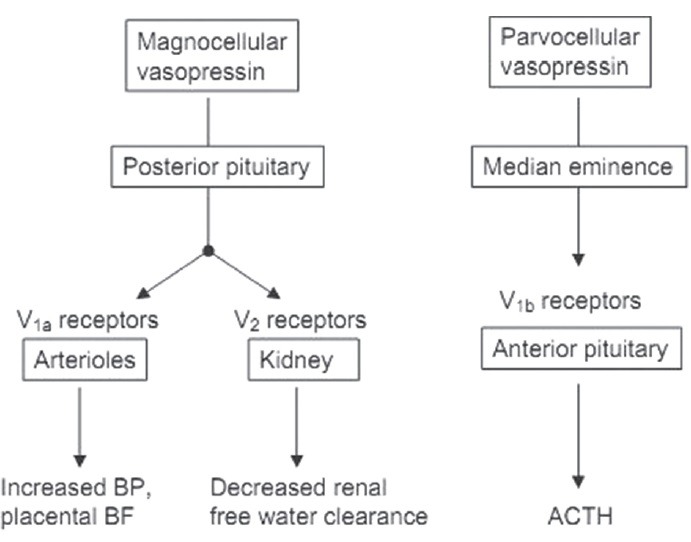
The synthesis, release, and action of AVP in the fetus. Magnocellular neurons in the paraventricular nucleus synthesize vasopressin, releasing the peptide into the bloodstream at the posterior pituitary. Parvocellular neurons in the hypothalamic nucleus synthesize vasopressin, which is released into the hypothalamo–hypophyseal portal blood at the median eminence. Portal blood vasopressin acts as a corticotropin-releasing factor at the corticotrope of the anterior pituitary. BF: Blood flow, BP: Blood pressure, ACTH: Adrenocorticotropic hormone
Figure 6
Figure 6
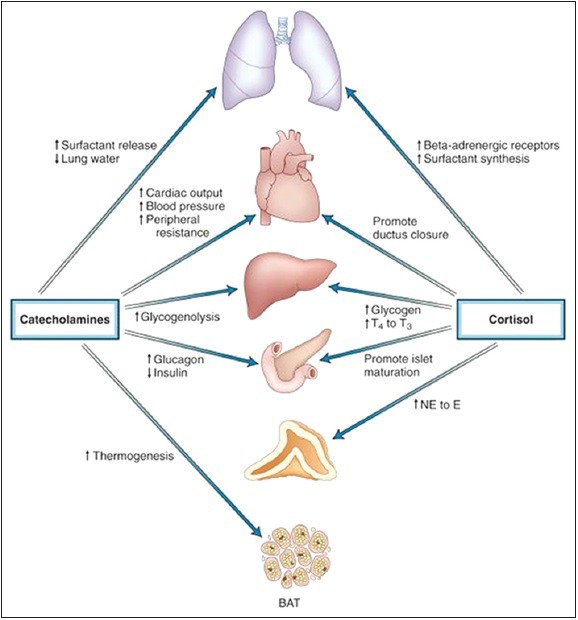
Actions of cortisol and catecholamines during fetal adaptation to the extrauterine environment. The prenatal cortisol surge acts to promote functional maturation of several organ systems as indicated. The neonatal catecholamine surge triggers or potentiates a number of the extrauterine cardiopulmonary and metabolic functional adaptations that are critical to extrauterine survival. See text for details. BAT: Brown adipose tissue, E: Epinephrine, NE: Norepinephrine, T3: Triiodothyronine, T4: Thyroxine
Figure 7
Figure 7
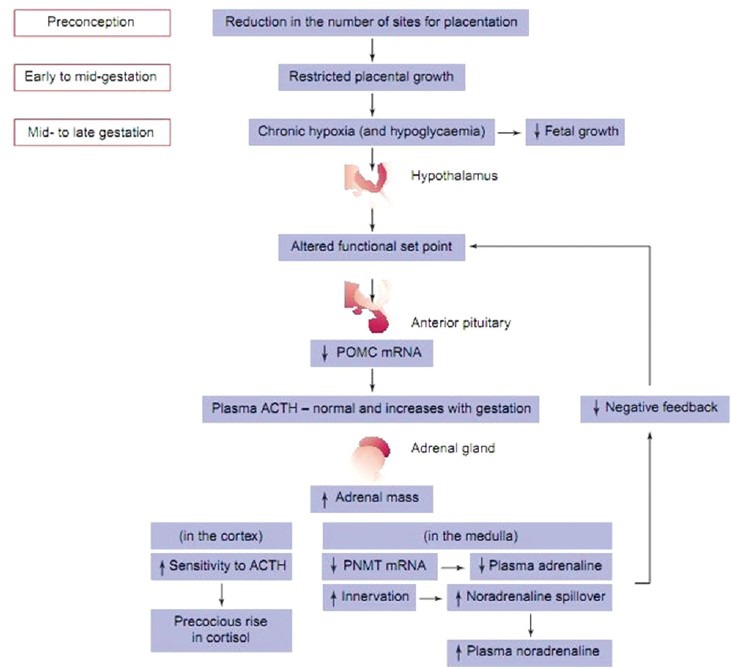
Developmental effect of placental restriction and resulting hypoxia on chronic adaptations in the fetal hypothalamic–pituitary–adrenal axis in the regulation of cortisol and catecholamine secretion in mid- to late-gestation. ACTH: Adrenocorticotrophicvhormone, PNMT: Phenylethanolamine-N-vethyltransferase, POMC: Pro-opiomelanocortin
Figure 8
Figure 8
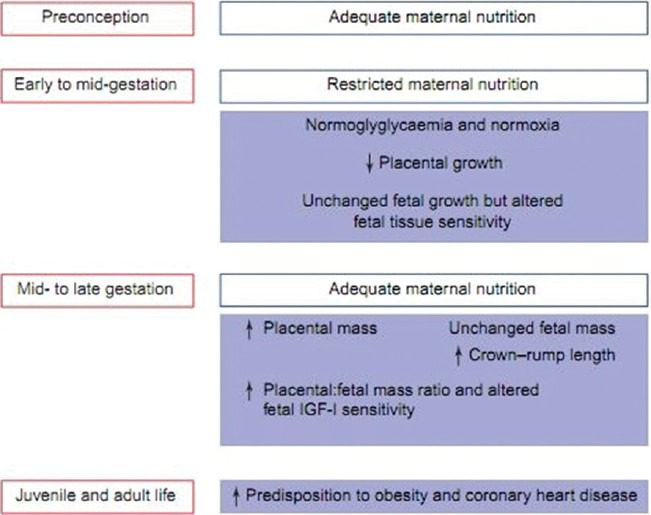
Effect of maternal nutrient restriction in early gestation on the relationship between placental and fetal growth throughout gestation with respect to adaptations in the fetal metabolic and hormonal environment that could contribute to an increased predisposition to adult disease in the resulting offspring. IGF-I: Insulin-like growth factor I

References

    1. Grumbach MM, Gluckman PD. The human fetal hypothalamus and pituitary gland: The maturation of neuroendocrine mechanisms controlling secretion of fetal pituitary growth hormone, prolactin, gonadotropins, adrenocorticotropin-related peptides, and thyrotropin. In: Tulchinsky D, Little AB, editors. Maternal Fetal Endocrinology. 2nd ed. Philadelphia: WB Saunders; 1994. pp. 193–261.
    1. Wu Y, He Z, Zhang L, Jiang H, Zhang W. Ontogeny of immunoreactive Lh and Fsh cells in relation to early ovarian differentiation and development in protogynous hermaphroditic ricefield Eel Monopterus albus. Biol Reprod. 2012;86:93. - PubMed
    1. Pepe GJ, Albrecht ED. Regulation of the primate fetal adrenal cortex. Endocr Rev. 1990;11:151–76. - PubMed
    1. Erickson RP, Blecher SR. Genetics of sex determination and differentiation. In: Polin RA, Fox WW, Abman SH, editors. Fetal and Neonatal Physiology. 3rd ed. Philadelphia: WB Saunders; 2004. pp. 1935–41.
    1. Lee MM. Molecular genetic control of sex differentiation. In: Pescovitz OH, Eugster EA, editors. Pediatric Endocrinology. Philadelphia: Lippincott Williams and Wilkins; 2004. pp. 231–42.