


A diet rich in high-glucoraphanin broccoli interacts with genotype to reduce discordance in plasma metabolite profiles by modulating mitochondrial function
- PMID: 23964055
- PMCID: PMC3743733
- DOI: 10.3945/ajcn.113.065235
A diet rich in high-glucoraphanin broccoli interacts with genotype to reduce discordance in plasma metabolite profiles by modulating mitochondrial function
Abstract
Background: Observational and experimental studies suggest that diets rich in cruciferous vegetables and glucosinolates may reduce the risk of cancer and cardiovascular disease (CVD).
Objective: We tested the hypothesis that a 12-wk dietary intervention with high-glucoraphanin (HG) broccoli would modify biomarkers of CVD risk and plasma metabolite profiles to a greater extent than interventions with standard broccoli or peas.
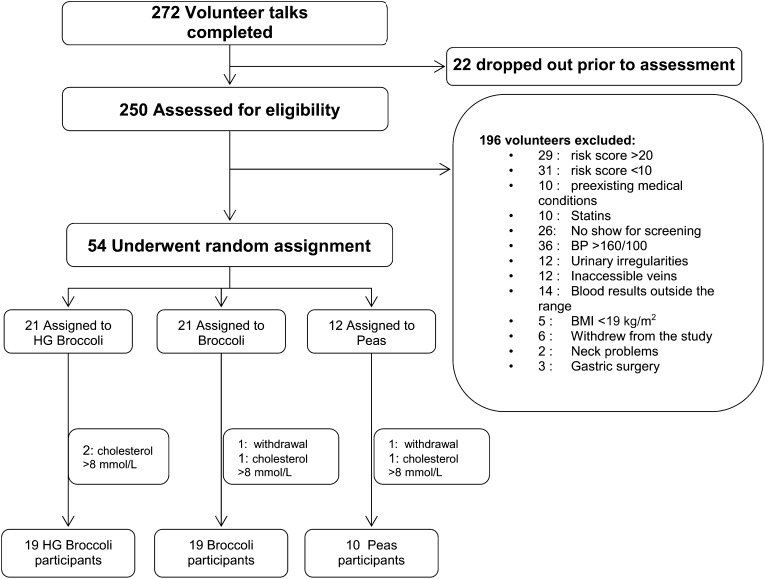
Design: Subjects were randomly assigned to consume 400 g standard broccoli, 400 g HG broccoli, or 400 g peas each week for 12 wk, with no other dietary restrictions. Biomarkers of CVD risk and 347 plasma metabolites were quantified before and after the intervention.
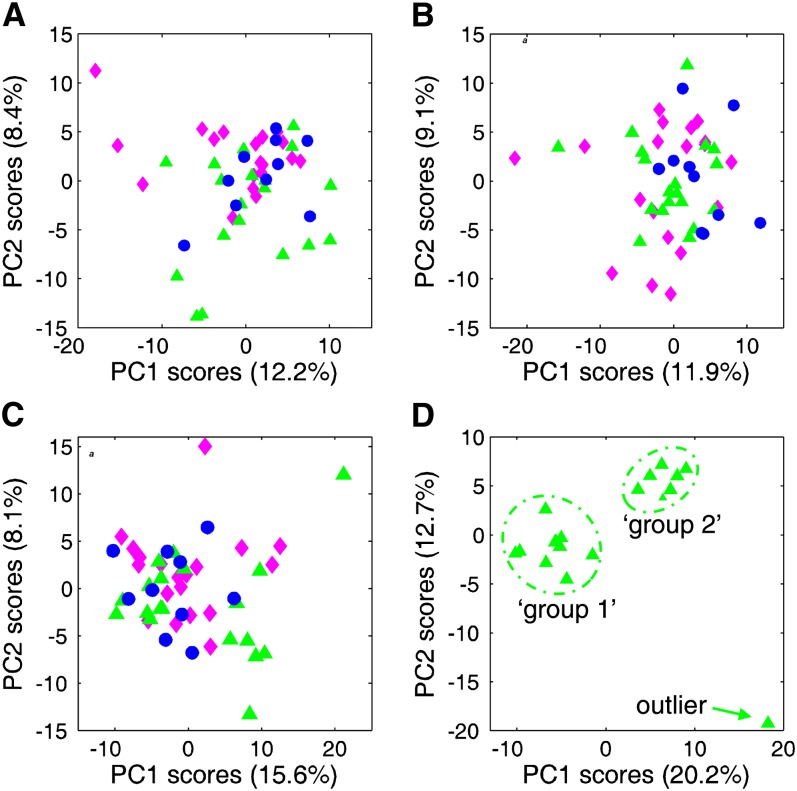
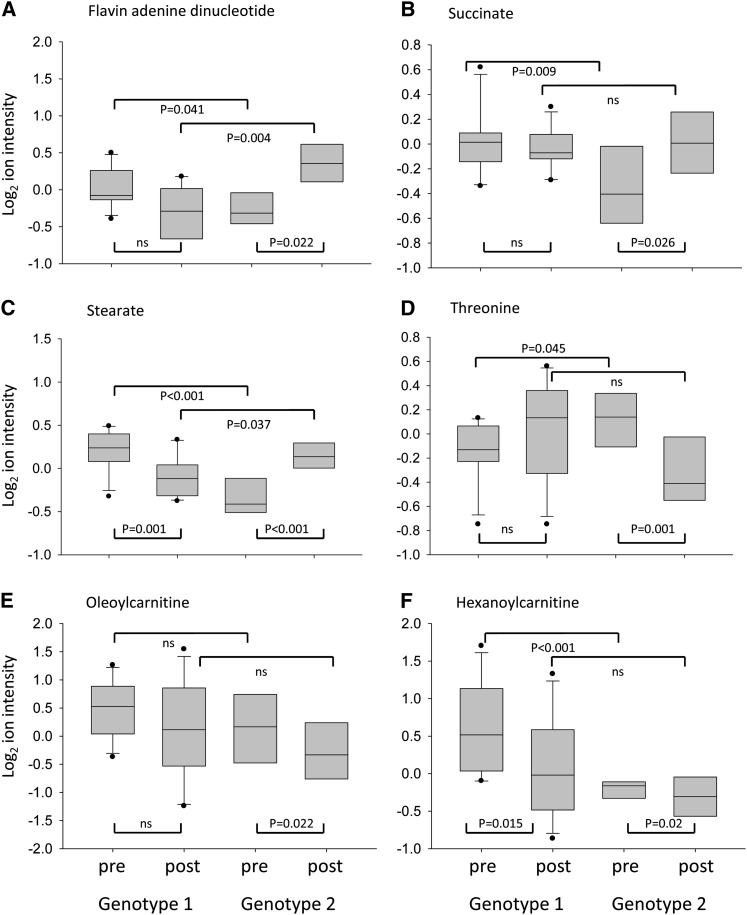
Results: No significant differences in the effects of the diets on biomarkers of CVD risk were found. Multivariate analyses of plasma metabolites identified 2 discrete phenotypic responses to diet in individuals within the HG broccoli arm, differentiated by single nucleotide polymorphisms associated with the PAPOLG gene. Univariate analysis showed effects of sex (P < 0.001), PAPOLG genotype (P < 0.001), and PAPOLG genotype × diet (P < 0.001) on the plasma metabolic profile. In the HG broccoli arm, the consequence of the intervention was to reduce variation in lipid and amino acid metabolites, tricarboxylic acid (TCA) cycle intermediates, and acylcarnitines between the 2 PAPOLG genotypes.
Conclusions: The metabolic changes observed with the HG broccoli diet are consistent with a rebalancing of anaplerotic and cataplerotic reactions and enhanced integration of fatty acid β-oxidation with TCA cycle activity. These modifications may contribute to the reduction in cancer risk associated with diets that are rich in cruciferous vegetables. This trial was registered at clinicaltrials.gov as NCT01114399.
Figures
References
-
- Seow A, Yuan JM, Sun CL, Van den Berg D, Lee HP, Yu MC. Dietary isothiocyanates, glutathione S-transferase polymorphisms and colorectal cancer risk in the Singapore Chinese Health Study. Carcinogenesis 2002;23:2055–61. - PubMed
-
- Hsu CC, Chow WH, Boffetta P, Moore L, Zaridze D, Moukeria A, Janout V, Kollarova H, Bencko V, Navratilova M, et al. Dietary risk factors for kidney cancer in Eastern and Central Europe. Am J Epidemiol 2007;166:62–70. - PubMed
-
- Kirsh VA, Peters U, Mayne ST, Subar AF, Chatterjee N, Johnson CC, Hayes RB; Prospective study of fruit and vegetable intake and risk of prostate cancer. J Natl Cancer Inst 2007;99:1200–9. - PubMed
-
- Bosetti C, Filomeno M, Riso P, Polesel J, Levi F, Talamini R, Montella M, Negri E, Franceschi S, La Vecchia C. Cruciferous vegetables and cancer risk in a network of case-control studies. Ann Oncol 2012;23:2198–203. - PubMed
Publication types
MeSH terms
Substances
Associated data
Grants and funding
LinkOut - more resources
Full Text Sources
Other Literature Sources
Medical
