


The use of radio-collars for monitoring wildlife diseases: a case study from Iberian ibex affected by Sarcoptes scabiei in Sierra Nevada, Spain
- PMID: 23965311
- PMCID: PMC3765276
- DOI: 10.1186/1756-3305-6-242
The use of radio-collars for monitoring wildlife diseases: a case study from Iberian ibex affected by Sarcoptes scabiei in Sierra Nevada, Spain
Abstract
Background: Wildlife radio tracking has gained popularity during the recent past. Ecologists and conservationists use radio-collars for different purposes: animal movement monitoring, home range, productivity, population estimation, behaviour, habitat use, survival, and predator-prey interaction, among others. The aim of our present study is to highlight the application of radio-collars for wildlife diseases monitoring. The spread of wildlife diseases and the efficacy of management actions for controlling them propose serious challenges for ecologists and conservationists, since it is difficult to re-capture (or simply observe) the same animal in pre-determined temporal interval, but such difficulty is overcome by the use of gps-gsm radio collars.
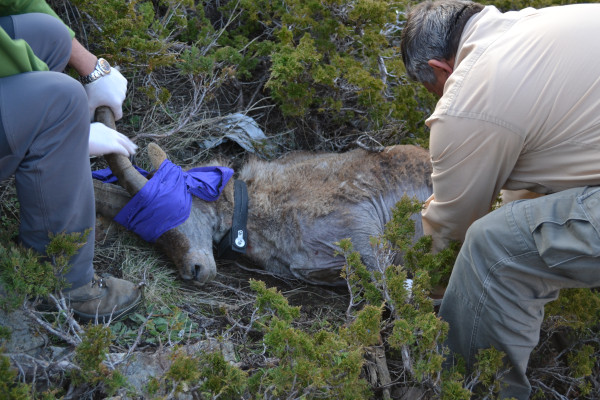
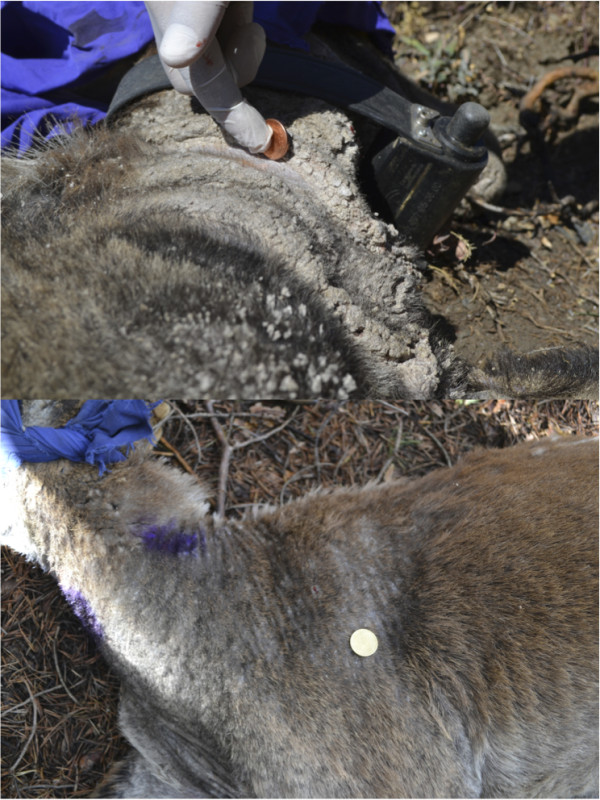
Methods: In the present study we report, for the first time to our knowledge, the use of radio-collars in the monitoring of Iberian ibex affected by Sarcoptes scabiei in Sierra Nevada mountain range, Spain. Twenty-five moderate or slightly mangy animals were radio-collared between 2006 and 2013.
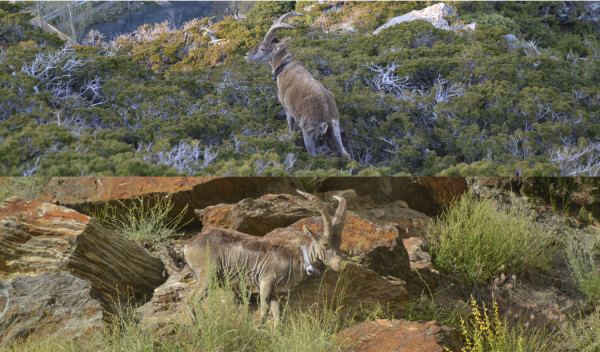
Results: The radio-collars allowed us to confirm the presence of resistance to S. scabiei within Iberian ibex population. Twenty (80%) of the collared animals recovered totally from mange, while the disease progressed in the other five Iberian ibex (20% of the collared animals) and the animals died. The average estimated recovery time of the resistant animals was 245 ± 277 days, and the estimated average survival time of the non-resistant Iberian ibex was 121 ± 71 days. Non-resistant animals survived at least 100 days, while all of them died with less than 200 days. Sixty per cent of the resistant animals were recovered with less than 200 days.
Conclusions: We report, for the first time, the successful use of radio collars for wildlife diseases monitoring using Iberian ibex/S. scabiei as a model. By using radio collars we documented that most of the Sarcoptes-infected Iberian ibex are resistant to this disease, and we estimated the average time for Iberian ibex recovering from mange infection and the average survival time of the non-resistant ones. We expect wider use of radio-collars for wild animals diseases monitoring, affected/not-affected animals interaction, and treatment efficacy, among others.
Figures

References
-
- Craighead FC, Craighead JJ. Tracking grizzly bears. BioScience. 1965;15:88–92. doi: 10.2307/1293343. - DOI
-
- Craighead JJ, Sumner JS, Mitchell JA. The Grizzly Bears of Yellowstone: Their Ecology in the Yellowstone Ecosystem, 1959–1992. Washington, DC: Island Press; 1995.
-
- Samuel MD, Fuller MR. In: Research and Management Techniques for Wildlife and Habitats. 5. Bookhout TA, editor. Bethesda, MD: The Wildlife Society; 1994. Wildlife radiotelemetry; pp. 370–418.
Publication types
MeSH terms
LinkOut - more resources
Full Text Sources
Other Literature Sources
Medical
Miscellaneous
