


First report of anthelmintic resistance in Haemonchus contortus in alpacas in Australia
- PMID: 23965333
- PMCID: PMC3765834
- DOI: 10.1186/1756-3305-6-243
First report of anthelmintic resistance in Haemonchus contortus in alpacas in Australia
Abstract
Background: Parasitic nematodes can cause substantial clinical and subclinical problems in alpacas and anthelmintics are regularly used to control parasitic nematodes in alpacas. Although anthelmintic resistance has been reported in ruminants worldwide, very little is known about anthelmintic resistance in alpacas. The present study was carried out to confirm a suspected case of anthelmintic resistance in Haemonchus contortus in alpacas in Australia.
Methods: Post mortem examination of an alpaca was conducted to determine the cause of its death. To confirm a suspected case of macrocyclic lactone (ML) resistance in H. contortus in alpacas, a faecal egg count reduction test (FECRT) was performed using closantel (7.5 mg/kg) and ivermectin (0.2 mg/kg). Nematode species were identified by morphological and molecular methods.
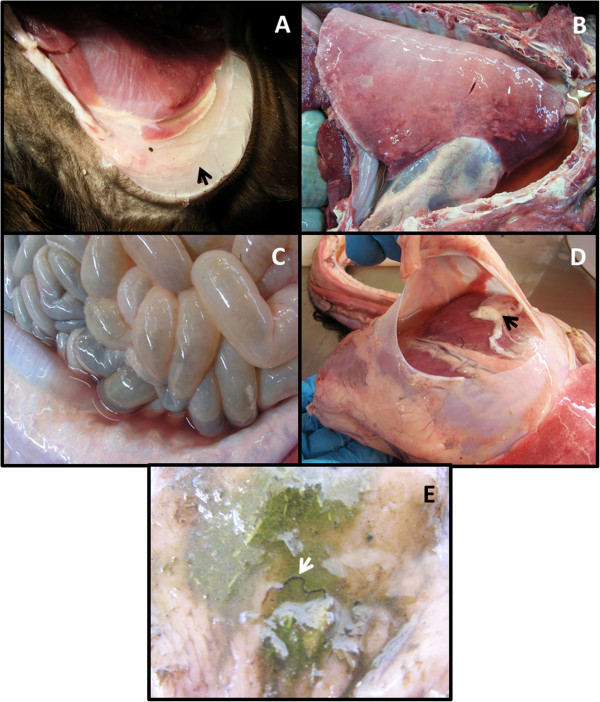
Results: Post mortem examination of a 1-year-old female alpaca that had died following a brief period of lethargy, anorexia and recumbency revealed severe anaemia, hypoproteinaemia and gastric parasitism by adult Haemonchus contortus, despite recent abamectin (0.2 mg/kg) treatment. Based on these findings and the exclusive use of MLs in the herd over the preceding six years, ML resistance in parasitic nematodes of alpacas on this farm was suspected. FECRT revealed that the efficacy of closantel was 99% (95% CI 93-100), whereas that of ivermectin was 35% (95% CI 0-78), indicating that the treatment failure was likely due to the presence of ML-resistant nematodes. Larval culture of faecal samples collected following ivermectin treatment consisted of 99% H. contortus and 1% Cooperia oncophora, a result confirmed using a PCR assay.
Conclusions: This study provides the first evidence of ML resistance in H. contortus in alpacas in Australia. Based on the extent of anthelmintic resistance in sheep gastrointestinal nematodes in Australia, veterinarians and alpaca owners should be encouraged to implement integrated parasite management strategies to improve nematode control in alpacas.
Figures
References
-
- Gerken M, Renieri C. South American camelids research. Göttingen, Germany, Proc. 4th European Symp Volume 1 . 2004. pp. 7–9. (South American Camelids and DECAMA European Seminar). p. 7-8.
-
- Foster M. Emerging Animal and Plant Industries-Their Value to Australia. 2. Canberra, Australia: Rural Industries Research and Development Corporation, Union Offset Printing; 2009. pp. 5–7.
-
- Leguia G. The epidemiology and economic impact of llama parasites. Parasitol Today. 1991;7:54–56. - PubMed
-
- Windsor RS, Windsor RHS, Teran M. Economic benefits of controlling internal and external parasites in South American camelids. Ann N Y Acad Sci. 1992;16:398–405. - PubMed
Publication types
MeSH terms
Substances
LinkOut - more resources
Full Text Sources
Other Literature Sources
