


Integrating acupuncture with exercise-based physical therapy for knee osteoarthritis: a randomized controlled trial
- PMID: 23965480
- PMCID: PMC3782092
- DOI: 10.1097/RHU.0b013e3182a21848
Integrating acupuncture with exercise-based physical therapy for knee osteoarthritis: a randomized controlled trial
Abstract
Background: Knee osteoarthritis is a chronic disease associated with significant morbidity and economic cost. The efficacy of acupuncture in addition to traditional physical therapy has received little study.
Objective: The objective of this study was to compare the efficacy and safety of integrating a standardized true acupuncture protocol versus nonpenetrating acupuncture into exercise-based physical therapy (EPT).
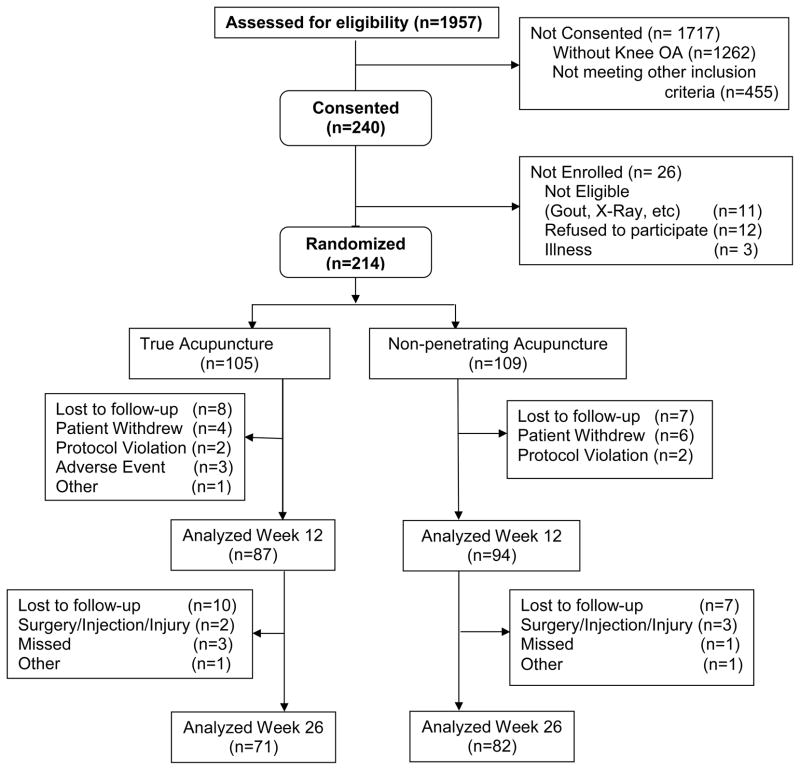
Methods: This was a randomized, double-blind, controlled trial at 3 physical therapy centers in Philadelphia, PA. We studied 214 patients (66% African Americans) with at least 6 months of chronic knee pain and x-ray-confirmed Kellgren scores of 2 or 3. Patients received 12 sessions of acupuncture directly following EPT over 6 to 12 weeks. Acupuncture was performed at the same 9 points dictated by the traditional Chinese "Bi" syndrome approach to knee pain, using either standard needles or Streitberger non-skin-puncturing needles. The primary outcome was the proportion of patients with at least a 36% improvement in Western Ontario and McMaster Universities Osteoarthritis Index score at 12 weeks.
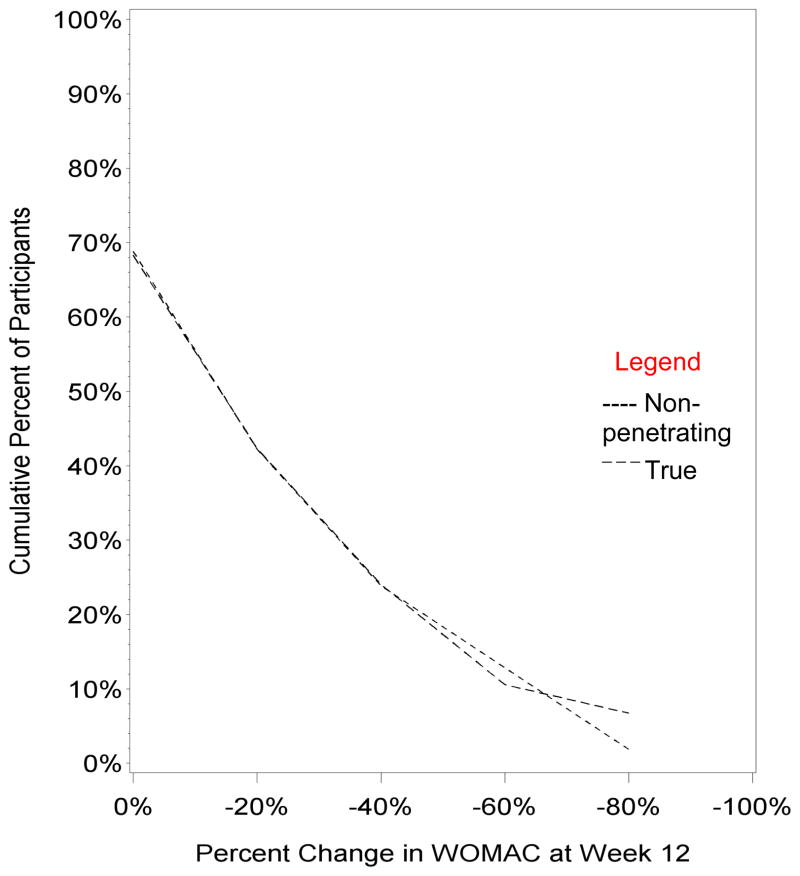
Results: Both treatment groups showed improvement from combined therapy with no difference between true (31.6%) and nonpenetrating acupuncture (30.3%) in Western Ontario and McMaster Universities Osteoarthritis Index response rate (P = 0.5) or report of minor adverse events. A multivariable logistic regression prediction model identified an association between a positive expectation of relief from acupuncture and reported improvement. No differences were noted by race, sex, or age.
Conclusions: Puncturing acupuncture needles did not perform any better than nonpuncturing needles integrated with EPT. Whether EPT, acupuncture, or other factors accounted for any improvement noted in both groups could not be determined in this study. Expectation for relief was a predictor of reported benefit.
Conflict of interest statement
Conflict of Interest: None of the authors have any employment/affiliation, grants or funding, consultancies, honoraria, stock ownership or options, expert testimony, royalties, or patents filed, received, or pending that are in conflict with this publication.
Figures
References
-
- Barnes PM, Powell-Griner E, McFann K, Nahin RL. Complementary and alternative medicine use among adults: United States, 2002. Adv Data. 2004;(343):1–19. - PubMed
-
- Barnes PM, Bloom B, Nahin RL. Complementary and alternative medicine use among adults and children: United States, 2007. Natl Health Stat Report. 2008;(12):1–23. - PubMed
-
- Okoro CA, Zhao G, Li C, Balluz LS. Use of complementary and alternative medicine among US adults with and without functional limitations. Disabil Rehabil. 2012;34(2):128–35. - PubMed
-
- Manheimer E, Linde K, Lao L, Bouter LM, Berman BM. Meta-analysis: acupuncture for osteoarthritis of the knee. Ann Intern Med. 2007;146(12):868–77. - PubMed
-
- White A, Foster NE, Cummings M, Barlas P. Acupuncture treatment for chronic knee pain: a systematic review. Rheumatology (Oxford) 2007;46(3):384–90. - PubMed
Publication types
MeSH terms
Grants and funding
LinkOut - more resources
Full Text Sources
Other Literature Sources
Medical
