Comparative Study
. 2014;29(2):112-9.
doi: 10.2133/dmpk.dmpk-13-rg-012. Epub 2013 Aug 20.

Differences in the glucuronidation of resveratrol and pterostilbene: altered enzyme specificity and potential gender differences

Affiliations
Comparative Study

Differences in the glucuronidation of resveratrol and pterostilbene: altered enzyme specificity and potential gender differences

Ryan W Dellinger et al. Drug Metab Pharmacokinet. 2014.

Abstract

Resveratrol, a natural polyphenol found in grapes, berries and other plants, has been proposed as an ideal chemopreventative agent due to its plethora of health promoting activities. However, despite its lofty promise as a cancer prevention agent its success in human clinical trials has been limited due to its poor bioavailability. Thus, interest in other natural polyphenols is intensifying including the naturally occurring dimethylated analog of resveratrol, pterostilbene. The UDP-glucuronosyltransferase (UGT) family of enzymes plays a vital role in the metabolism of both resveratrol and pterostilbene. The current study sought to elucidate the UGT family members responsible for the metabolism of pterostilbene and to examine gender differences in the glucuronidation of resveratrol and pterostilbene. We demonstrate that UGT1A1 and UGT1A3 are mainly responsible for pterostilbene glucuronidation although UGT1A8, UGT1A9 and UGT1A10 also had detectable activity. Intriguingly, UGT1A1 exhibits the highest activity against both resveratrol and pterostilbene despite altered hydroxyl group specificity. Using pooled human liver microsomes, enzyme kinetics were determined for pterostilbene and resveratrol glucuronides. In all cases females were more efficient than males, indicating potential gender differences in stilbene metabolism. Importantly, the glucuronidation of pterostilbene is much less efficient than that of resveratrol, indicating that pterostilbene will have dramatically decreased metabolism in humans.


Figures
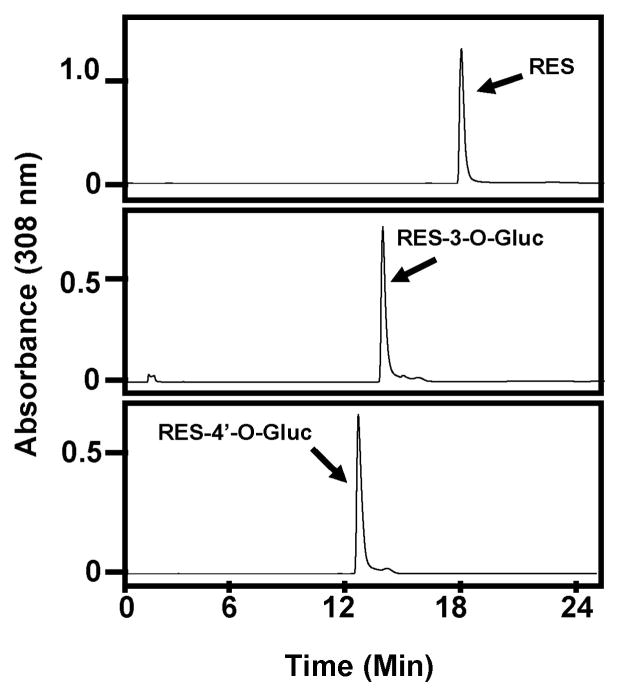
Fig. 1
Fig. 1. Characterization of resveratrol and resveratrol-glucuronide standards by HPLC
Representative HPLC chromatograms for: 1) resveratrol alone (top panel), 2) RES-3-O-Gluc standard (middle panel), 3) RES-4′-O-Gluc standard (bottom panel).
Fig. 2
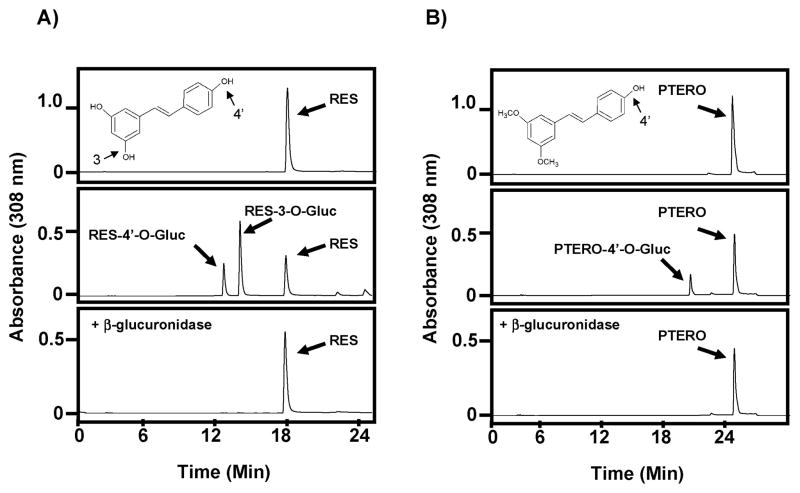
Fig. 2. Characterization of resveratrol and pterostilbene glucuronides
(A) Representative HPLC chromatograms for: 1) resveratrol alone (top panel), 2) glucuronidation assay using female HLMs and resveratrol for 60 min (middle panel), and 3) β-glucuronidase assay of one-half of the reaction from middle panel (bottom panel). (B) Representative HPLC chromatograms for: 1) pterostilbene alone (top panel), 2) glucuronidation assay using female HLMs and pterostilbene for 60 min (middle panel), and 3) β-glucuronidase assay of one-half of the reaction from middle panel (bottom panel). All peaks are labeled and the chemical structures of resveratrol (A) and pterostilbene (B) are inset in their respective top panels with reactive hydroxyl groups indicated. RES, resveratrol; PTERO, pterostilbene.
Fig. 3
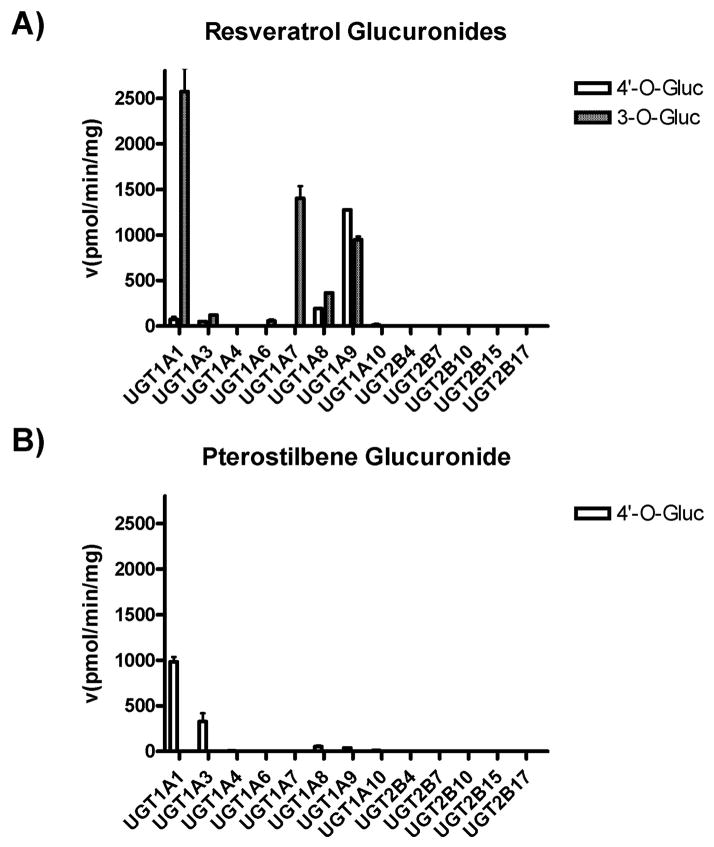
Fig. 3. Screen for human UGTs active against pterostilbene
Supersomes over-expressing individual, recombinant, human UGTs were used to screen for glucuronidation activity against resveratrol (A) and pterostilbene (B). 4′-O-Glucuronides are shown in open boxes and 3-O-glucuronides are shown in shaded boxes. All reactions were performed for 2 h using 25 μg of the indicated UGT with 500 μM of substrate. All data shown are the composite of at least three independent experiments with standard error.
Fig. 4
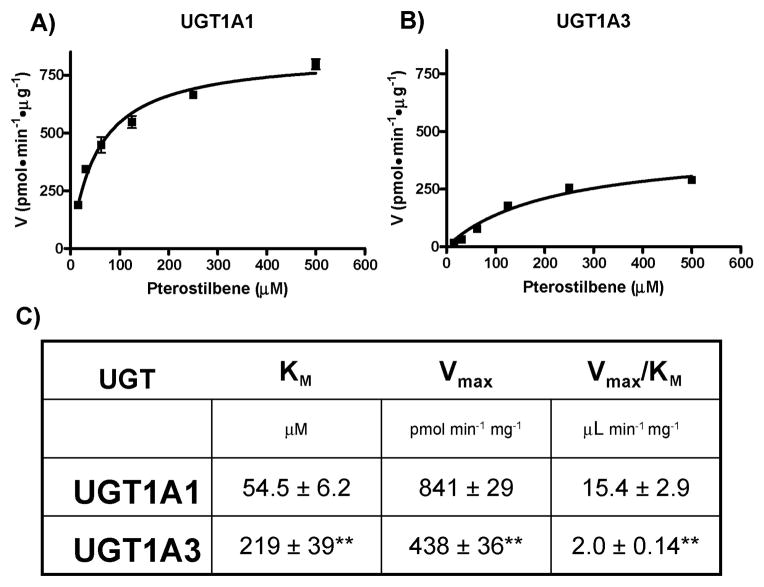
Fig. 4. Kinetic analysis of pterostilbene-glucuronide formation by UGT1A1 and UGT1A3
Kinetic curves of the rate of pterostilbene-glucuronide formation by UGT1A1 (A) and UGT1A3 (B). Plots were generated by GraphPad Prism 5 software and calculated kinetic values are shown in (C). ** indicates significance of p < 0.01 as compared to the same kinetic parameter above.
Fig. 5
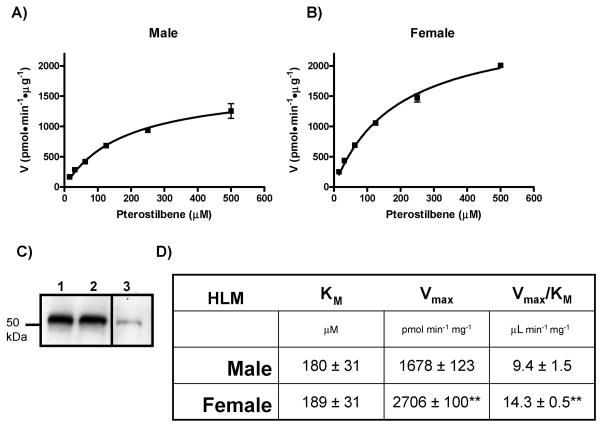
Fig. 5. Gender differences in the glucuronidation of pterostilbene
Kinetic curves of the rate of pterostilbene-glucuronide formation by Male (A) and Female (B) HLMs. (C) Western blot showing relative UGT1A protein levels in male (lane 1) and female (lane 2) HLMs. UGT1A positive control that came with antibody is shown in lane 3. Kinetic plots were generated by GraphPad Prism 5 software and calculated kinetic values are shown in (D). ** indicates significance of p < 0.01 as compared to the same kinetic parameter above.
Fig. 6
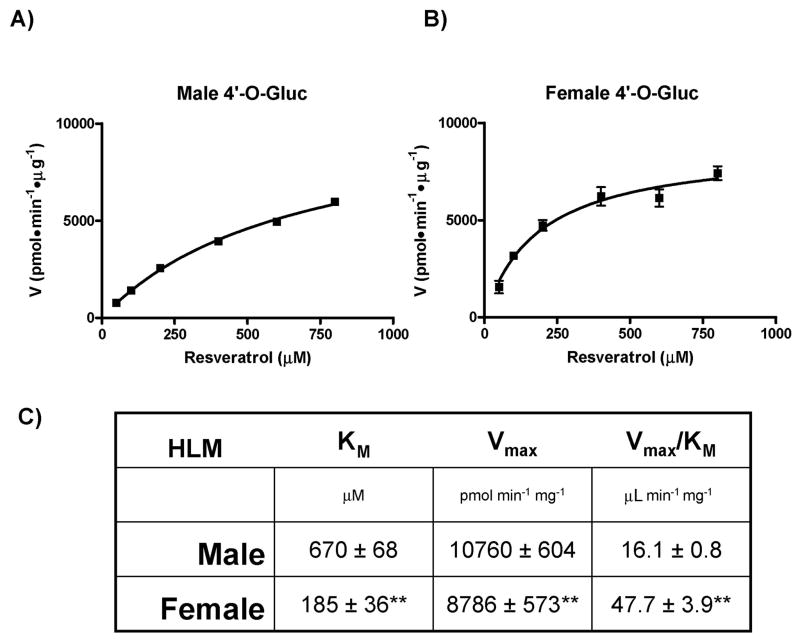
Fig. 6. Gender differences in the glucuronidation of resveratrol at the 4′-hydroxyl position
Kinetic curves depicting the rate of resveratrol-4′-O-glucuronide formation by Male (A) and Female (B) HLMs. Plots were generated by GraphPad Prism 5 software and calculated kinetic values are shown in (C). ** indicates significance of p < 0.01 as compared to the same kinetic parameter above.
Fig. 7
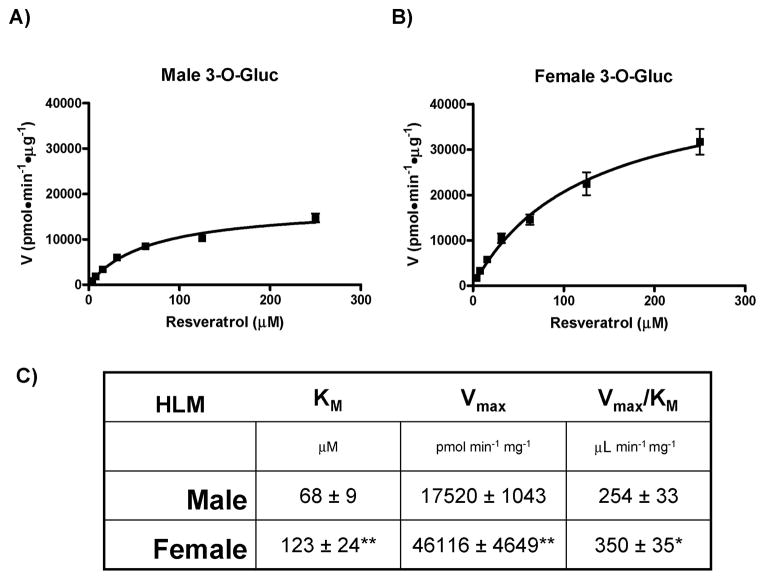
Fig. 7. Gender differences in the glucuronidation of resveratrol at the 3-hydroxyl position
Kinetic curves of the rate of resveratrol-3-O-glucuronide formation by Male (A) and Female (B) HLMs. Plots were generated by GraphPad Prism 5 software and calculated kinetic values are shown in (C). Significance value of p < 0.01 (**) or p < 0.05 (*) is shown compared to the same kinetic parameter above.

References

    1. Park K, Lee JH. Protective effects of resveratrol on UVB-irradiated HaCaT cells through attenuation of the caspase pathway. Oncol Rep. 2008;19:413–417. - PubMed
    1. Yu W, Fu YC, Wang W. Cellular and molecular effects of resveratrol in health and disease. J Cell Biochem. 2012;113:752–759. - PubMed
    1. Jang M, Cai L, Udeani GO, Slowing KV, Thomas CF, Beecher CW, Fong HH, Farnsworth NR, Kinghorn AD, et al. Cancer chemopreventive activity of resveratrol, a natural product derived from grapes. Science. 1997;275:218–220. - PubMed
    1. Ndiaye M, Philippe C, Mukhtar H, Ahmad N. The grape antioxidant resveratrol for skin disorders: Promise, prospects, and challenges. Arch Biochem Biophys. 2011;508:164–170. - PMC - PubMed
    1. Roupe KA, Remsberg CM, Yanez JA, Davies NM. Pharmacometrics of stilbenes: seguing towards the clinic. Curr Clin Pharmacol. 2006;1:81–101. - PubMed

Publication types