


New strategies in neuroblastoma: Therapeutic targeting of MYCN and ALK
- PMID: 23965898
- PMCID: PMC3818140
- DOI: 10.1158/1078-0432.CCR-13-0680
New strategies in neuroblastoma: Therapeutic targeting of MYCN and ALK
Abstract
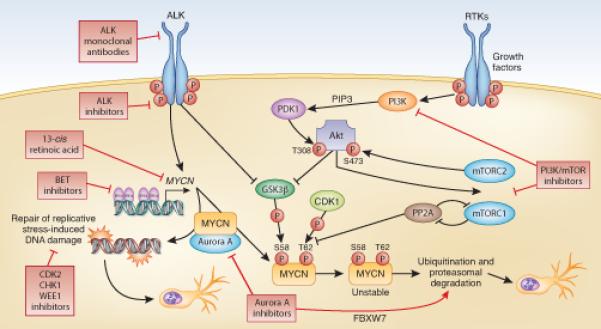
Clinical outcome remains poor in patients with high-risk neuroblastoma, in which chemoresistant relapse is common following high-intensity conventional multimodal therapy. Novel treatment approaches are required. Although recent genomic profiling initiatives have not revealed a high frequency of mutations in any significant number of therapeutically targeted genes, two exceptions, amplification of the MYCN oncogene and somatically acquired tyrosine kinase domain point mutations in anaplastic lymphoma kinase (ALK), present exciting possibilities for targeted therapy. In contrast with the situation with ALK, in which a robust pipeline of pharmacologic agents is available from early clinical use in adult malignancy, therapeutic targeting of MYCN (and MYC oncoproteins in general) represents a significant medicinal chemistry challenge that has remained unsolved for two decades. We review the latest approaches envisioned for blockade of ALK activity in neuroblastoma, present a classification of potential approaches for therapeutic targeting of MYCN, and discuss how recent developments in targeting of MYC proteins seem to make therapeutic inhibition of MYCN a reality in the clinic.
Figures
References
-
- Park JR, Eggert A, Caron H. Neuroblastoma: biology, prognosis, and treatment. Pediatr Clin North Am. 2008;55:97–120. - PubMed
Publication types
MeSH terms
Substances
Grants and funding
LinkOut - more resources
Full Text Sources
Other Literature Sources
Medical
