


How active are our children? Findings from the Millennium Cohort Study
- PMID: 23965931
- PMCID: PMC3752053
- DOI: 10.1136/bmjopen-2013-002893
How active are our children? Findings from the Millennium Cohort Study
Abstract
Objective: To describe levels of physical activity, sedentary time and adherence to Chief Medical Officers (CMO) physical activity guidelines among primary school-aged children across the UK using objective accelerometer-based measurements.
Design: Nationally representative prospective cohort study.
Setting: Children born across the UK, between 2000 and 2002.
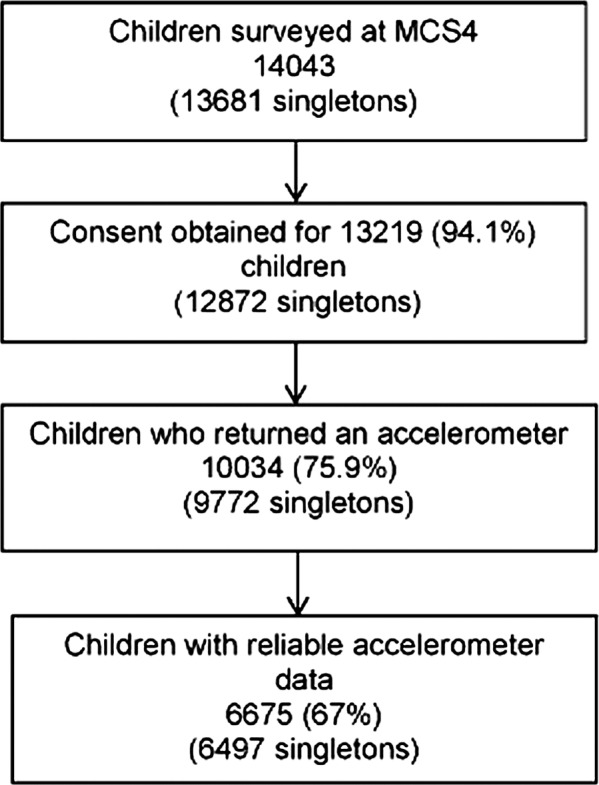
Participants: 6497 7-year-old to 8-year-old singleton children for whom reliable accelerometer data were available for at least 10 h a day for at least 2 days.
Main outcome measures: Physical activity in counts per minute (cpm); time spent in sedentary and moderate-to-vigorous intensity physical activity (MVPA); proportion of children meeting CMO guidelines (≥60 min/day MVPA); average daily steps.
Explanatory measures: Gender, ethnicity, maternal current/most recent occupation, lone parenthood status, number of children in the household and country/region of residence.
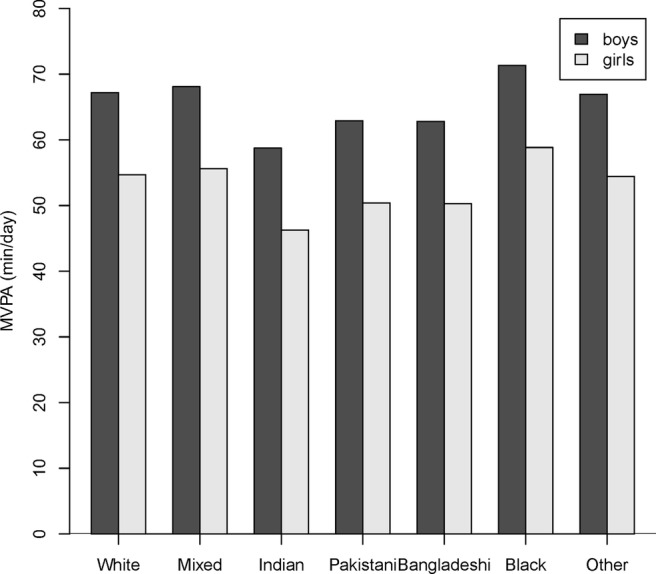
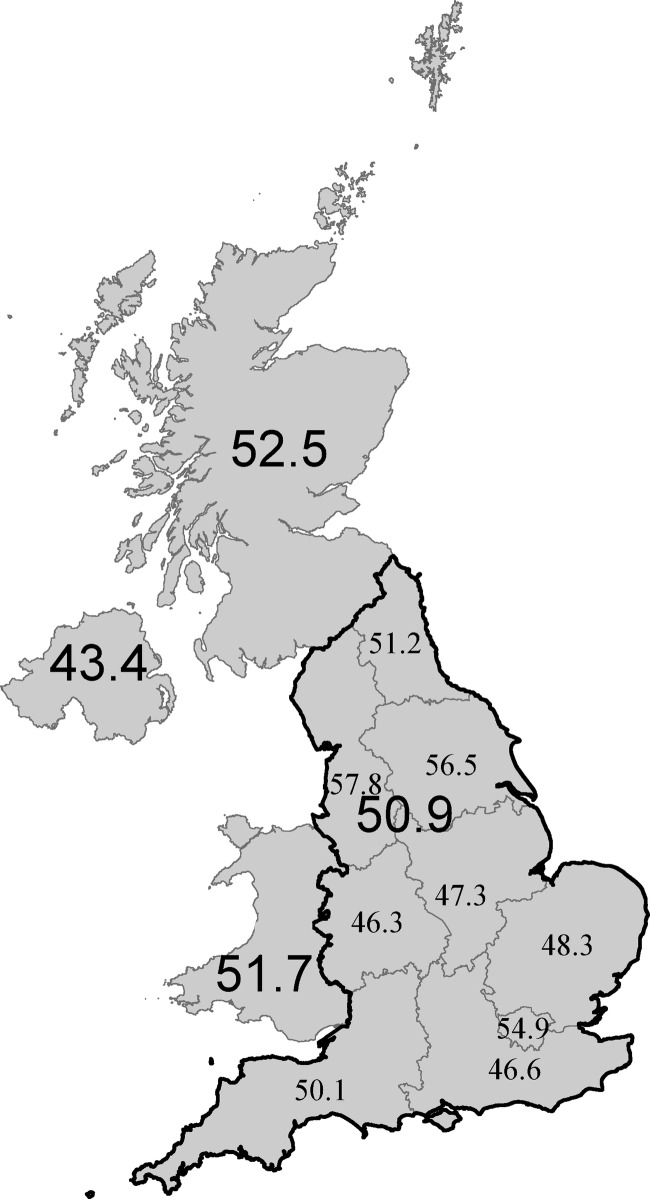
Results: The median daily physical activity level was 595 cpm (IQR 507, 697). Children spent a median of 60 min (IQR 47-76) in MVPA/day and were sedentary for a median of 6.4 h/day (IQR 6-7). Only 51% met CMO guidelines, with girls (38%) less active than boys (63%). Children took an average of 10 229 (95% CI (8777 to 11 775)) steps each day. Children of Indian ethnicity were significantly less active overall than all other ethnic groups. Children of Bangladeshi origin and those living in Northern Ireland were least likely to meet CMO guidelines.
Conclusions: Only half of 7-year-old children in the UK achieve recommended levels of physical activity, with significant gender, ethnic and geographic variations. Longitudinal studies are needed to better understand the relevance of these (in)activity patterns for long-term health and well-being. In the meantime population-wide efforts to boost physical activity among young people are needed which are likely to require a broad range of policy interventions.
Keywords: Paediatrics; Public Health; Sports Medicine.
Figures
References
-
- Hills AP, Andersen LB, Byrne NM. Physical activity and obesity in children. Br J Sports Med 2011;45:866–70 - PubMed
-
- Owen CG, Nightingale CM, Rudnicka AR, et al. Physical activity, obesity and cardiometabolic risk factors in 9- to 10-year-old UK children of white European, South Asian and black African-Caribbean origin: the Child Heart and Health Study in England (CHASE). Diabetologia 2010;53:1620–30 - PMC - PubMed
Grants and funding
LinkOut - more resources
Full Text Sources
Other Literature Sources
Miscellaneous
