


Clinical and biochemical improvements in a patient with MNGIE following enzyme replacement
- PMID: 23966250
- PMCID: PMC3795612
- DOI: 10.1212/WNL.0b013e3182a6cb4b
Clinical and biochemical improvements in a patient with MNGIE following enzyme replacement
Abstract
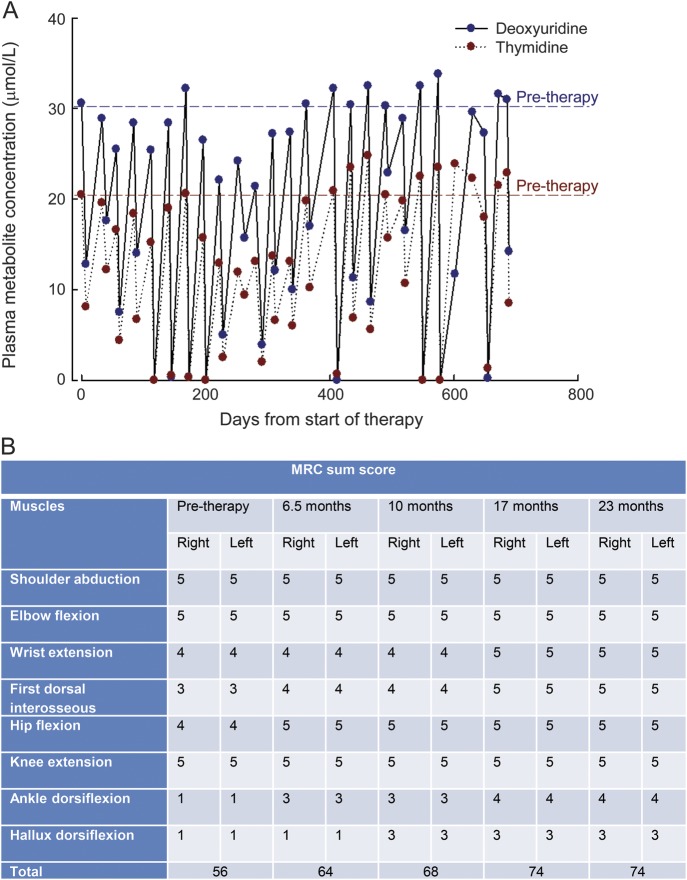
Mitochondrial neurogastrointestinal encephalomyopathy (MNGIE) is a rare autosomal recessive metabolic disorder caused by a deficiency of thymidine phosphorylase (TP, EC2.4.2.4) due to mutations in the nuclear gene TYMP. TP deficiency leads to plasma and tissue accumulations of thymidine and deoxyuridine which generate imbalances within the mitochondrial nucleotide pools, ultimately leading to mitochondrial dysfunction.1 MNGIE is characterized clinically by leukoencephalopathy, external ophthalmoplegia, peripheral polyneuropathy, cachexia, and enteric neuromyopathy manifesting as gastrointestinal dysmotility. The condition is relentlessly progressive, with patients usually dying from a combination of nutritional and neuromuscular failure at an average age of 37 years.2 Allogeneic hematopoietic stem cell transplantation (AHSCT) offers a permanent cure. Clinical and biochemical improvements following AHSCT have been reported but it carries a high mortality risk and is limited by matched donor availability.3 A consensus proposal for standardizing AHSCT recommends treatment of patients without irreversible end-stage disease and with an optimally matched donor; a majority of patients are ineligible and thus there is a critical requirement for an alternative treatment.4
Figures
References
-
- Nishino I, Spinazzola A, Papadimitriou A, et al. Mitochondrial neurogastrointestinal encephalomyopathy: an autosomal recessive disorder due to thymidine phosphorylase mutations. Ann Neurol 2000;47:792–800 - PubMed
-
- Filosto M, Scarpelli M, Tonin P, et al. Course and management of allogeneic stem cell transplantation in patients with mitochondrial neurogastrointestinal encephalomyopathy. J Neurol 2012;259:2699–2706 - PubMed
-
- Moran NF, Bain MD, Muqit M, Bax BE. Carrier erythrocyte entrapped thymidine phosphorylase therapy in MNGIE. Neurology 2008;71:686–688 - PubMed
Publication types
MeSH terms
Substances
Supplementary concepts
Grants and funding
LinkOut - more resources
Full Text Sources
Other Literature Sources
Medical
