


Enhanced diagnostic yields of bacteremia and candidemia in blood specimens by PCR-electrospray ionization mass spectrometry
- PMID: 23966503
- PMCID: PMC3889730
- DOI: 10.1128/JCM.00876-13
Enhanced diagnostic yields of bacteremia and candidemia in blood specimens by PCR-electrospray ionization mass spectrometry
Abstract
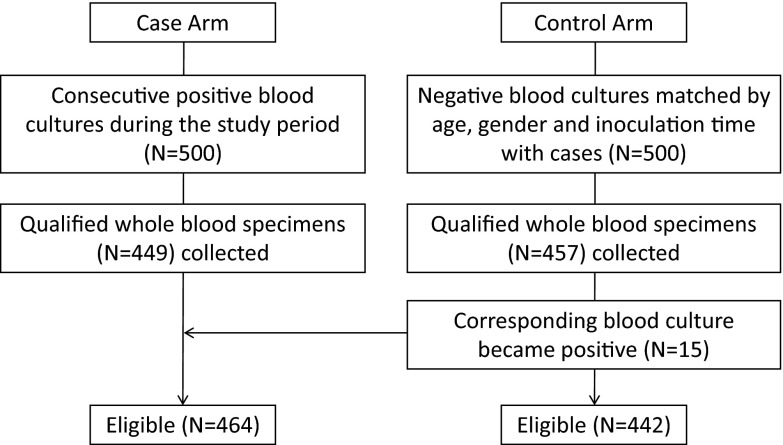
A prospective study was performed to determine the value of direct molecular testing of whole blood for detecting the presence of culturable and unculturable bacteria and yeasts in patients with suspected bloodstream infections. A total of 464 adult and pediatric patients with positive blood cultures matched with 442 patients with negative blood cultures collected during the same period were recruited during a 10-month study. PCR amplification coupled with electrospray ionization mass spectrometry (PCR-ESI-MS) plus blood culture reached an overall agreement of 78.6% in the detection and species-level identification of bacterial and candidal pathogens. Of 33 culture-negative/PCR-ESI-MS-positive specimens, 31 (93.9%) were judged to be truly bacteremic and/or candidemic based on a medical chart review and analytical metrics. Among the 15 culture-positive specimens in which PCR-ESI-MS detected additional bacterial or yeast species, 66.7% and 20.0% of the additional positive specimens by PCR-ESI-MS were judged to be truly or possibly bacteremic and/or candidemic, respectively. Direct analysis of blood samples by PCR-ESI-MS rapidly detects bacterial and yeast pathogens in patients with bloodstream infections. When used in conjunction with blood culture, PCR-ESI-MS enhances the diagnostics of septicemia by shortening test turnaround time and improving yields.
Figures
References
-
- Angus DC, Linde-Zwirble WT, Lidicker J, Clermont G, Carcillo J, Pinsky MR. 2001. Epidemiology of severe sepsis in the United States: analysis of incidence, outcome, and associated costs of care. Crit. Care Med. 29:1303–1310 - PubMed
-
- Kumar A, Roberts D, Wood KE, Light B, Parrillo JE, Sharma S, Suppes R, Feinstein D, Zanotti S, Taiberg L, Gurka D, Kumar A, Cheang M. 2006. Duration of hypotension before initiation of effective antimicrobial therapy is the critical determinant of survival in human septic shock. Crit. Care Med. 34:1589–1596 - PubMed
-
- Fraser A, Paul M, Almanasreh N, Tacconelli E, Frank U, Cauda R, Borok S, Cohen M, Andreassen S, Nielsen AD, Leibovici L, TREAT Study Group 2006. Benefit of appropriate empirical antibiotic treatment: thirty-day mortality and duration of hospital stay. Am. J. Med. 119:970–976 - PubMed
-
- Garnacho-Montero J, Garcia-Garmendia JL, Barrero-Almodovar A, Jimenez-Jimenez FJ, Perez-Paredes C, Ortiz-Leyba C. 2003. Impact of adequate empirical antibiotic therapy on the outcome of patients admitted to the intensive care unit with sepsis. Crit. Care Med. 31:2742–2751 - PubMed
-
- Kollef MH, Sherman G, Ward S, Fraser VJ. 1999. Inadequate antimicrobial treatment of infections: a risk factor for hospital mortality among critically ill patients. Chest 115:462–474 - PubMed
Publication types
MeSH terms
LinkOut - more resources
Full Text Sources
Other Literature Sources
