


Team-based learning in US colleges and schools of pharmacy
- PMID: 23966718
- PMCID: PMC3748296
- DOI: 10.5688/ajpe776115
Team-based learning in US colleges and schools of pharmacy
Abstract
Objective: To characterize the use of team-based learning (TBL) in US colleges and schools of pharmacy, including factors that may affect implementation and perceptions of faculty members regarding the impact of TBL on educational outcomes.
Methods: Respondents identified factors that inhibit or enable TBL use and its impact on student learning. Results were stratified by type of institution (public/private), class size, and TBL experience.
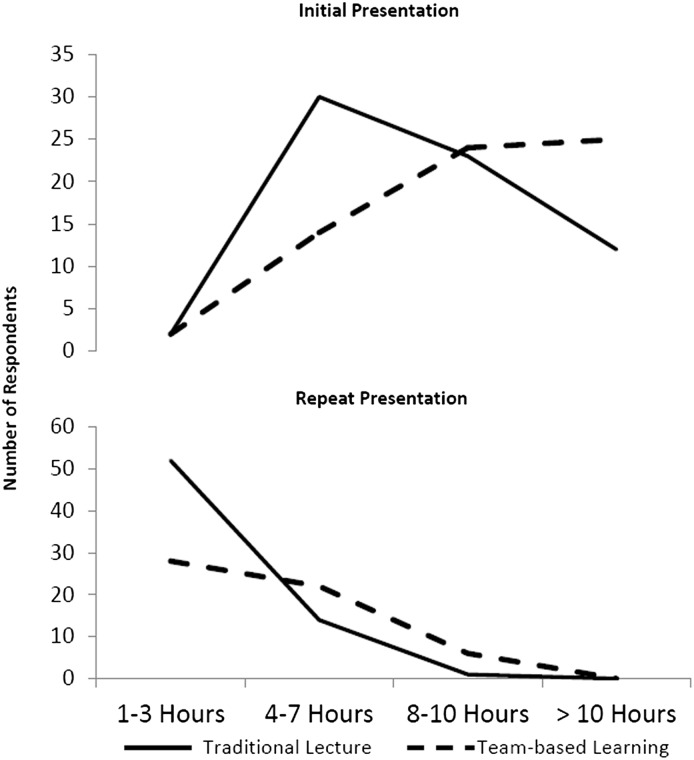
Results: Sixty-nine of 100 faculty members (69%) representing 43 (86%) institutions responded. Major factors considered to enable TBL implementation included a single campus and student and administration buy-in. Inhibiting factors included distant campuses, faculty resistance, and lack of training. Compared with traditional lectures, TBL is perceived to enhance student engagement, improve students' preparation for class, and promote achievement of course outcomes. In addition, TBL is perceived to be more effective than lectures at fostering learning in all 6 domains of Bloom's Taxonomy.
Conclusions: Despite potential implementation challenges, faculty members perceive that TBL improves student engagement and learning.
Keywords: Team-based learning; active learning; education; pharmacy.
Figures
References
-
- Michaelsen LK, Parmalee DX, McMahon LL, Levine RE, editors. Team-Based Learning for Health Professions Education: A Guide to Using Small Groups for Improving Learning. Sterling. VA: Stylus Publishing; 2008.
-
- Accreditation Council for Pharmacy Education. Accreditation standards and guidelines for the professional program in pharmacy leading to the doctor of pharmacy degree. Version 2.0. The Accreditation Council for Pharmacy Education Inc. https://www.acpe-accredit.org/pdf/FinalS2007Guidelines2.0.pdf. Accessed September 11, 2012.
-
- Searle NS, Haidet P, Kelly PA, Schneider VF, Seidel CL, Richards BF. TBL in medical education: initial experiences at ten institutions. Acad Med. 2003;78(10 suppl):S55–S58. - PubMed
-
- Koles PG, Stolfi A, Borges NJ, Nelson S, Parmelee DX. The impact of team-based learning on medical students’ academic performance. Acad Med. 2010;85(11):1739–1745. - PubMed
MeSH terms
Grants and funding
LinkOut - more resources
Full Text Sources
Other Literature Sources
