


2-methoxyestradiol induces mitotic arrest, apoptosis, and synergistic cytotoxicity with arsenic trioxide in human urothelial carcinoma cells
- PMID: 23967052
- PMCID: PMC3742604
- DOI: 10.1371/journal.pone.0068703
2-methoxyestradiol induces mitotic arrest, apoptosis, and synergistic cytotoxicity with arsenic trioxide in human urothelial carcinoma cells
Abstract
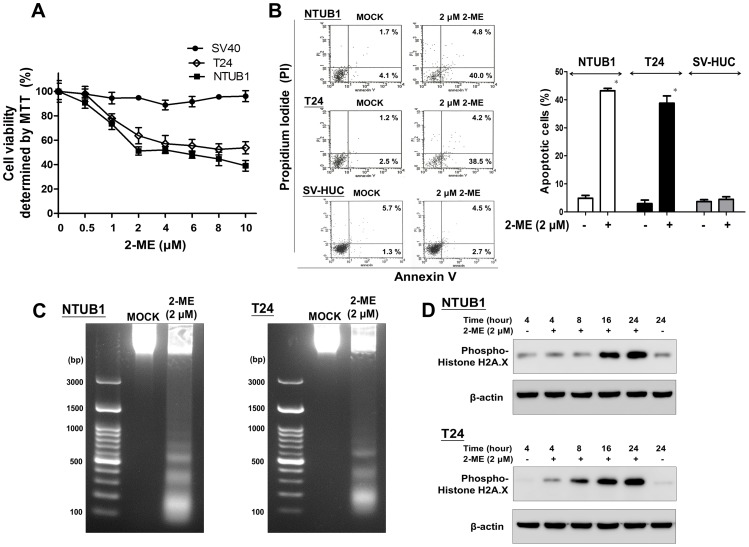
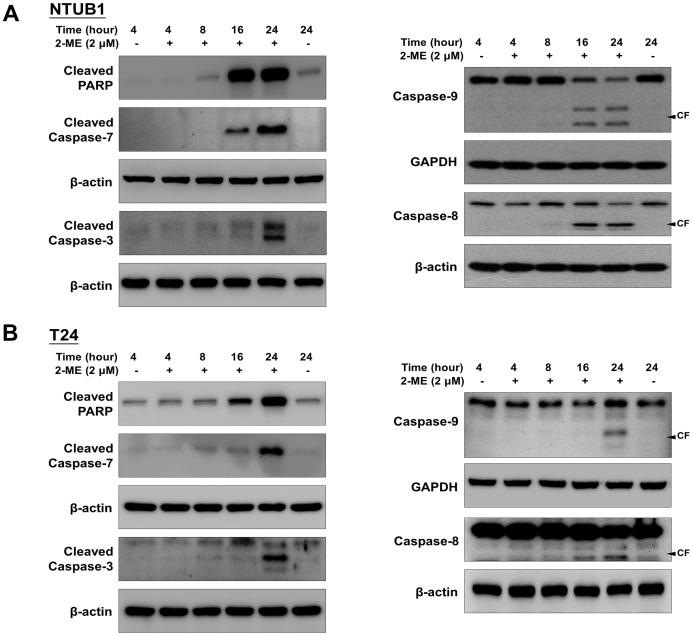
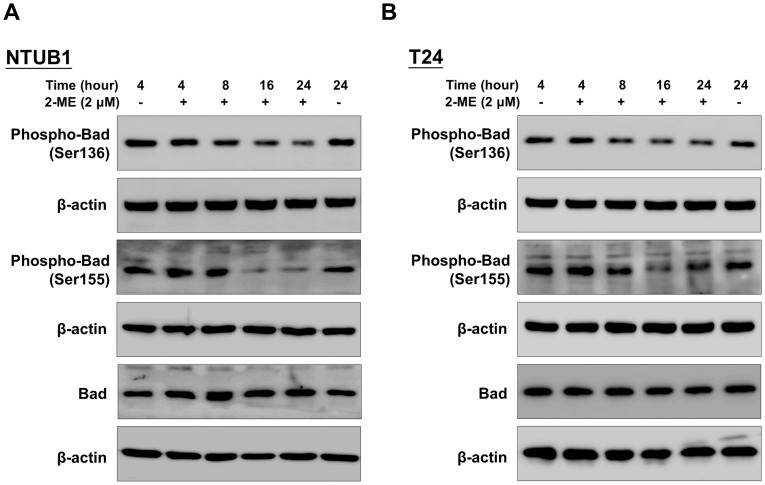
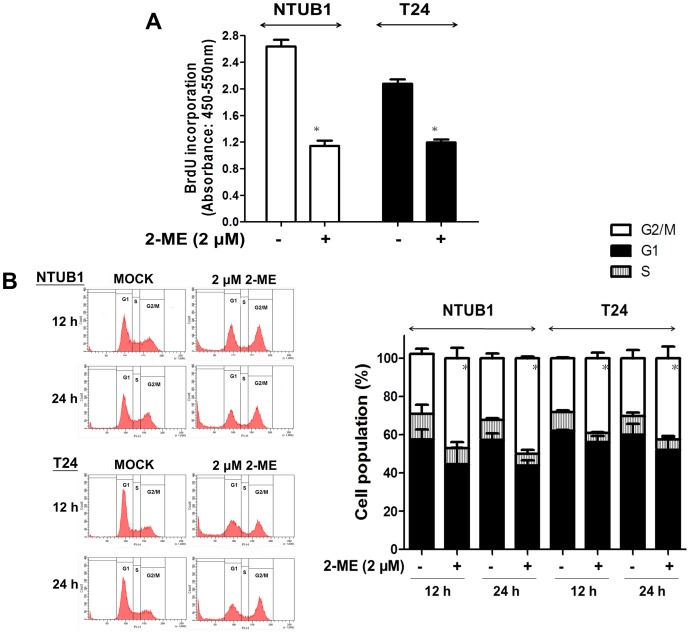
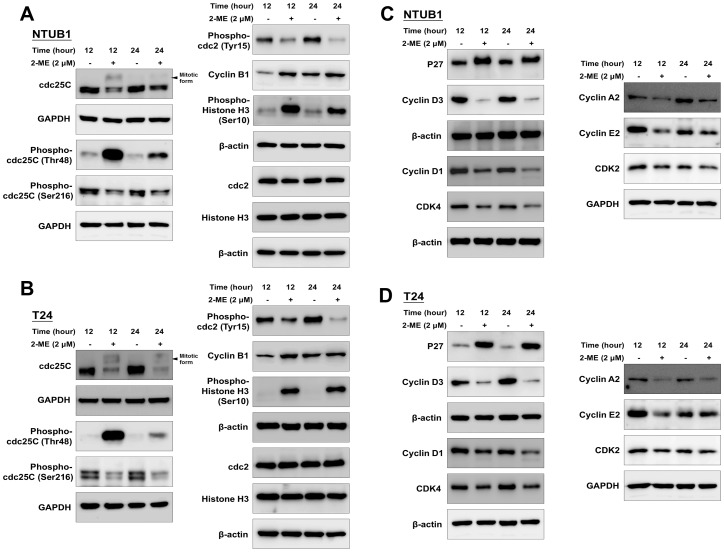
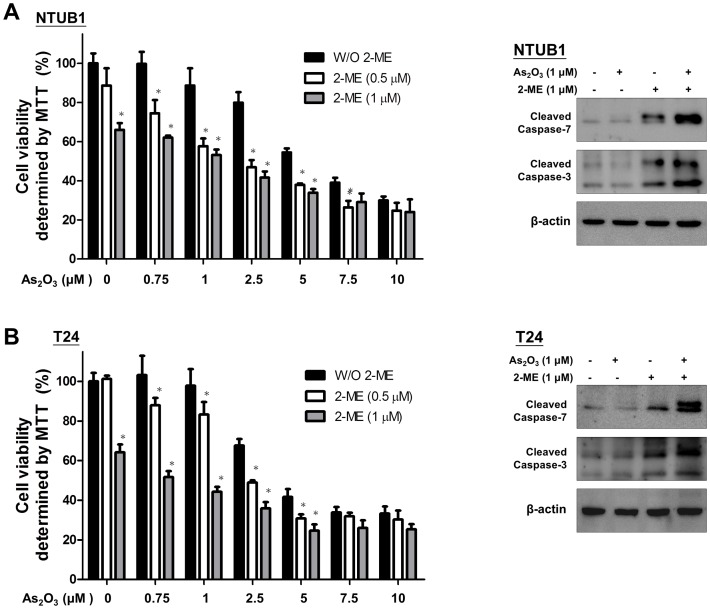
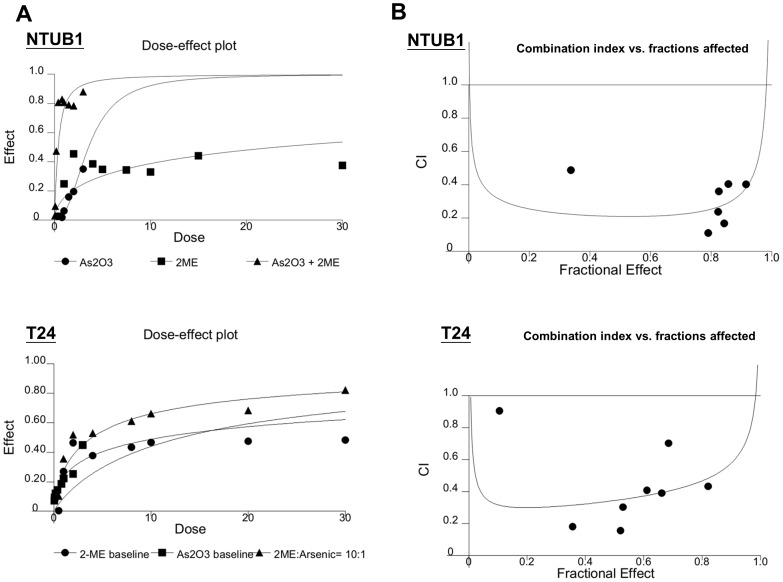
2-Methoxyestradiol (2-ME), an endogenous derivative of 17β-estradiol, has been reported to elicit antiproliferative responses in various tumors. In this study, we investigated the effects of 2-ME on cell viability, proliferation, cell cycle, and apoptosis in human urothelial carcinoma (UC) cell lines. We used two high-grade human bladder UC cell lines (NTUB1 and T24). After treatment with 2-ME, the cell viability and apoptosis were measured by MTT assay and flow cytometry (fluorescence-activated cell sorting), with annexin V-FITC staining and propidium iodide (PI) labeling. DNA fragmentation was analyzed by agarose gel electrophoresis. Flow cytometry with PI labeling was used for the cell cycle analyses. The protein levels of caspase activations, poly (ADP-ribose) polymerase (PARP) cleavage, phospho-histone H2A.X, phospho-Bad, and cell cycle regulatory molecules were measured by Western blot. The effects of the drug combinations were analyzed using the computer software, CalcuSyn. We demonstrated that 2-ME effectively induces dose-dependent cytotoxicity and apoptosis in human UC cells after 24 h exposure. DNA fragmentation, PARP cleavage, and caspase-3, 7, 8, 9 activations can be observed with 2-ME-induced apoptosis. The decreased phospho-Bad (Ser136 and Ser155) and mitotic arrest of the cell cycle in the process of apoptosis after 2-ME treatment was remarkable. In response to mitotic arrest, the mitotic forms of cdc25C, phospho-cdc2, cyclin B1, and phospho-histone H3 (Ser10) were activated. In combination with arsenic trioxide (As2O3), 2-ME elicited synergistic cytotoxicity (combination index <1) in UC cells. We concluded that 2-ME significantly induces apoptosis through decreased phospho-Bad and arrests bladder UC cells at the mitotic phase. The synergistic antitumor effect with As2O3 provides a novel implication in clinical treatment of UC.
Conflict of interest statement
Figures
References
-
- Jemal A, Siegel R, Xu J, Ward E (2010) Cancer statistics, 2010. CA Cancer JClin 60: 277–300. - PubMed
-
- Cohen MH, Rothmann M (2001) Gemcitabine and cisplatin for advanced, metastatic bladder cancer. JClinOncol 19: 1229–1231. - PubMed
-
- von der MH, Hansen SW, Roberts JT, Dogliotti L, Oliver T, et al. (2000) Gemcitabine and cisplatin versus methotrexate, vinblastine, doxorubicin, and cisplatin in advanced or metastatic bladder cancer: results of a large, randomized, multinational, multicenter, phase III study. JClinOncol 18: 3068–3077. - PubMed
-
- Latini DM, Lerner SP, Wade SW, Lee DW, Quale DZ (2010) Bladder cancer detection, treatment and outcomes: opportunities and challenges. Urology 75: 334–339. - PubMed
-
- Lakhani NJ, Sarkar MA, Venitz J, Figg WD (2003) 2-Methoxyestradiol, a promising anticancer agent. Pharmacotherapy 23: 165–172. - PubMed
Publication types
MeSH terms
Substances
LinkOut - more resources
Full Text Sources
Other Literature Sources
Molecular Biology Databases
Research Materials
Miscellaneous
