


IgA and neutralizing antibodies to influenza a virus in human milk: a randomized trial of antenatal influenza immunization
- PMID: 23967126
- PMCID: PMC3743877
- DOI: 10.1371/journal.pone.0070867
IgA and neutralizing antibodies to influenza a virus in human milk: a randomized trial of antenatal influenza immunization
Abstract
Background: Antenatal immunization of mothers with influenza vaccine increases serum antibodies and reduces the rates of influenza illness in mothers and their infants. We report the effect of antenatal immunization on the levels of specific anti-influenza IgA levels in human breast milk. (ClinicalTrials.gov identifier NCT00142389; http://clinicaltrials.gov/ct2/show/NCT00142389).
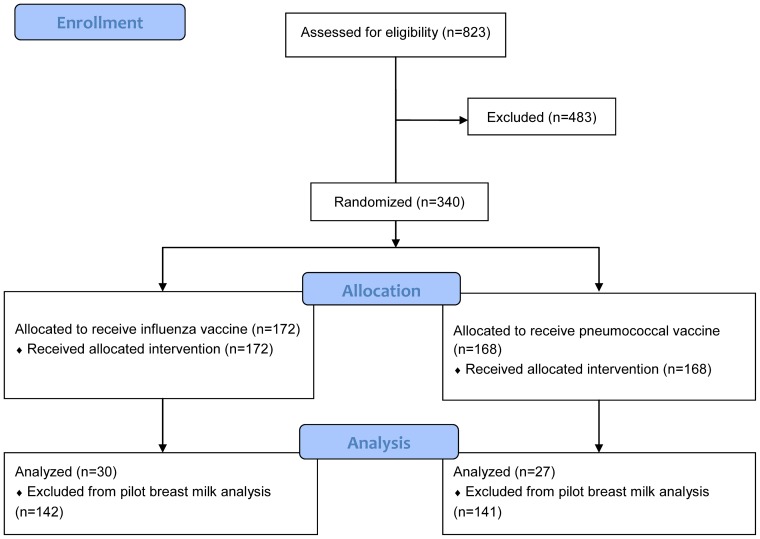
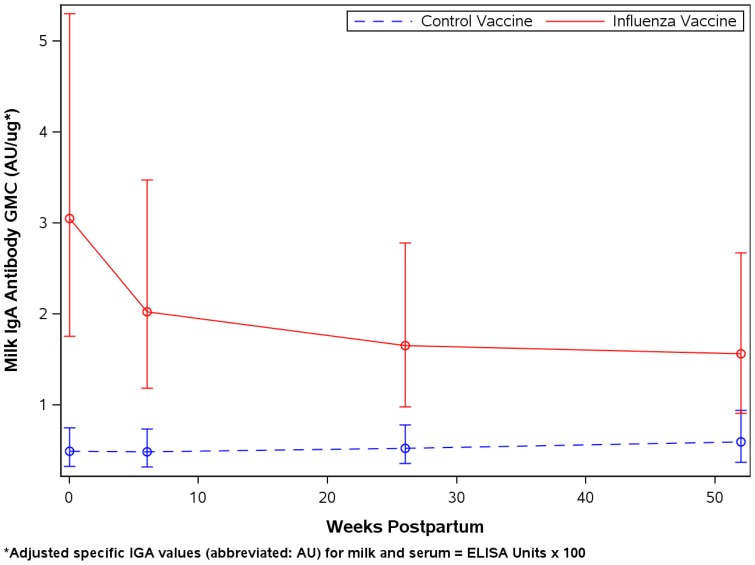
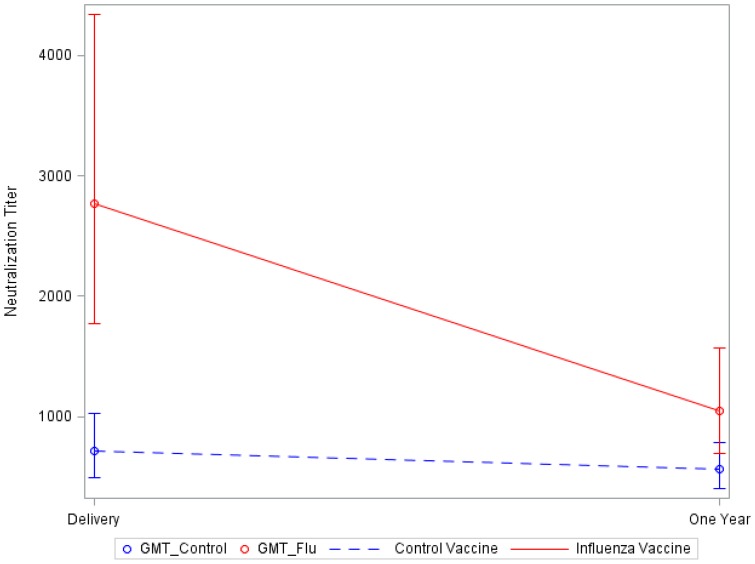
Methods and findings: The Mother's Gift study was a prospective, blinded, randomized controlled trial that assigned 340 pregnant Bangladeshi mothers to receive either trivalent inactivated influenza vaccine, or 23-valent pneumococcal polysaccharide vaccine during the third trimester. We evaluated breast milk at birth, 6 weeks, 6 months, and 12 months, and serum at 10 weeks and 12 months. Milk and serum specimens from 57 subjects were assayed for specific IgA antibody to influenza A/New Caledonia (H1N1) using an enzyme-linked immunosorbent assay (ELISA) and a virus neutralization assay, and for total IgA using ELISA. Influenza-specific IgA levels in breast milk were significantly higher in influenza vaccinees than in pneumococcal controls for at least 6 months postpartum (p = 0.04). Geometric mean concentrations ranged from 8.0 to 91.1 ELISA units/ml in vaccinees, versus 2.3 to 13.7 ELISA units/mL in controls. Virus neutralization titers in milk were 1.2 to 3 fold greater in vaccinees, and correlated with influenza-specific IgA levels (r = 0.86). Greater exclusivity of breastfeeding in the first 6 months of life significantly decreased the expected number of respiratory illness with fever episodes in infants of influenza-vaccinated mothers (p = 0.0042) but not in infants of pneumococcal-vaccinated mothers (p = 0.4154).
Conclusions: The sustained high levels of actively produced anti-influenza IgA in breast milk and the decreased infant episodes of respiratory illness with fever suggest that breastfeeding may provide local mucosal protection for the infant for at least 6 months. Studies are needed to determine the cellular and immunologic mechanisms of breast milk-mediated protection after antepartum immunization.
Trial registration: ClinicalTrials.gov NCT00142389.
Conflict of interest statement
Figures
References
-
- Glezen WP, Paredes A, Taber LH (1980) Influenza in children. Relationship to other respiratory agents. JAMA 243: 1345–1349. - PubMed
-
- Poehling KA, Edwards KM, Weinberg GA, Szilagyi P, Staat MA, et al. (2006) The underrecognized burden of influenza in young children. N Engl J Med 355: 31–40. - PubMed
-
- Henkle E, Steinhoff MC, Omer SB, Roy E, Arifeen SE, et al. (2010) Incidence of Influenza Virus Infection in Early Infancy: a Prospective Study in South Asia. Pediatr Infect Dis J 30: 170–3. - PubMed
-
- Brooks WA, Goswami D, Rahman M, Nahar K, Fry AM, et al. (2010) Influenza is a major contributor to childhood pneumonia in a tropical developing country. Pediatr Infect Dis J 29: 216–221. - PubMed
Publication types
MeSH terms
Substances
Associated data
Grants and funding
LinkOut - more resources
Full Text Sources
Other Literature Sources
Medical
Miscellaneous
