


Treatment of early caries lesions using biomimetic self-assembling peptides--a clinical safety trial
- PMID: 23969679
- PMCID: PMC3813405
- DOI: 10.1038/sj.bdj.2013.741
Treatment of early caries lesions using biomimetic self-assembling peptides--a clinical safety trial
Abstract
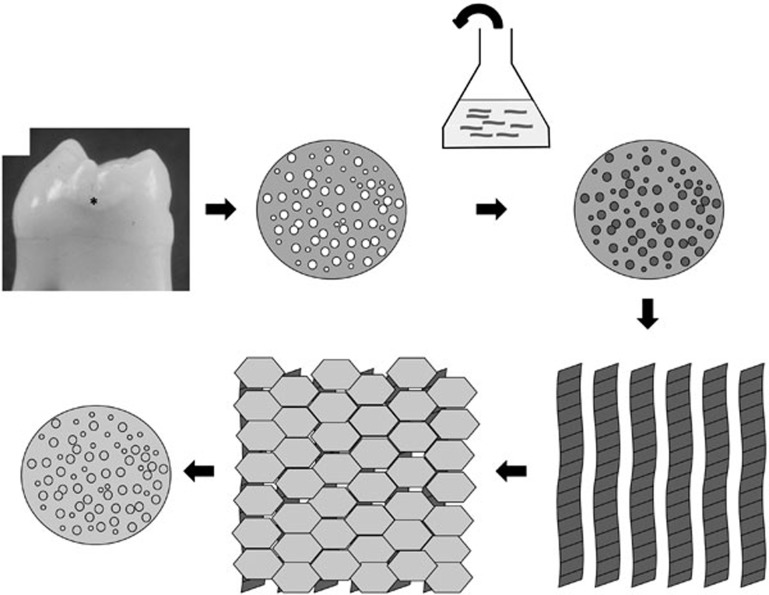
Objective: We previously reported that a rationally designed biomimetic self-assembling peptide, P₁₁-4, nucleated hydroxyapatite de novo and was apparently capable of in situ enamel regeneration following infiltration into caries-like lesions. Our present aim was to determine the safety and potential clinical efficacy of a single application of P₁₁-4 on early enamel lesions.
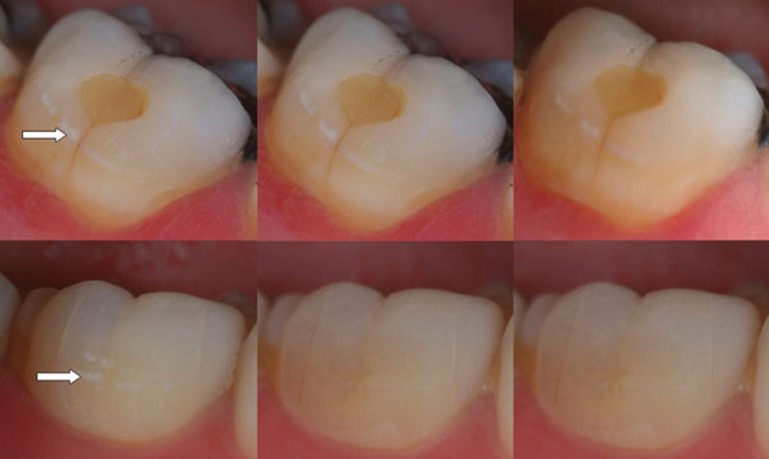
Materials and methods: Fifteen healthy adults with Class V 'white spot' lesions received a single application of P₁₁-4. Adverse events and lesion appearances were recorded over 180 days.
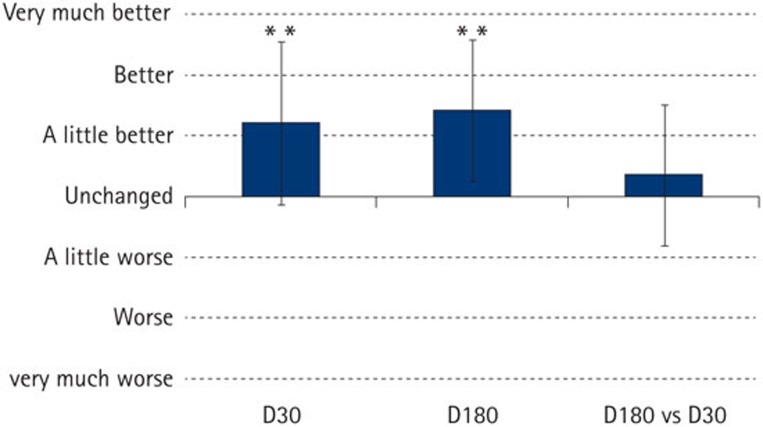
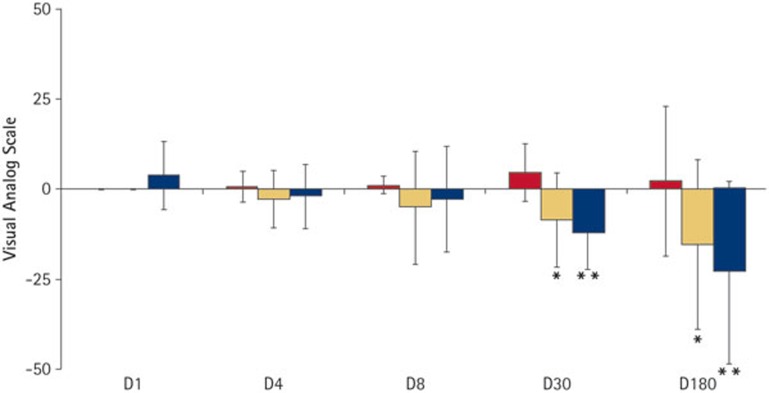
Results: Patients treated with P₁₁-4 experienced a total of 11 adverse events during the study, of which two were possibly related to the protocol. Efficacy evaluation suggested that treatment with P₁₁-4 significantly decreased lesion size (p = 0.02) after 30 days and shifted the apparent progression of the lesions from 'arrested/progressing' to 'remineralising' (p <0.001). A highly significant improvement in the global impression of change was recorded at day 30 compared with baseline (p <0.001).
Conclusions: The results suggest that treatment of early caries lesions with P₁₁-4 is safe, and that a single application is associated with significant enamel regeneration, presumably by promoting mineral deposition within the subsurface tissue.
Conflict of interest statement
Conflict of interest declaration: J. Kirkham and A. Aggeli are named inventors on the underlying patent on self-assembling peptides. The University of Leeds holds an equity stake in credentis.
Figures
Comment in
-
Summary of: Treatment of early caries lesions using biomimetic self-assembling peptides--a clinical safety trial.Br Dent J. 2013 Aug;215(4):174-5. doi: 10.1038/sj.bdj.2013.811. Br Dent J. 2013. PMID: 23969659 No abstract available.
References
-
- Kirkham J, Firth A, Vernals D et al.. Self-assembling peptide scaffolds promote enamel remineralization. J Dent Res 2007; 86: 426–430. - PubMed
-
- Aggeli A, Bell M, Boden N et al.. Responsive gels formed by the spontaneous self-assembly of peptides into polymeric beta-sheet tapes. Nature 1997; 386: 259–262. - PubMed
-
- Aggeli A, Bell M, Boden N et al.. Engineering of peptide beta-sheet nanotapes. J Mater Chem 1997; 7: 1135–1145.
-
- Aggeli A, Bell M, Carrick L M et al.. pH as a trigger of peptide beta-sheet self-assembly and reversible switching between nematic and isotropic phases. J Am Chem Soc 2003; 125: 9619–9628. - PubMed
-
- Aggeli A, Fytas G, Vlassopoulos D et al.. Structure and dynamics of self-assembling beta-sheet peptide tapes by dynamic light scattering. Biomacromolecules 2001; 2: 378–388. - PubMed
Publication types
MeSH terms
Substances
Grants and funding
LinkOut - more resources
Full Text Sources
Other Literature Sources
Medical
