


Repeated use of immersive virtual reality therapy to control pain during wound dressing changes in pediatric and adult burn patients
- PMID: 23970314
- PMCID: PMC3770783
- DOI: 10.1097/BCR.0b013e3182777904
Repeated use of immersive virtual reality therapy to control pain during wound dressing changes in pediatric and adult burn patients
Abstract
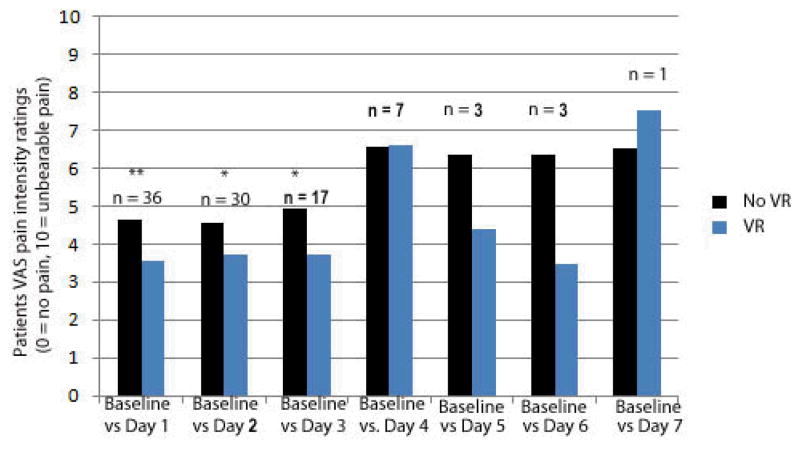
The current study explored whether immersive virtual reality (VR) continues to reduce pain (via distraction) during more than one wound care session per patient. Thirty-six patients aged 8 to 57 years (mean age, 27.7 years), with an average of 8.4% TBSA burned (range, 0.25-25.5 TBSA) received bandage changes, and wound cleaning. Each patient received one baseline wound cleaning/debridement session with no-VR (control condition) followed by one or more (up to seven) subsequent wound care sessions during VR. After each wound care session (one session per day), worst pain intensity was measured using a visual analog thermometer, the dependent variable. Using a within-subjects design, worst pain intensity during wound care with no-VR (baseline, day 0) was compared with pain during wound care while using immersive VR (up to 7 days of wound care during VR). Compared with pain during no-VR baseline (day 0), pain ratings during wound debridement were statistically lower when patients were in VR on days 1, 2, and 3, and although not significant beyond day 3, the pattern of results from days 4, 5, and 6 are consistent with the notion that VR continues to reduce pain when used repeatedly. Results from the present study suggest that VR continues to be effective when used for three (or possibly more) treatments during severe burn wound debridement.
Figures
References
-
- Wiechman Askay S, Patterson DR, Sharar SR, et al. Pain management in patients with burn injuries. International Review of Psychiatry. 2009 Dec;21(6):522–530. - PubMed
-
- Summer GJ, Puntillo KA, Miaskowski C, et al. Burn injury pain: the continuing challenge. Journal of Pain. 2007 Jul;8(7):533–548. - PubMed
-
- Choiniere M, Melzack R, Rondeau J, et al. The pain of burns: Characteristics and correlates. Journal of Trauma. 1989 Nov;29(11):1531–1539. - PubMed
-
- Byers JF, Bridges S, Kijek J, LaBorde P. Burn patients’ pain and anxiety experiences. Journal of Burn Care and Rehabilitation. 2001 Mar-Apr;22(2):144–149. - PubMed
-
- Patterson DR, Tininenko JR, Ptacek JT. Pain during burn hospitalization predicts long-term outcome. Journal of Burn Care and Research. 2006 Sep-Oct;27(5):719–726. - PubMed
Publication types
MeSH terms
Substances
Grants and funding
LinkOut - more resources
Full Text Sources
Other Literature Sources
Medical
