


The growth factor progranulin attenuates neuronal injury induced by cerebral ischemia-reperfusion through the suppression of neutrophil recruitment
- PMID: 23972823
- PMCID: PMC3765381
- DOI: 10.1186/1742-2094-10-105
The growth factor progranulin attenuates neuronal injury induced by cerebral ischemia-reperfusion through the suppression of neutrophil recruitment
Abstract
Background: To improve the clinical outcome of patients who suffered ischemic stroke, cerebral ischemia-reperfusion (I/R) injury is one of the major concerns that should be conquered. Inflammatory reactions are considered a major contributor to brain injury following cerebral ischemia, and I/R exacerbates these reactions. The aim of this study was to investigate the possible ameliorative effects of progranulin (PGRN) against I/R injury in mice.
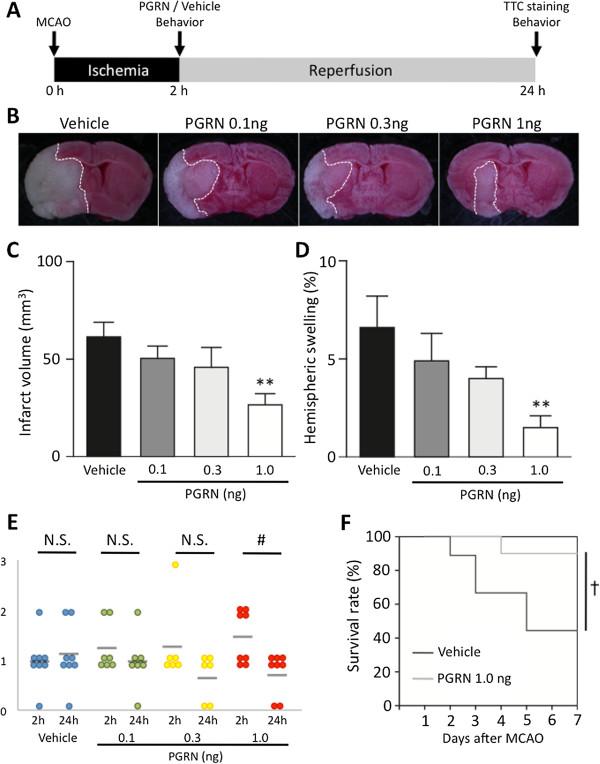
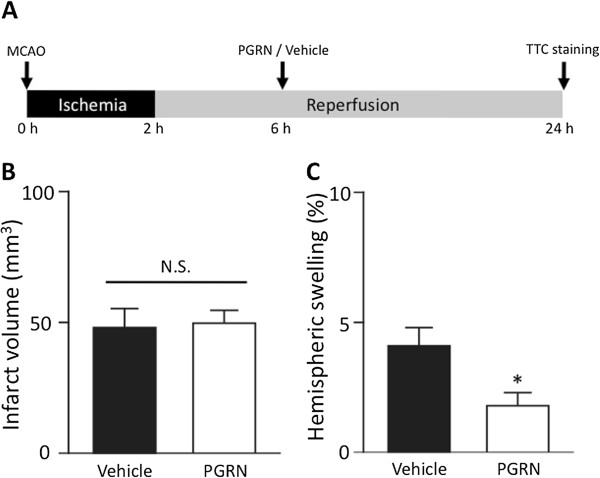
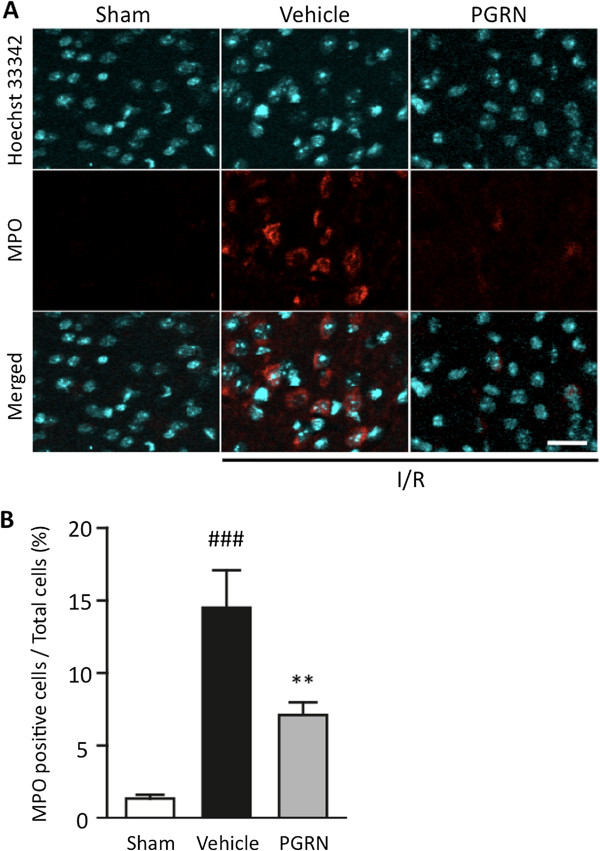
Methods: In vivo I/R was induced in four-week-old male ddY mice by 2 h of MCAO (middle cerebral artery occlusion) followed by 22 h of reperfusion. We evaluate expression of PGRN in I/R brain, efficacy of recombinant-PGRN (r-PGRN) treatment and its therapeutic time-window on I/R injury. Two hours after MCAO, 1.0 ng of r-PRGN or PBS was administered via intracerebroventricular. We assess neutrophil infiltration, expression of tumor necrosis factor (TNF)-α, matrix metalloproteinase-9 (MMP-9) and phosphorylation of nuclear factor-κB (NF-κB) by immunofluorescense staining and Western blotting. We also investigate neutrophil chemotaxis and intercellular adhesion molecule-1 (ICAM-1) expression in vitro inflammation models using isolated neutrophils and endothelial cells.
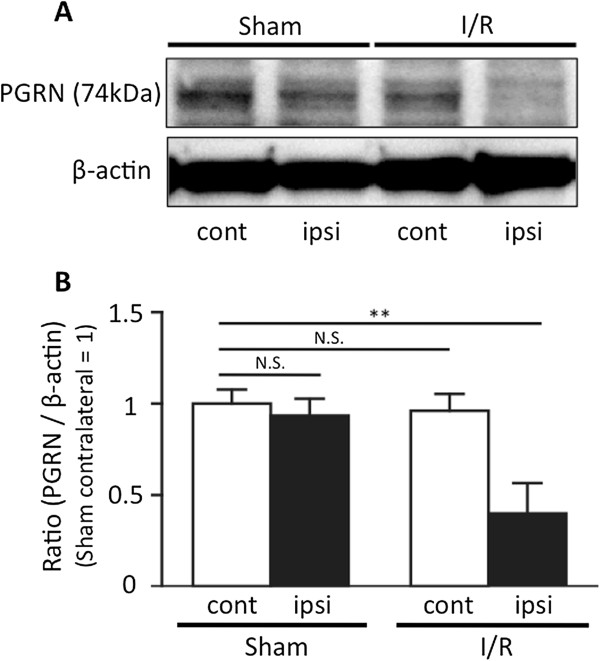
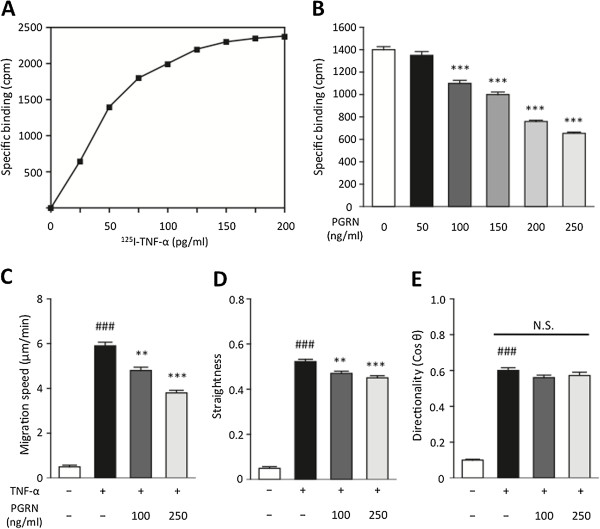
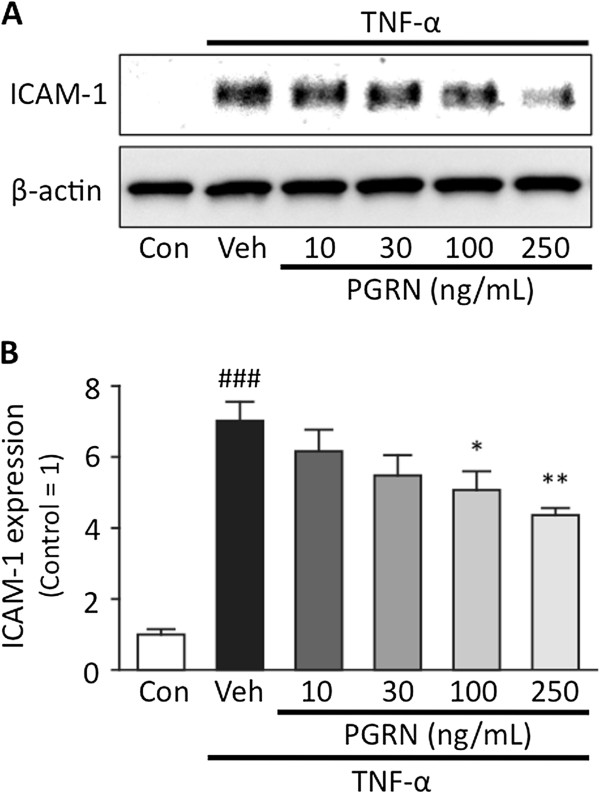
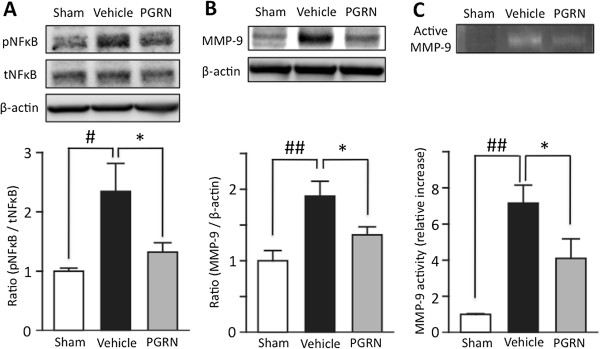
Results: We found that expression of PGRN was decreased in the I/R mouse brain. r-PGRN treatment at 2 h after MCAO resulted in a reduction in the infarct volume and decreased brain swelling; this led to an improvement in neurological scores and to a reduction of mortality rate at 24 h and 7 d after MCAO, respectively. Immunohistochemistry, Western blotting, and gelatin zymography also confirmed that r-PGRN treatment suppressed neutrophil recruitment into the I/R brain, and this led to a reduction of NF-κB and MMP-9 activation. In the in vitro inflammation models, PGRN suppressed both the neutrophil chemotaxis and ICAM-1 expression caused by TNF-α in endothelial cells.
Conclusions: PGRN exerted ameliorative effects against I/R-induced inflammation, and these effects may be due to the inhibition of neutrophil recruitment into the I/R brain.
Figures
References
-
- Roger VL, Go AS, Lloyd-Jones DM, Benjamin EJ, Berry JD, Borden WB, Bravata DM, Dai S, Ford ES, Fox CS, Fullerton HJ, Gillespie C, Hailpern SM, Heit JA, Howard VJ, Kissela BM, Kittner SJ, Lackland DT, Lichtman JH, Lisabeth LD, Makuc DM, Marcus GM, Marelli A, Matchar DB, Moy CS, Mozaffarian D, Mussolino ME, Nichol G, Paynter NP, Soliman EZ. et al. Heart disease and stroke statistics–2012 update: a report from the American heart association. Circulation. 2012;125:e2–e220. - PMC - PubMed
-
- Jean WC, Spellman SR, Nussbaum ES, Low WC. Reperfusion injury after focal cerebral ischemia: the role of inflammation and the therapeutic horizon. Neurosurgery. 1998;43:1382–1396. discussion 1396–1387. - PubMed
Publication types
MeSH terms
Substances
LinkOut - more resources
Full Text Sources
Other Literature Sources
Miscellaneous
