


The association of dysmenorrhea with noncyclic pelvic pain accounting for psychological factors
- PMID: 23973396
- PMCID: PMC4191839
- DOI: 10.1016/j.ajog.2013.08.020
The association of dysmenorrhea with noncyclic pelvic pain accounting for psychological factors
Abstract
Objective: The factors that underlie pelvic pain are poorly understood. Specifically, the relative influence of dysmenorrhea and psychological factors in the etiology of noncyclic pelvic pain conditions, such as interstitial cystitis and irritable bowel syndrome, is unknown. To further characterize pelvic pain, we compared the frequency of menstrual, somatosensory, and psychological risk factors between women with and without severe noncyclic pelvic pain symptoms.
Study design: A total of 1012 reproductive-aged women completed a 112-item questionnaire with domains including mood, fatigue, physical activity, somatic complaint, and pain. Questionnaire items included existing items for menstrual distress and newly written items derived from qualitative interviews. The relationship of dysmenorrhea and noncyclic pelvic pain complaints (dyspareunia, dyschezia, or dysuria) was modeled using quantile regression.
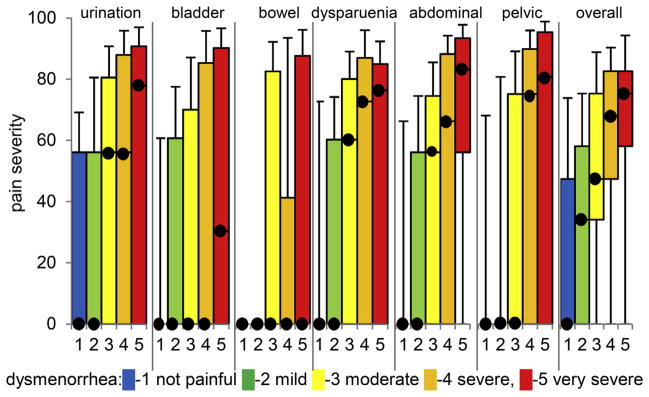
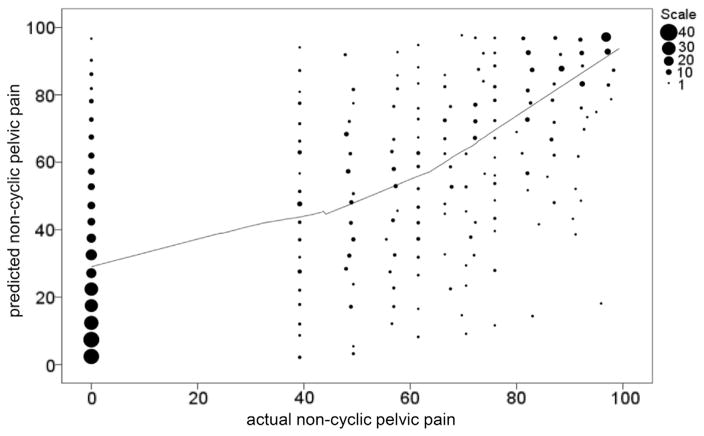
Results: Among women who menstruate regularly, those with dysmenorrhea had disproportionally more severe noncyclic pelvic pain (54/402, 13%) than women without dysmenorrhea (5/432, 1%; odds ratio, 13; 95% confidence interval, 5-33). In a multivariate-adjusted model, dysmenorrhea (β = .17), activity capability (β = .17), somatic complaint (β = .17), and bodily pain (β = .12) were the primary predictors of noncyclic pelvic pain. Depression (β = .03) and anxiety (β = .01) were not significantly predictive. The presence of dysmenorrhea, somatic complaint, and low activity capability predicted 90% of the cases of women with noncyclic pelvic pain.
Conclusion: The association between dysmenorrhea and noncyclic pelvic pain suggests that menstrual pain is an etiological factor in noncyclic pelvic pain, whereas depression and anxiety may be secondary effects. Longitudinal studies are needed to determine whether dysmenorrhea causally influences development of noncyclic pelvic pain or shares common underlying neural mechanisms.
Keywords: dysmenorrhea; interstitial cystitis; irritable bowel syndrome; pelvic pain.
Copyright © 2013 Mosby, Inc. All rights reserved.
Conflict of interest statement
The authors report no conflict of interest.
Figures
References
-
- Mathias SD, Kuppermann M, Liberman RF, Lipschutz RC, Steege JF. Chronic pelvic pain: prevalence, health-related quality of life, and economic correlates. Obstet Gynecol. 1996;87:321–7. - PubMed
-
- Mára M, Fucíková Z, Kuzel D, Dohnalová A, Haaková L, Zivný J. Laparoscopy in chronic pelvic pain–a retrospective clinical study [article in Czech] Ceska Gynekol. 2002;67:38–46. - PubMed
-
- Reiter RC, Gambone JC. Nongynecologic somatic pathology in women with chronic pelvic pain and negative laparoscopy. J Reprod Med. 1991;36:253–9. - PubMed
-
- Grace VM, Zondervan KT. Chronic pelvic pain in New Zealand: prevalence, pain severity, diagnoses and use of the health services. Aust N Z J Public Health. 2004;28:369–75. - PubMed
Publication types
MeSH terms
Grants and funding
LinkOut - more resources
Full Text Sources
Other Literature Sources
Medical
