


Mutation E169K in junctophilin-2 causes atrial fibrillation due to impaired RyR2 stabilization
- PMID: 23973696
- PMCID: PMC3830688
- DOI: 10.1016/j.jacc.2013.06.052
Mutation E169K in junctophilin-2 causes atrial fibrillation due to impaired RyR2 stabilization
Abstract
Objectives: This study sought to study the role of junctophilin-2 (JPH2) in atrial fibrillation (AF).
Background: JPH2 is believed to have an important role in sarcoplasmic reticulum (SR) Ca(2+) handling and modulation of ryanodine receptor Ca(2+) channels (RyR2). Whereas defective RyR2-mediated Ca(2+) release contributes to the pathogenesis of AF, nothing is known about the potential role of JPH2 in atrial arrhythmias.
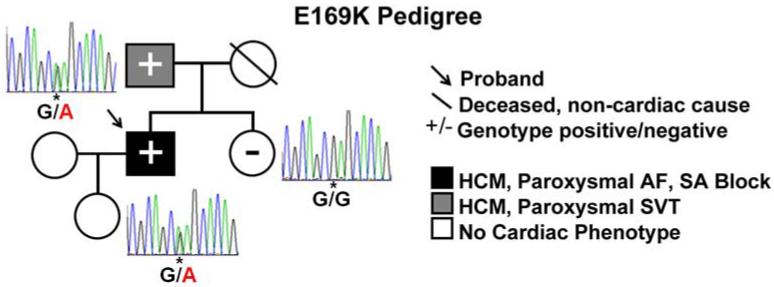
Methods: Screening 203 unrelated hypertrophic cardiomyopathy patients uncovered a novel JPH2 missense mutation (E169K) in 2 patients with juvenile-onset paroxysmal AF (pAF). Pseudoknock-in (PKI) mouse models were generated to determine the molecular defects underlying the development of AF caused by this JPH2 mutation.
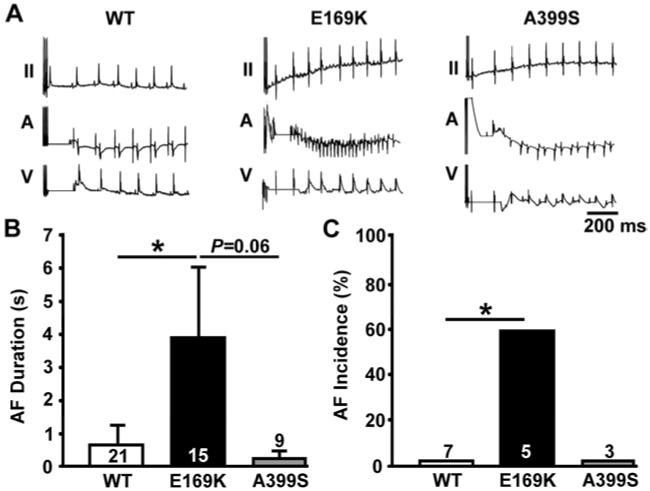
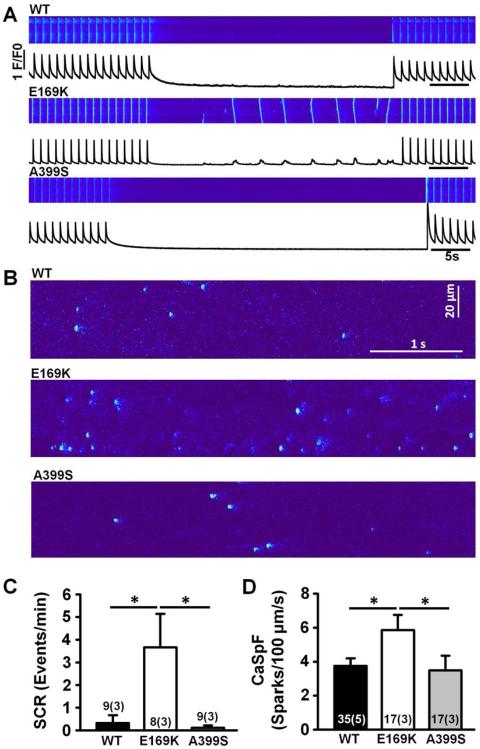
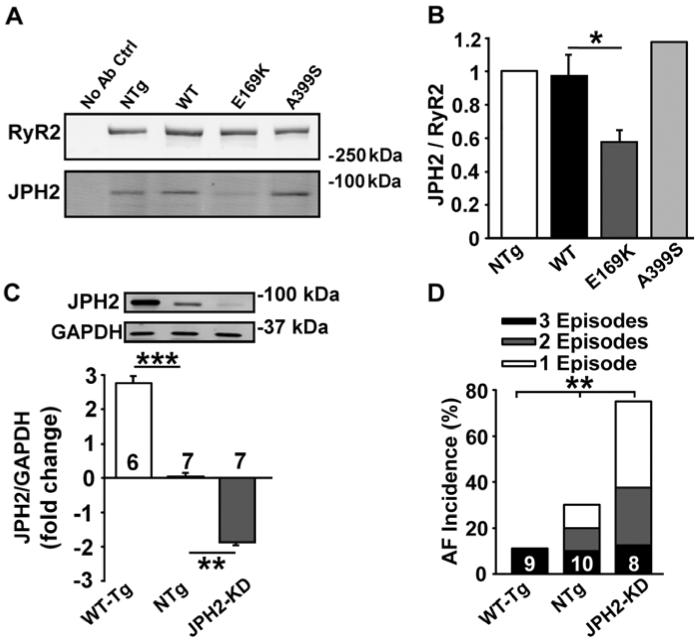
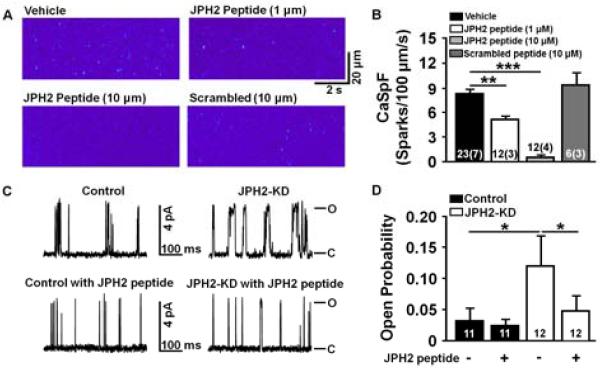
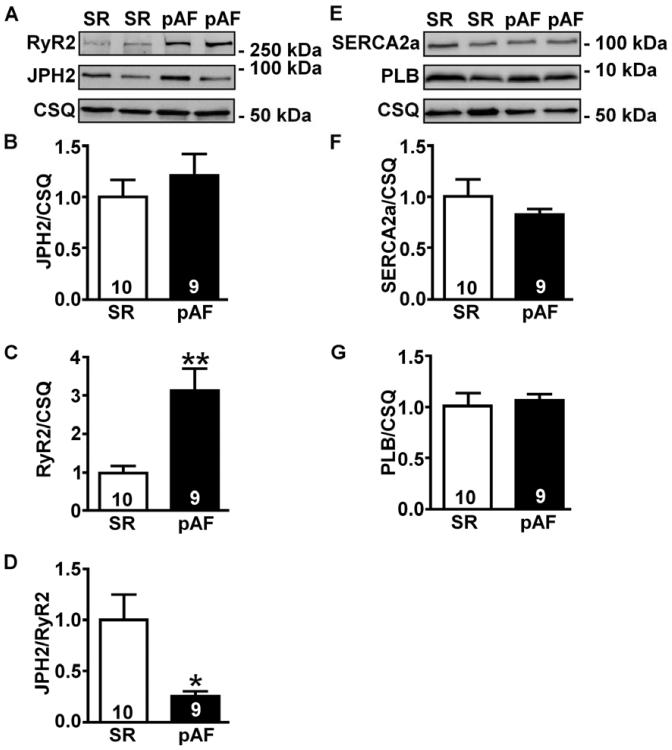
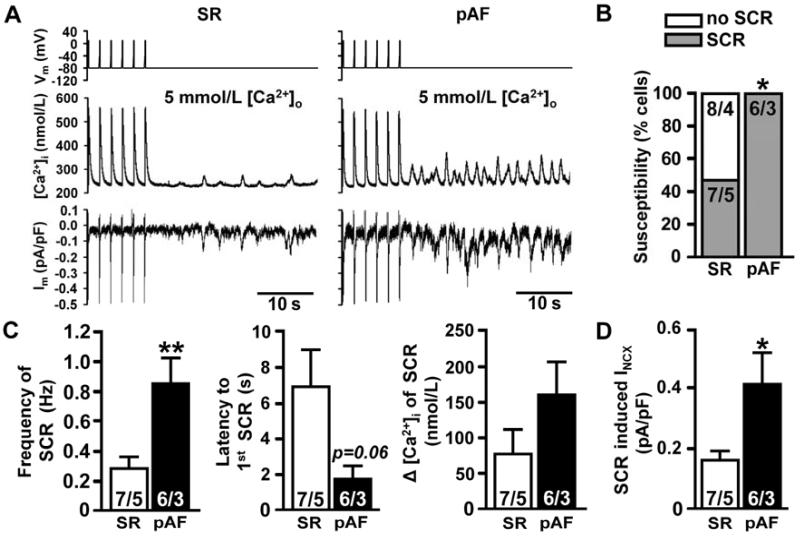
Results: PKI mice expressing E169K mutant JPH2 exhibited a higher incidence of inducible AF than wild type (WT)-PKI mice, whereas A399S-PKI mice expressing a hypertrophic cardiomyopathy-linked JPH2 mutation not associated with atrial arrhythmias were not significantly different from WT-PKI. E169K-PKI but not A399A-PKI atrial cardiomyocytes showed an increased incidence of abnormal SR Ca(2+) release events. These changes were attributed to reduced binding of E169K-JPH2 to RyR2. Atrial JPH2 levels in WT-JPH2 transgenic, nontransgenic, and JPH2 knockdown mice correlated negatively with the incidence of pacing-induced AF. Ca(2+) spark frequency in atrial myocytes and the open probability of single RyR2 channels from JPH2 knockdown mice was significantly reduced by a small JPH2-mimicking oligopeptide. Moreover, patients with pAF had reduced atrial JPH2 levels per RyR2 channel compared to sinus rhythm patients and an increased frequency of spontaneous Ca(2+) release events.
Conclusions: Our data suggest a novel mechanism by which reduced JPH2-mediated stabilization of RyR2 due to loss-of-function mutation or reduced JPH2/RyR2 ratios can promote SR Ca(2+) leak and atrial arrhythmias, representing a potential novel therapeutic target for AF.
Keywords: AF; Ca(2+); DAD; EAD; HCM; JMC; JPH2; NCX; NTg; Na(+)/Ca(2+) exchanger; PKI; RyR2; SR; Tg; WT; atrial fibrillation; calcium; delayed afterdepolarizations; early afterdepolarizations; hypertrophic cardiomyopathy; junctional membrane complex; junctophilin; junctophilin-2; nontransgenic; pseudoknock-in; ryanodine receptor type 2; ryanodine receptor; sarcoplasmic reticulum; transgenic; wild type.
Copyright © 2013. Published by Elsevier Inc.
Figures
Comment in
-
Ca(2+) leak in atrial fibrillation: junctophilin-2 stabilizes ryanodine receptor.J Am Coll Cardiol. 2013 Nov 19;62(21):2020-2022. doi: 10.1016/j.jacc.2013.07.054. Epub 2013 Aug 21. J Am Coll Cardiol. 2013. PMID: 23973695 Free PMC article. No abstract available.
References
-
- Lloyd-Jones DM, Wang TJ, Leip EP, et al. Lifetime risk for development of atrial fibrillation: the Framingham Heart Study. Circulation. 2004;110:1042–6. - PubMed
-
- Yeh YH, Wakili R, Qi XY, et al. Calcium-handling abnormalities underlying atrial arrhythmogenesis and contractile dysfunction in dogs with congestive heart failure. Circulation Arrhythmia and electrophysiology. 2008;1:93–102. - PubMed
-
- Greiser M, Neuberger HR, Harks E, et al. Distinct contractile and molecular differences between two goat models of atrial dysfunction: AV block-induced atrial dilatation and atrial fibrillation. Journal of molecular and cellular cardiology. 2009;46:385–94. - PubMed
Publication types
MeSH terms
Substances
Grants and funding
LinkOut - more resources
Full Text Sources
Other Literature Sources
Medical
Molecular Biology Databases
Research Materials
Miscellaneous