Immature MEF2C-dysregulated T-cell leukemia patients have an early T-cell precursor acute lymphoblastic leukemia gene signature and typically have non-rearranged T-cell receptors
- PMID: 23975177
- PMCID: PMC4007923
- DOI: 10.3324/haematol.2013.090233
Immature MEF2C-dysregulated T-cell leukemia patients have an early T-cell precursor acute lymphoblastic leukemia gene signature and typically have non-rearranged T-cell receptors
Abstract
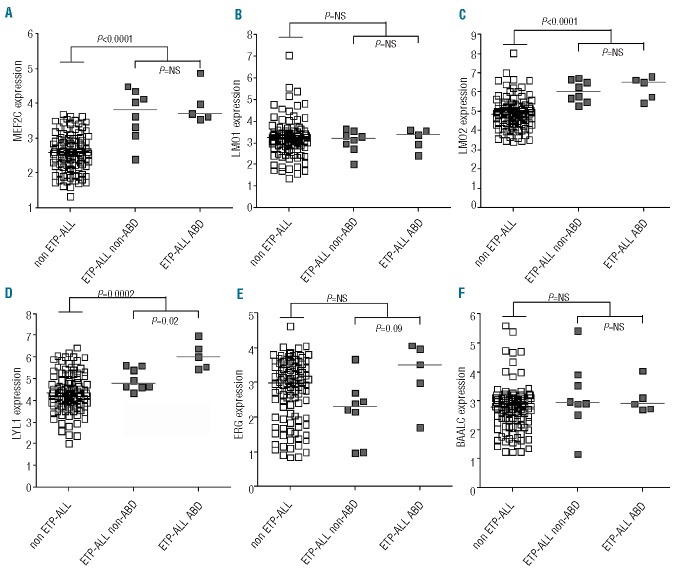
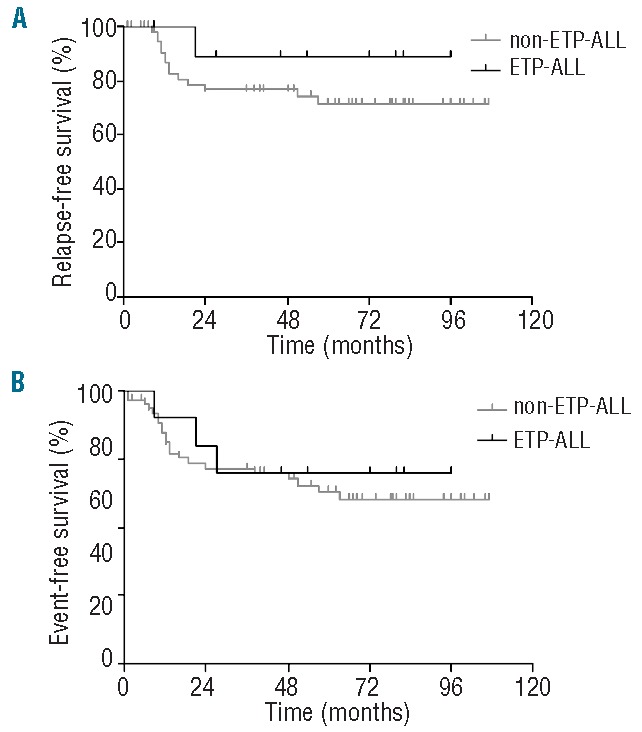
Three distinct immature T-cell acute lymphoblastic leukemia entities have been described including cases that express an early T-cell precursor immunophenotype or expression profile, immature MEF2C-dysregulated T-cell acute lymphoblastic leukemia cluster cases based on gene expression analysis (immature cluster) and cases that retain non-rearranged TRG@ loci. Early T-cell precursor acute lymphoblastic leukemia cases exclusively overlap with immature cluster samples based on the expression of early T-cell precursor acute lymphoblastic leukemia signature genes, indicating that both are featuring a single disease entity. Patients lacking TRG@ rearrangements represent only 40% of immature cluster cases, but no further evidence was found to suggest that cases with absence of bi-allelic TRG@ deletions reflect a distinct and even more immature disease entity. Immature cluster/early T-cell precursor acute lymphoblastic leukemia cases are strongly enriched for genes expressed in hematopoietic stem cells as well as genes expressed in normal early thymocyte progenitor or double negative-2A T-cell subsets. Identification of early T-cell precursor acute lymphoblastic leukemia cases solely by defined immunophenotypic criteria strongly underestimates the number of cases that have a corresponding gene signature. However, early T-cell precursor acute lymphoblastic leukemia samples correlate best with a CD1 negative, CD4 and CD8 double negative immunophenotype with expression of CD34 and/or myeloid markers CD13 or CD33. Unlike various other studies, immature cluster/early T-cell precursor acute lymphoblastic leukemia patients treated on the COALL-97 protocol did not have an overall inferior outcome, and demonstrated equal sensitivity levels to most conventional therapeutic drugs compared to other pediatric T-cell acute lymphoblastic leukemia patients.
Figures
References
-
- Thompson PK, Zuniga-Pflucker JC. On becoming a T cell, a convergence of factors kick it up a Notch along the way. Semin Immunol. 2011;23(5):350–9 - PubMed
-
- Asnafi V, Beldjord K, Boulanger E, Comba B, Le Tutour P, Estienne MH, et al. Analysis of TCR, pT alpha, and RAG-1 in T-acute lymphoblastic leukemias improves understanding of early human T-lymphoid lineage commitment. Blood. 2003;101(7):2693–703 - PubMed
-
- Meijerink JP. Genetic rearrangements in relation to immunophenotype and outcome in T-cell acute lymphoblastic leukaemia. Best Pract Res Clin Haematol. 2010;23(3):307–18 - PubMed
-
- Van Vlierberghe P, Pieters R, Beverloo HB, Meijerink JP. Molecular-genetic insights in paediatric T-cell acute lymphoblastic leukaemia. Br J Haematol. 2008;143(2):153–68 - PubMed
Publication types
MeSH terms
Substances
Grants and funding
LinkOut - more resources
Full Text Sources
Other Literature Sources
Research Materials
Miscellaneous