


Parental support during young adulthood: Why does assistance decline with age?
- PMID: 23976811
- PMCID: PMC3747833
- DOI: 10.1177/0192513X12454657
Parental support during young adulthood: Why does assistance decline with age?
Abstract
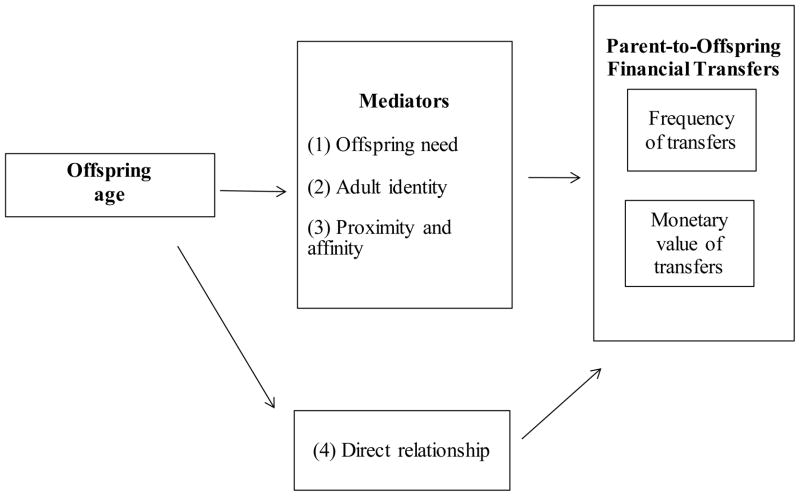
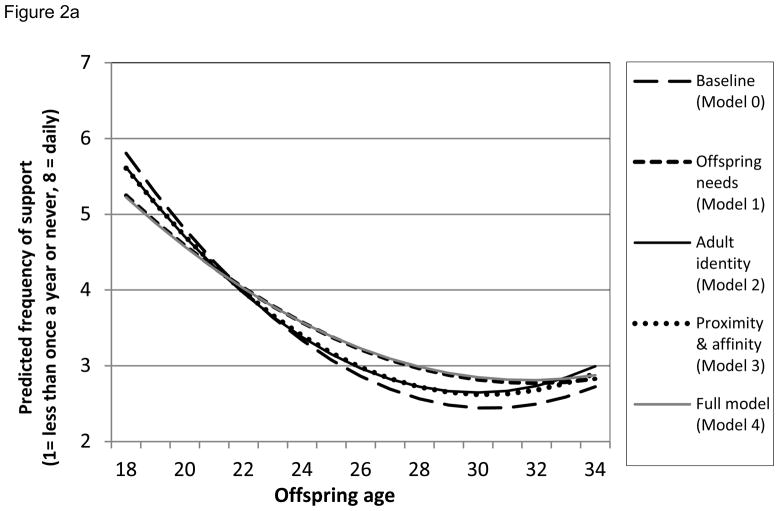
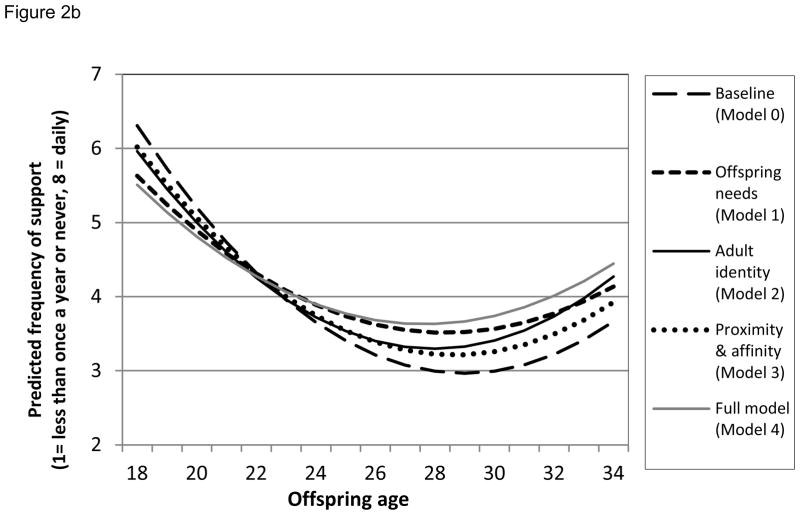
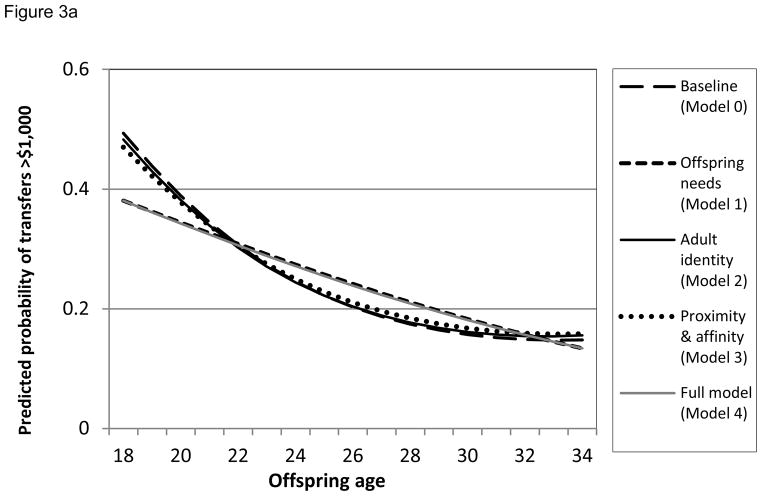
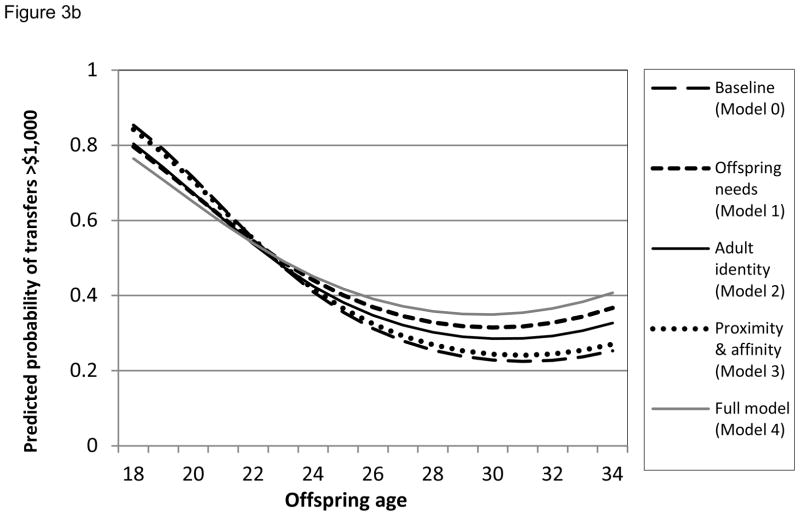
Previous research has found that financial transfers from parents to young adult children decline as children age and that age is one of the strongest predictors of support. Using data collected from young adults (ages 18 to 34) and their parents (ages 40 to 60; N=536 parent-child dyads), we explore the possibility that the relationship between age and financial support is mediated by offspring needs, acquisition of adult roles, or geographical and emotional closeness. We find that age-related declines in offspring's needs help to explain why financial support falls with age. However, offspring age remains a robust predictor of financial support after controlling for a wide range of factors, suggesting that age norms condition support from parents to offspring.
Keywords: Aging; Intergenerational transfers; Social support; Transition to adulthood.
Figures
References
-
- Albertini M, Kohli M, Vogel C. Intergenerational transfers of time and money in European families: common patterns, different regimes? Journal of European Social Policy. 2007;17:319.
-
- Antonucci TC, Akiyama H. Social Networks in Adult Life and a Preliminary Examination of the Convoy Model. Journal of Gerontology. 1987;42 - PubMed
-
- Aquilino W. Impact of family structure on parental attitudes toward the economic support of adult children over the transition to adulthood. Journal of Family Issues. 2005;26:143–167.
-
- Aquilino W. Family relationships and support systems in emerging adulthood. In: Arnett JJ, Tanner JL, editors. Emerging adults in the America: Coming of age in the 21st century. Washington, DC: American Psychological Association; 2006. pp. 193–217.
-
- Arnett JJ. Young people’s conceptions of the transition to adulthood. Youth & Society. 1997;29:1–23.
Grants and funding
LinkOut - more resources
Full Text Sources