


Théoriser la violence en Améerique: Retour sur trente ans d'ethnographie
- PMID: 23976819
- PMCID: PMC3748611
Théoriser la violence en Améerique: Retour sur trente ans d'ethnographie
Abstract
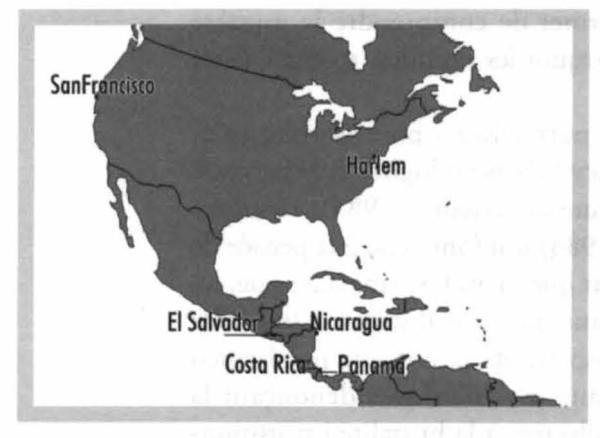
This thirty year retrospective analysis of violence at my fieldwork sites in the Americas (Nicaragua, El Salvador, Costa Rica, Panama, USA) explores the importance and difficulty of recognizing the continuities of violence across historical eras as an ethnographer. Expanding on the continuum of violence concept, I propose the utility of identifying the mutually reinforcing interface of three overlapping categories of invisible violence: structural, symbolic and normalized. If theory is meant to help us see more, then theorizing violence through a continuum of categories of invisibility is useful because it contravenes the political effects of the contemporary hyper-visibility of interpersonal and petty criminal street violence. The increasing global reach of a punitive version of corporate neoliberalism over the past two decades has lumpenized large sectors of the urban and rural poor. Recognizing the links between categories of invisible violence in this globalized context of social inequality explains the demobilization of class-based demands for economic redistribution and populist support for physically repressive forms of governmentality that punish the poor deemed unworthy.
Keywords: Amérique centrale/Central America; Costa Rica; Harlem; La Mosquitía (Nicaragua); Lumpen; Panama; Salvador; San Francisco; drogue/drugs; guerre civile révolutionnaire/revolutionary civil war; néolibéralisme/neoliberalism; sans-papiers/undocumented migrants; violence; États-Unis/United States.
Figures

References
-
- Americas Watch Committee . Violations of the Laws of War by Both Sides in Nicaragua, 1981-1985. Americas Watch Committee; New York: 1985.
-
- El Salvador’s Decade of Terror. Human Rights since the Assassination of Archbishop Romero. Yale University Press; New Haven: 1991.
-
- Andrews Edmund. Economic Inequality Grew in 90’s Boom, Fed Reports. New York Times. 2003 Jan 22th;:CI, C7. 2003.
-
- Argueta Manlio. Un dia en la vida. Editorial Universitario Centroamerica; San Jose (Costa Rica): 1983.
-
- Asociacio’n Pro-bu’squeda de Niñas y Niños Desaparecidos . Historias para tener presente. Los relatos extraordinarios de cinco jo’venes que perdieron a sus familiasy que, luego de la guerra, las volvieron a encontrar, San Salvador. Uca Editores; 2002.
Grants and funding
LinkOut - more resources
Full Text Sources
Research Materials
Miscellaneous