


Long non coding RNAs (lncRNAs) are dysregulated in Malignant Pleural Mesothelioma (MPM)
- PMID: 23976967
- PMCID: PMC3747266
- DOI: 10.1371/journal.pone.0070940
Long non coding RNAs (lncRNAs) are dysregulated in Malignant Pleural Mesothelioma (MPM)
Abstract
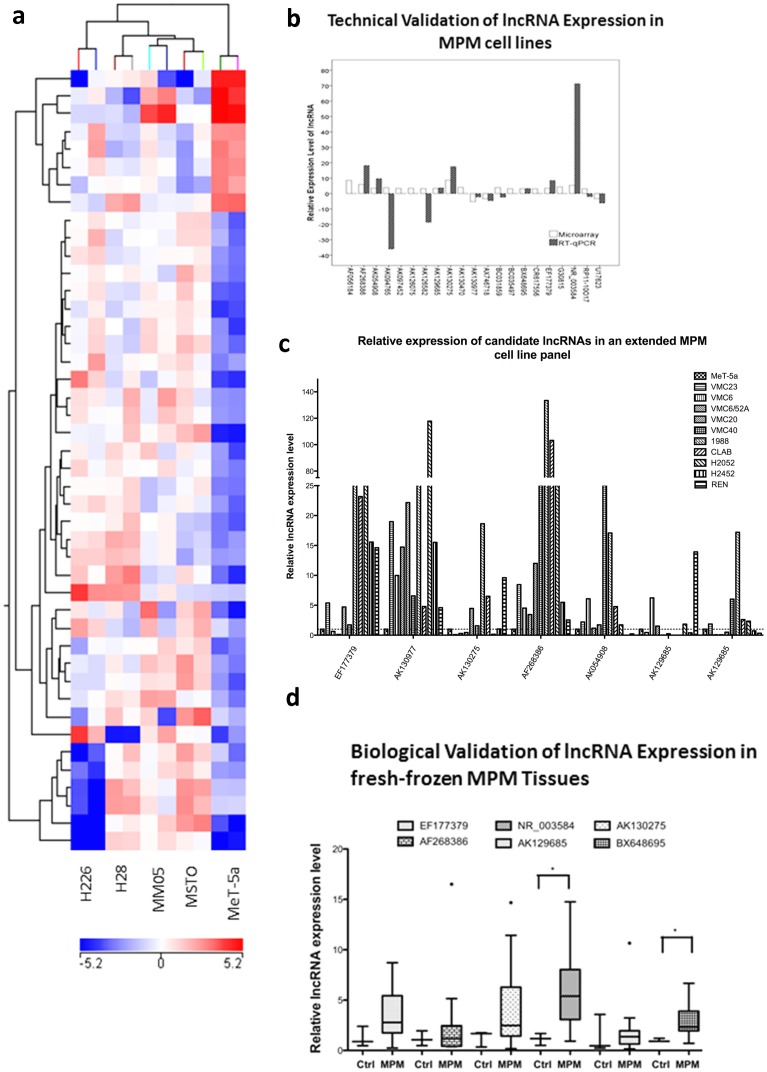
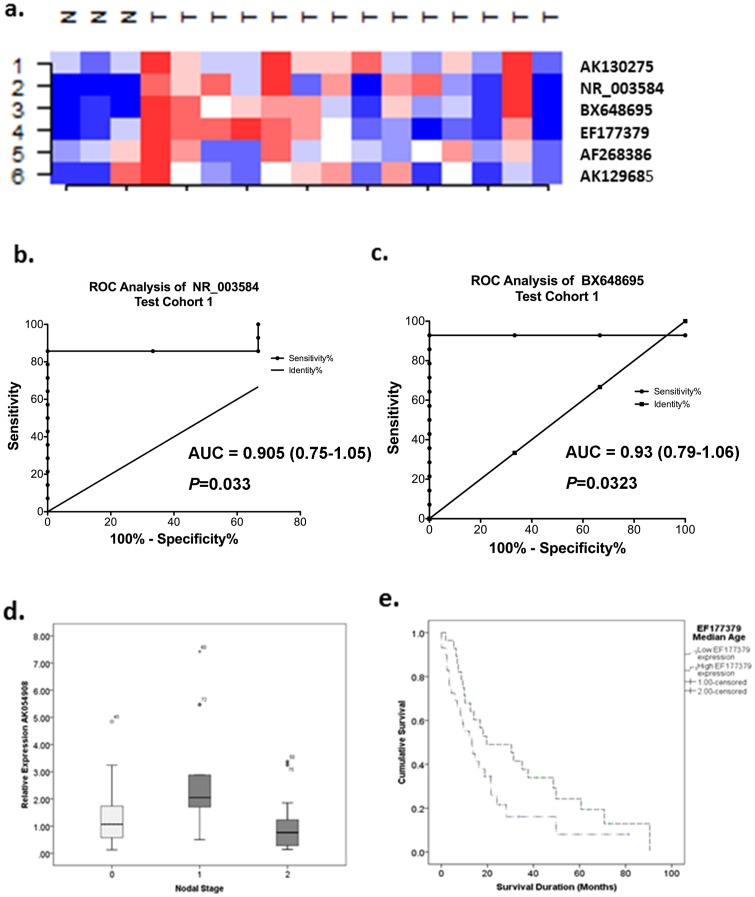
Malignant Pleural Mesothelioma (MPM) is an aggressive cancer that is often diagnosed at an advanced stage and is characterized by a long latency period (20-40 years between initial exposure and diagnosis) and prior exposure to asbestos. Currently accurate diagnosis of MPM is difficult due to the lack of sensitive biomarkers and despite minor improvements in treatment, median survival rates do not exceed 12 months. Accumulating evidence suggests that aberrant expression of long non-coding RNAs (lncRNAs) play an important functional role in cancer biology. LncRNAs are a class of recently discovered non-protein coding RNAs >200 nucleotides in length with a role in regulating transcription. Here we used NCode long noncoding microarrays to identify differentially expressed lncRNAs potentially involved in MPM pathogenesis. High priority candidate lncRNAs were selected on the basis of statistical (P<0.05) and biological significance (>3-fold difference). Expression levels of 9 candidate lncRNAs were technically validated using RT-qPCR, and biologically validated in three independent test sets: (1) 57 archived MPM tissues obtained from extrapleural pneumonectomy patients, (2) 15 cryopreserved MPM and 3 benign pleura, and (3) an extended panel of 10 MPM cell lines. RT-qPCR analysis demonstrated consistent up-regulation of these lncRNAs in independent datasets. ROC curve analysis showed that two candidates were able to separate benign pleura and MPM with high sensitivity and specificity, and were associated with nodal metastases and survival following induction chemotherapy. These results suggest that lncRNAs have potential to serve as biomarkers in MPM.
Conflict of interest statement
Figures
References
-
- Henderson DW, Rodelsperger K, Woitowitz HJ, Leigh J (2004) After Helsinki: a multidisciplinary review of the relationship between asbestos exposure and lung cancer, with emphasis on studies published during 1997–2004. Pathology 36: 517–550. - PubMed
-
- Vogelzang NJ, Rusthoven JJ, Symanowski J, Denham C, Kaukel E, et al. (2003) Phase III study of pemetrexed in combination with cisplatin versus cisplatin alone in patients with malignant pleural mesothelioma. J Clin Oncol 21: 2636–2644. - PubMed
-
- Weder W, Stahel RA, Bernhard J, Bodis S, Vogt P, et al. (2007) Multicenter trial of neo-adjuvant chemotherapy followed by extrapleural pneumonectomy in malignant pleural mesothelioma. Ann Oncol 18: 1196–1202. - PubMed
MeSH terms
Substances
LinkOut - more resources
Full Text Sources
Other Literature Sources
Medical
Molecular Biology Databases
