


A decade of invasive meningococcal disease surveillance in Poland
- PMID: 23977184
- PMCID: PMC3748050
- DOI: 10.1371/journal.pone.0071943
A decade of invasive meningococcal disease surveillance in Poland
Abstract
Background: Neisseria meningitidis is a leading etiologic agent of severe invasive disease. The objective of the study was to characterise invasive meningococcal disease (IMD) epidemiology in Poland during the last decade, based on laboratory confirmed cases.
Methods: The study encompassed all invasive meningococci collected between 2002 and 2011 in the National Reference Centre for Bacterial Meningitis. The isolates were re-identified and characterised by susceptibility testing, MLST analysis, porA and fetA sequencing. A PCR technique was used for meningococcal identification directly from clinical materials.
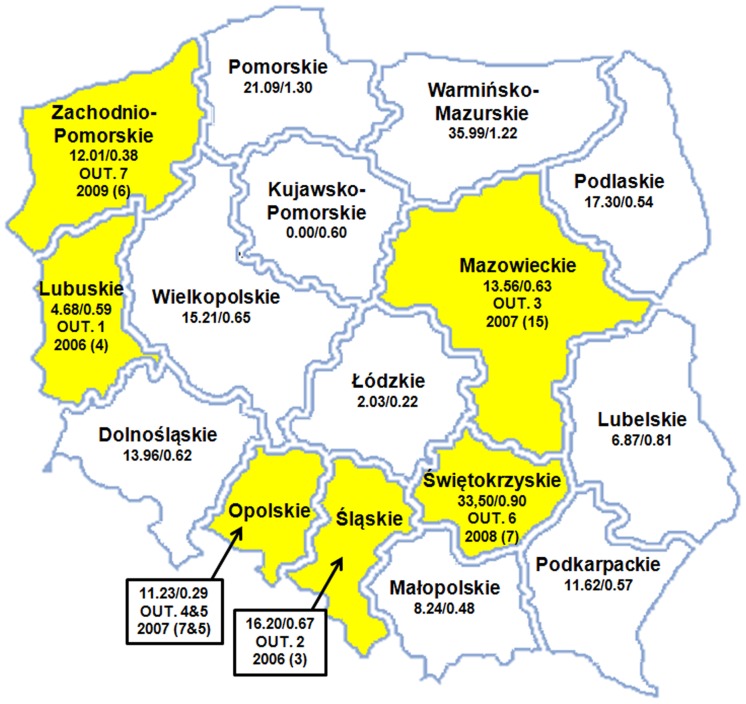
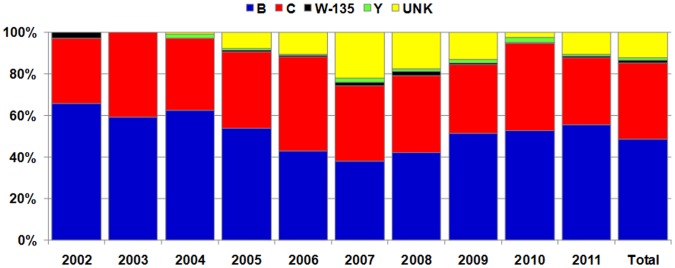
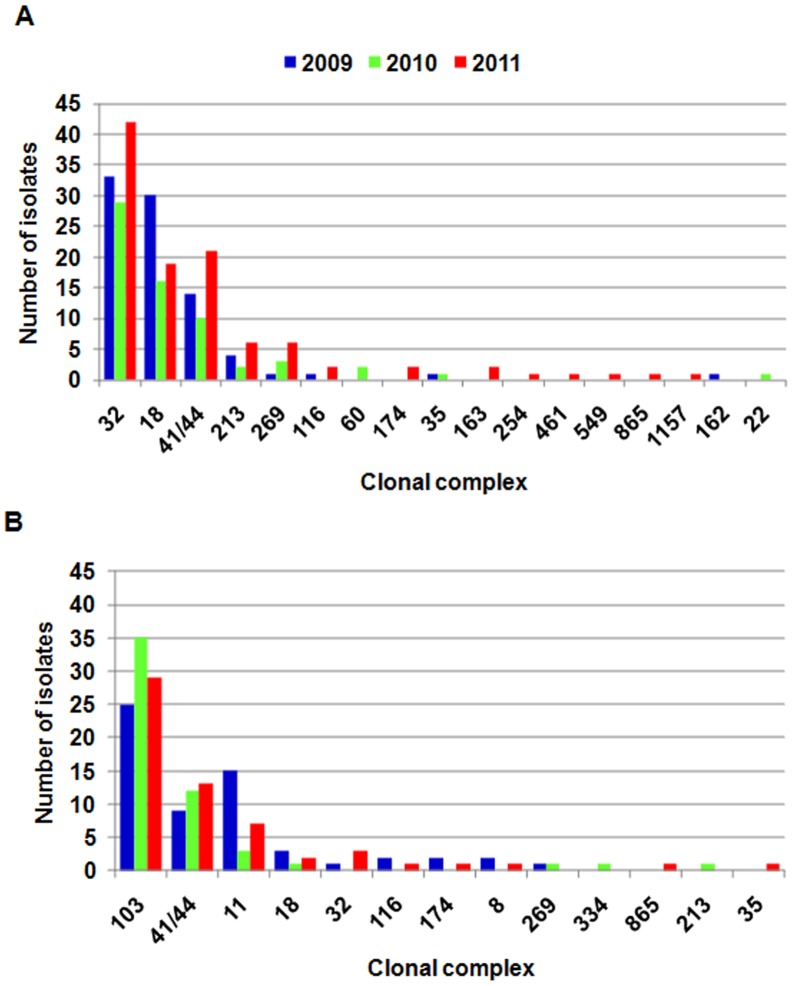
Results: In the period studied, 1936 cases of IMD were confirmed, including 75.6% identified by culture. Seven IMD outbreaks, affecting mostly adolescents, were reported; all were caused by serogroup C meningococci of ST-11. The highest incidence was observed among children under one year of age (15.71/100,000 in 2011). The general case fatality rate in the years 2010-2011 was 10.0%. Meningococci of serogroup B, C, Y and W-135 were responsible for 48.8%, 36.6%, 1.2% and 1.2% of cases, respectively. All isolates were susceptible to third generation cephalosporins, chloramphenicol, ciprofloxacin, and 84.2% were susceptible to penicillin. MLST analysis (2009-2011) revealed that among serogroup B isolates the most represented were clonal complexes (CC) ST-32CC, ST-18CC, ST-41/44CC, ST-213CC and ST-269CC, and among serogroup C: ST-103CC, ST-41/44CC and ST-11CC.
Conclusions: The detection of IMD in Poland has changed over time, but observed increase in the incidence of the disease was mostly attributed to changes in the surveillance system including an expanded case definition and inclusion of data from non-culture diagnostics.
Conflict of interest statement
Figures
References
-
- Stephens DS (2007) Conquering the meningococcus. FEMS Microbiol Rev 31: 3–14. - PubMed
-
- Khatami A, Pollard AJ (2010) The epidemiology of meningococcal disease and the impact of vaccines. Expert Rev Vaccines 9: 285–298. - PubMed
-
- Cohn AC, MacNeil JR, Harrison LH, Hatcher C, Theodore J, et al. (2010) Changes in Neisseria meningitidis disease epidemiology in the United States, 1998–2007: implications for prevention of meningococcal disease. Clin Infect Dis 50: 184–191. - PubMed
-
- Healy CM, Butler KM, Smith EO, Hensey OP, Bate T, et al. (2002) Influence of serogroup on the presentation, course, and outcome of invasive meningococcal disease in children in the Republic of Ireland, 1995–2000. Clin Infect Dis 34: 1323–1330. - PubMed
-
- Skoczynska A, Kadlubowski M, Knap J, Szulc M, Janusz-Jurczyk M, et al. (2006) Invasive meningococcal disease associated with very high case fatality rate in the North-West of Poland. FEMS Immunol Med Microbiol 46: 230–235. - PubMed
Publication types
MeSH terms
Substances
Grants and funding
LinkOut - more resources
Full Text Sources
Other Literature Sources
