


Brain-immune interaction accompanying odor-evoked autobiographic memory
- PMID: 23977312
- PMCID: PMC3748042
- DOI: 10.1371/journal.pone.0072523
Brain-immune interaction accompanying odor-evoked autobiographic memory
Abstract
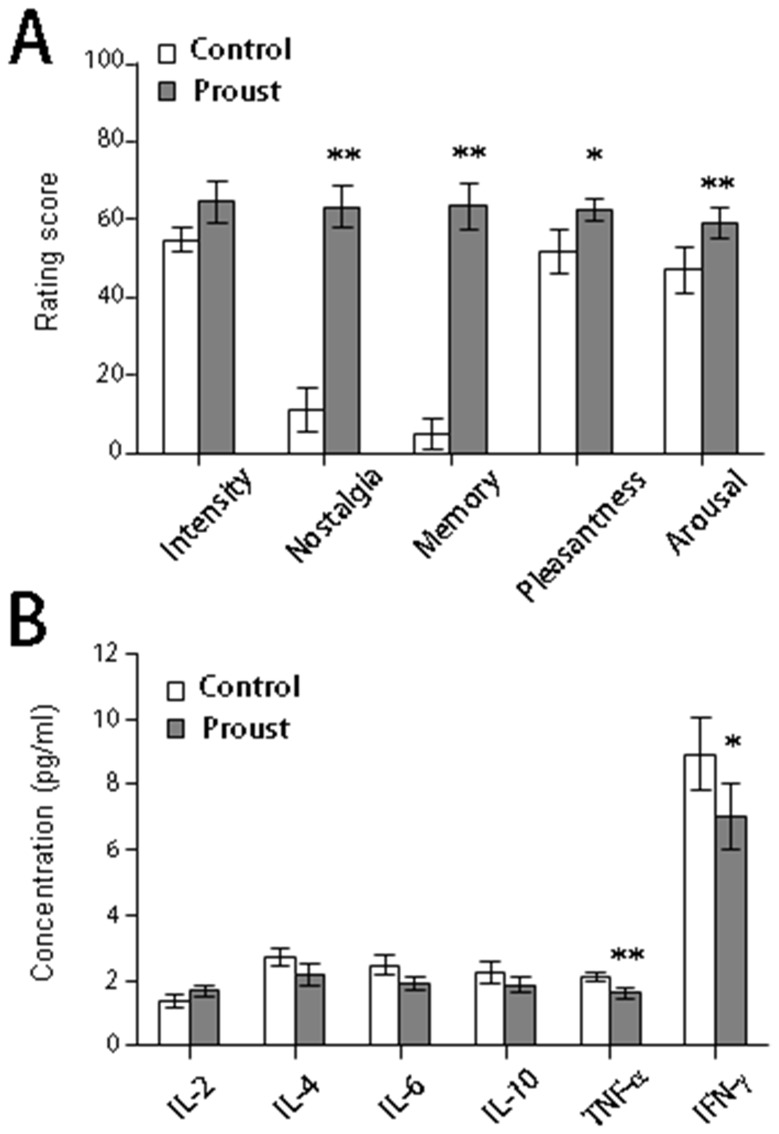
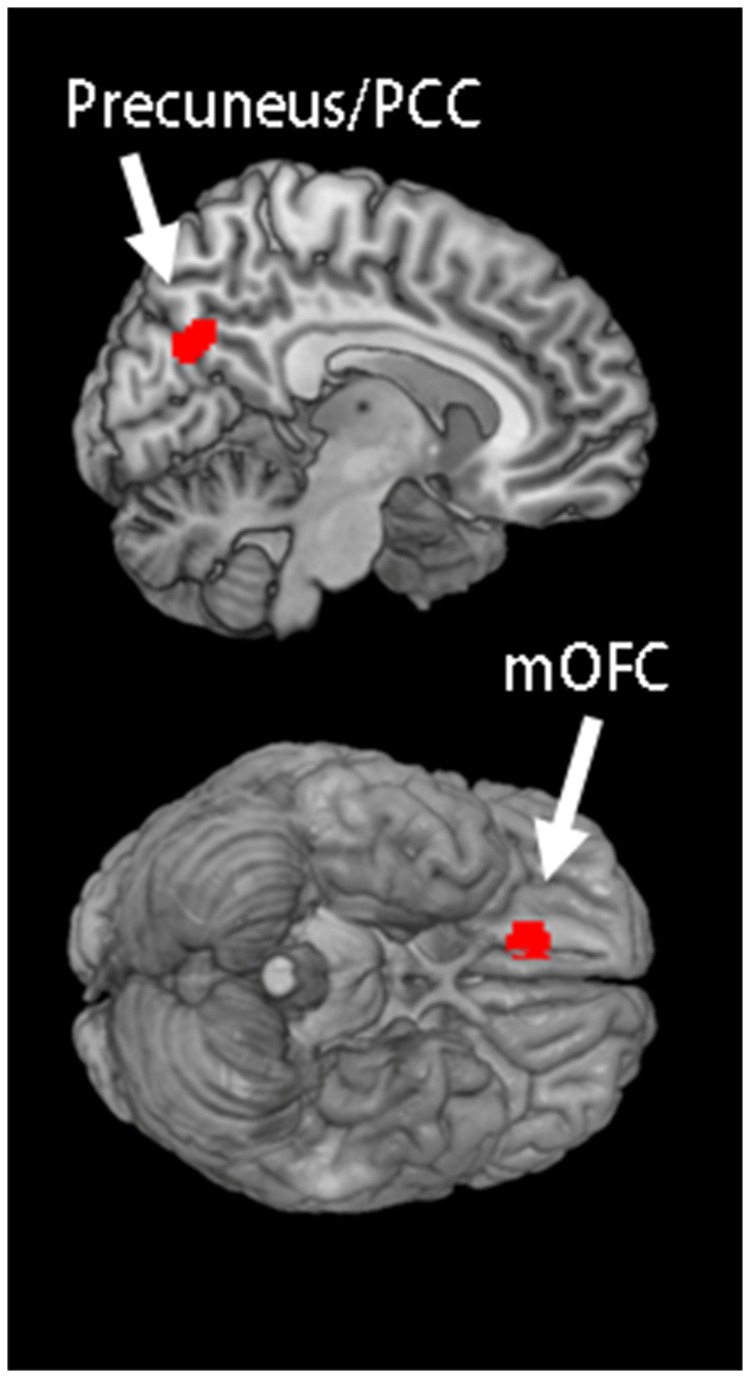
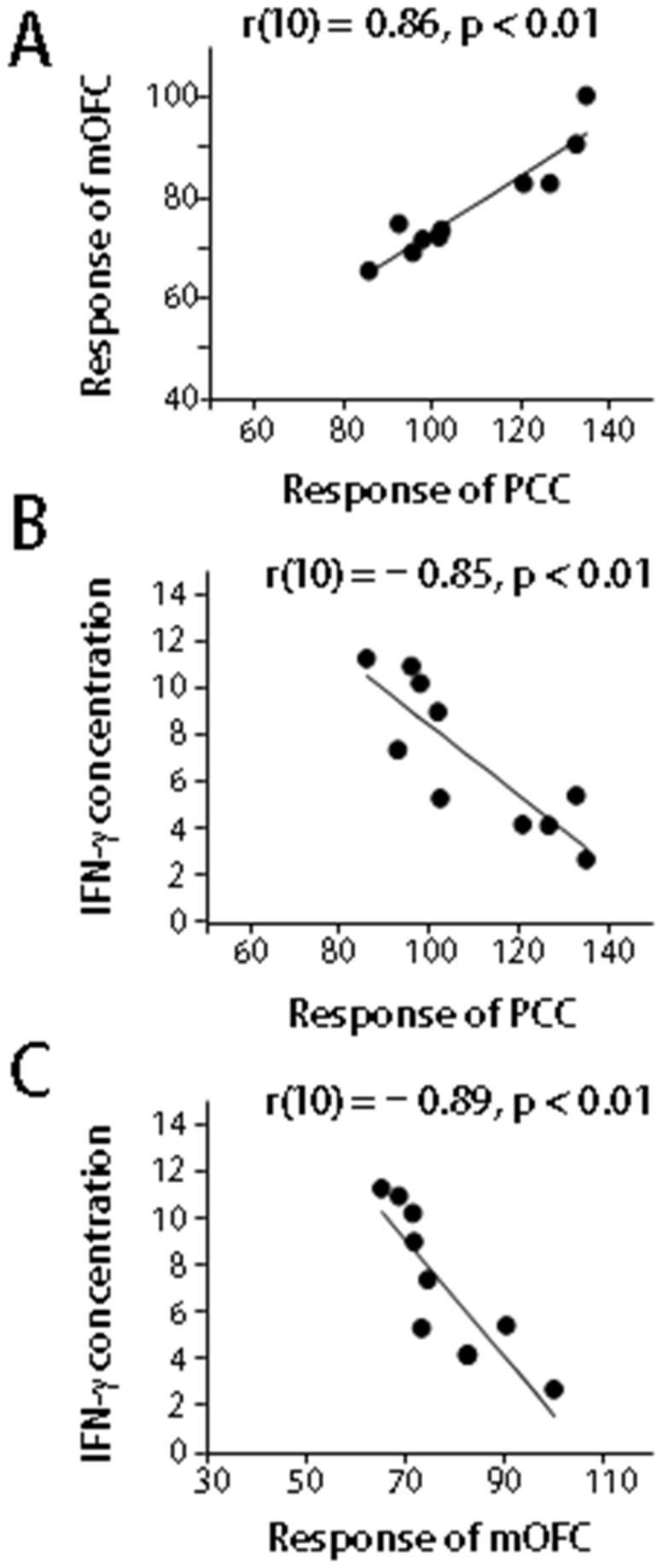
The phenomenon in which a certain smell evokes a specific memory is known as the Proust phenomenon. Odor-evoked autobiographic memories are more emotional than those elicited by other sensory stimuli. The results of our previous study indicated that odor-evoked autobiographic memory accompanied by positive emotions has remarkable effects on various psychological and physiological activities, including the secretion of cytokines, which are immune-signaling molecules that modulate systemic inflammation. In this study, we aimed to clarify the neural substrates associated with the interaction between odor-evoked autobiographic memory and peripheral circulating cytokines. We recruited healthy male and female volunteers and investigated the association between brain responses and the concentration of several cytokines in the plasma by using positron emission tomography (PET) recordings when an autographic memory was evoked in participants by asking them to smell an odor that was nostalgic to them. Participants experienced positive emotions and autobiographic memories when nostalgic odors were presented to them. The levels of peripheral proinflammatory cytokines, such as the tumor necrosis factor-α (TNF-α) and interferon-γ (IFN-γ), were significantly reduced after experiencing odor-evoked autobiographic memory. Subtraction analysis of PET images indicated that the medial orbitofrontal cortex (mOFC) and precuneus/posterior cingulate cortex (PCC) were significantly activated during experiences of odor-evoked autobiographic memory. Furthermore, a correlation analysis indicated that activities of the mOFC and precuneus/PCC were negatively correlated with IFN-γ concentration. These results indicate that the neural networks including the precuneus/PCC and mOFC might regulate the secretion of peripheral proinflammatory cytokines during the experience of odor-evoked autobiographic memories accompanied with positive emotions.
Conflict of interest statement
Figures
References
-
- Proust M (1919) Du coté de chez Swann. Paris: Gaillimard.
-
- Herz RS, Cupchik GC (1995) The emotional distinctiveness of odor-evoked memories. Chem Sens 20: 517-528. doi:10.1093/chemse/20.5.517. PubMed: 8564426. - DOI - PubMed
-
- Herz RS (1998) Are odors the best cues to memory? A cross-modal comparison of associative memory stimuli. Ann N Y Acad Sci 855: 670-674. doi:10.1111/j.1749-6632.1998.tb10643.x. PubMed: 9929669. - DOI - PubMed
-
- Herz RS, Schooler JW (2002) A naturalistic study of autobiographical memories evoked by olfactory and visual cues: testing the Proustian hypothesis. Am J Psychol 115: 21-32. doi:10.2307/1423672. PubMed: 11868193. - DOI - PubMed
-
- Herz RS, Eliassen J, Beland S, Souza T (2004) Neuroimaging evidence for the emotional potency of odor-evoked memory. Neuropsychologia 42: 371-378. doi:10.1016/j.neuropsychologia.2003.08.009. PubMed: 14670575. - DOI - PubMed
Publication types
MeSH terms
Substances
LinkOut - more resources
Full Text Sources
Other Literature Sources
