


Limited TCF7L2 expression in MS lesions
- PMID: 23977356
- PMCID: PMC3748032
- DOI: 10.1371/journal.pone.0072822
Limited TCF7L2 expression in MS lesions
Abstract
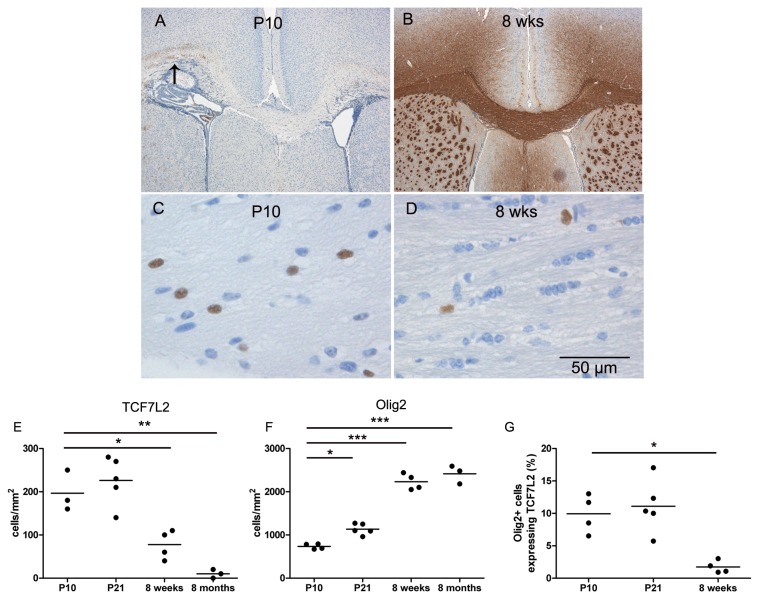
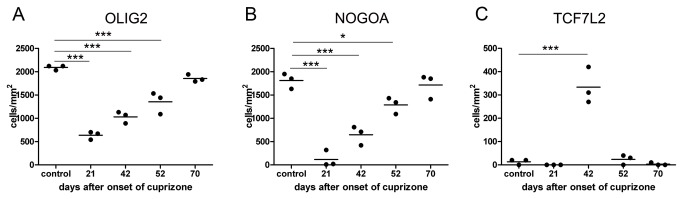
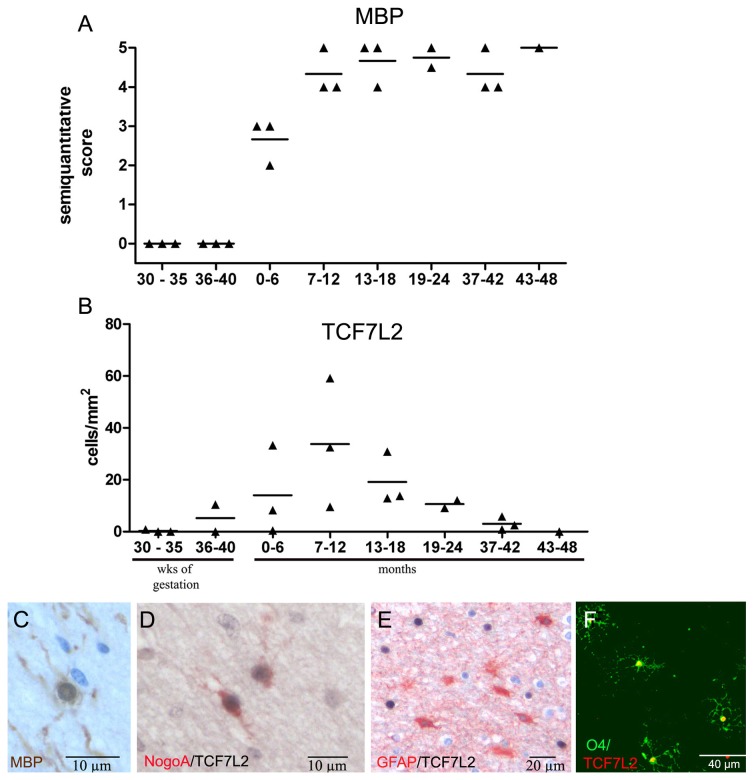
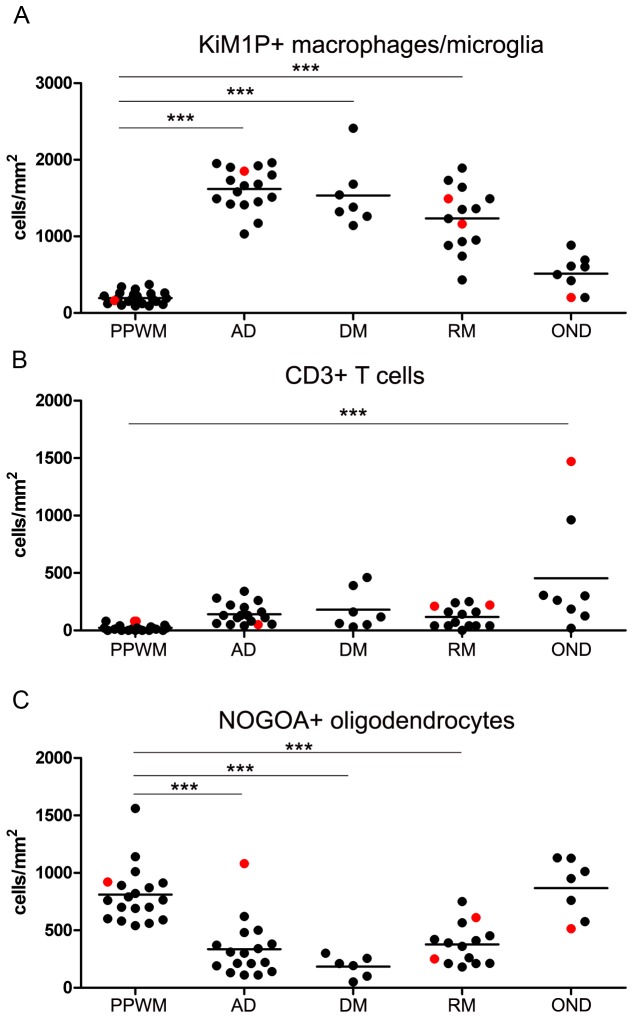
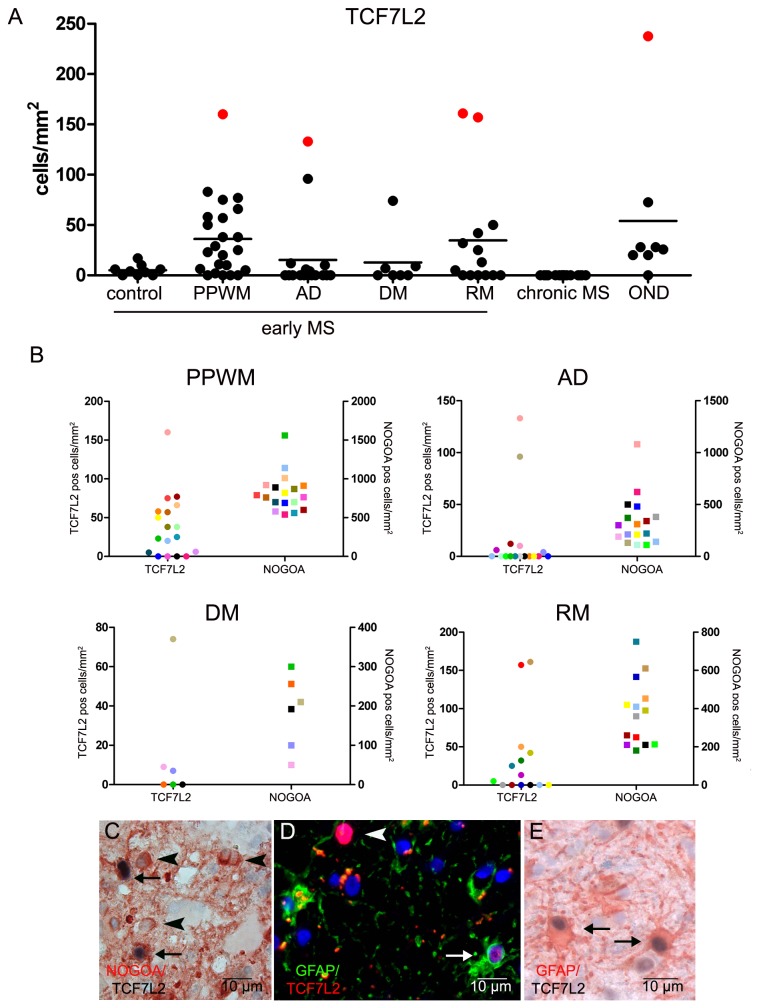
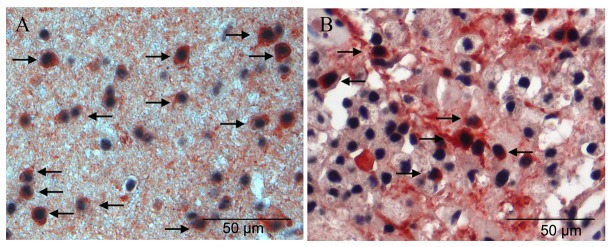
Multiple sclerosis is the most frequent demyelinating disease in the human CNS characterized by inflammation, demyelination, relative axonal loss and gliosis. Remyelination occurs, but is frequently absent or restricted to a small remyelinated rim at the lesion border. Impaired differentiation of oligodendroglial precursor cells is one factor contributing to limited remyelination, especially in chronic MS. TCF7L2 is an oligodendroglial transcription factor regulating myelin gene expression during developmental myelination as well as remyelination. TCF7L2 binds to co-effectors such as β-catenin or histone deacetylases and thereby activates or inhibits the transcription of downstream genes involved in oligodendroglial differentiation. To determine whether TCF7L2 can be used as a marker for differentiating or myelinating oligodendrocytes, we analyzed the expression patterns of TCF7L2 during myelination and remyelination in human and murine CNS tissue samples. Here, we demonstrate that marked expression of TCF7L2 in oligodendrocytes is restricted to a well defined time period during developmental myelination in human and mouse CNS tissue samples. In demyelinating diseases, such as multiple sclerosis, TCF7L2 is reexpressed in oligodendrocytes in a subset of MS patients, but is also present in tissue samples from patients with non-demyelinating, inflammatory diseases. Furthermore, TCF7L2 expression was also detected in astrocytes. HDAC2, a potential binding partner of TCF7L2 that promotes oligodendroglial differentiation and myelination, is expressed in the majority of oligodendrocytes in controls and MS tissue samples. In summary, our data demonstrate that the expression of TCF7L2 in oligodendrocytes is limited to a certain differentiation stage; however the expression of TCF7L2 is neither restricted to the oligodendroglial lineage nor to (re-)myelinating conditions.
Conflict of interest statement
Figures
References
-
- Trapp BD, Peterson J, Ransohoff RM, Rudick R, Mörk S et al. (1998) Axonal transection in the lesions of multiple sclerosis. N Engl J Med 338: 278-285. doi:10.1056/NEJM199801293380502. PubMed: 9445407. - DOI - PubMed
-
- Trapp BD, Ransohoff R, Rudick R (1999) Axonal pathology in multiple sclerosis: relationship to neurologic disability. Curr Opin Neurol 12: 295-302. doi:10.1097/00019052-199906000-00008. PubMed: 10499174. - DOI - PubMed
-
- Ferguson B, Matyszak MK, Esiri MM, Perry VH (1997) Axonal damage in acute multiple sclerosis lesions. Brain 120: 393-399. doi:10.1093/brain/120.3.393. PubMed: 9126051. - DOI - PubMed
-
- Schirmer L, Antel JP, Brück W, Stadelmann C (2011) Axonal loss and neurofilament phosphorylation changes accompany lesion development and clinical progression in multiple sclerosis. Brain Pathol 21: 428-440. doi:10.1111/j.1750-3639.2010.00466.x. PubMed: 21114565. - DOI - PMC - PubMed
-
- De Stefano N, Matthews PM, Fu L, Narayanan S, Stanley J et al. (1998) Axonal damage correlates with disability in patients with relapsing-remitting multiple sclerosis. Results of a longitudinal magnetic resonance spectroscopy study. Brain 121: 1469-1477. doi:10.1093/brain/121.8.1469. PubMed: 9712009. - DOI - PubMed
Publication types
MeSH terms
Substances
LinkOut - more resources
Full Text Sources
Other Literature Sources
Medical
