


Liver Injury and the Activation of the Hepatic Myofibroblasts
- PMID: 23977452
- PMCID: PMC3748972
- DOI: 10.1007/s40139-013-0019-6
Liver Injury and the Activation of the Hepatic Myofibroblasts
Abstract
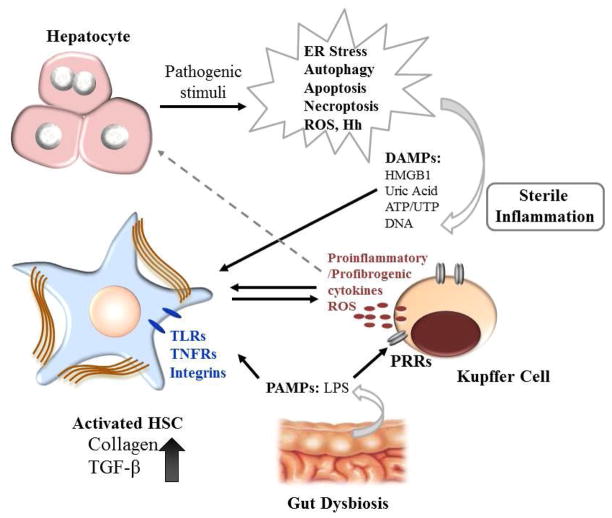
Liver fibrosis is a wound healing process, the end result of chronic liver injury elicited by different noxious stimuli. Activated hepatic stellate cells or myofibroblasts and portal myofibroblasts are considered as the main producers of the extracellular matrix in the liver. Upon liver injury the quiescent stellate cells transdifferentiate into myofibroblasts a process highlighted by the loss of vitamin A stores, upregulation of interstitial type collagens, smooth muscle α actin, matrix metalloproteinases, proteoglycans, and the induction of cell survival pathways. Activation of hepatic stellate cells is a result of a complex interplay between the parenchymal cells, immune cells, extracellular matrix mechanics and extrahepatic milieu such as the gut microbiome. In this review we will focus on the pathomechanism of stellate cell activation following chronic liver injury; with the aim of identifying possible treatment targets for anti-fibrogenic agents.
Keywords: Epigenetic signaling; Gut microbiota; Hepatocyte apoptosis; Inflammasome; Liver fibrosis; Myofibroblast; Pathobiology; Reactive oxidative species; Stellate cell activation; Sterile inflammation.
Conflict of interest statement
Joy X. Jiang declares that she has no conflict of interest.
Natalie J. Török has received research funding from Genkyotex and National Institutes of Health.
Figures
References
-
- D’Amico G, Garcia-Tsao G, Pagliaro L. Natural history and prognostic indicators of survival in cirrhosis: a systematic review of 118 studies. J Hepatol. 2006;44:217–231. - PubMed
Grants and funding
LinkOut - more resources
Full Text Sources
Other Literature Sources