


A comparison of referral criteria used by the plusoptiX photoscreener
- PMID: 23978147
- PMCID: PMC3820012
- DOI: 10.3109/09273972.2013.811606
A comparison of referral criteria used by the plusoptiX photoscreener
Abstract
Purpose: To evaluate the sensitivity, specificity, and predictive value of 7 different referral criteria used for the plusoptiX photoscreener on the same cohort of children.
Methods: Retrospective chart review of patients presenting to a pediatric ophthalmology clinic who underwent plusoptiX photoscreening as part of a comprehensive examination. We applied multiple referral criteria from previously published studies as well as the manufacturer's criteria in order to calculate specificity, sensitivity, and predictive value differences between the various referral criteria. We compared all criteria to the results of a pediatric ophthalmology examination based upon the 2003 American Association for Pediatric Ophthalmology and Strabismus (AAPOS) criteria, as well as the newly accepted revision of the AAPOS referral criteria.
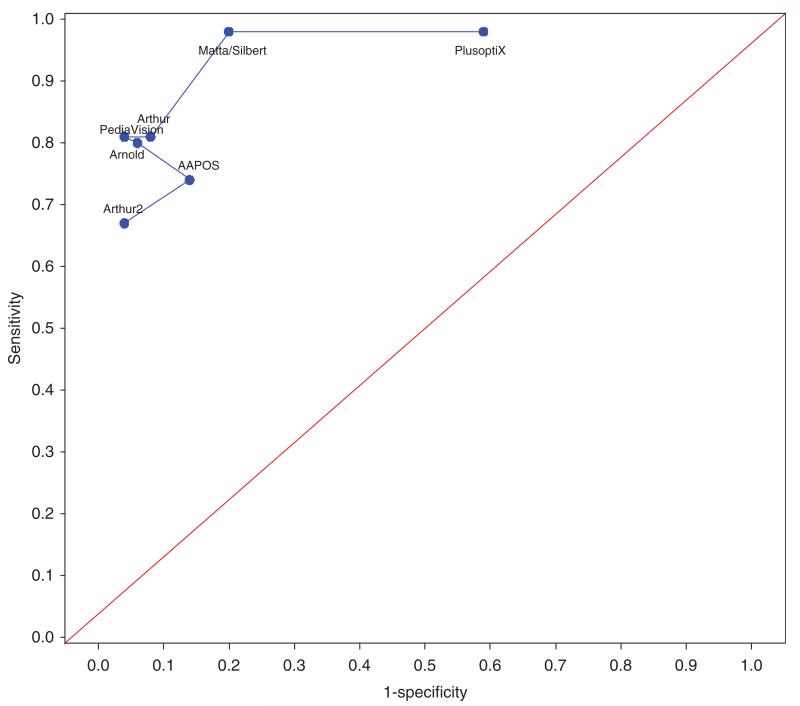
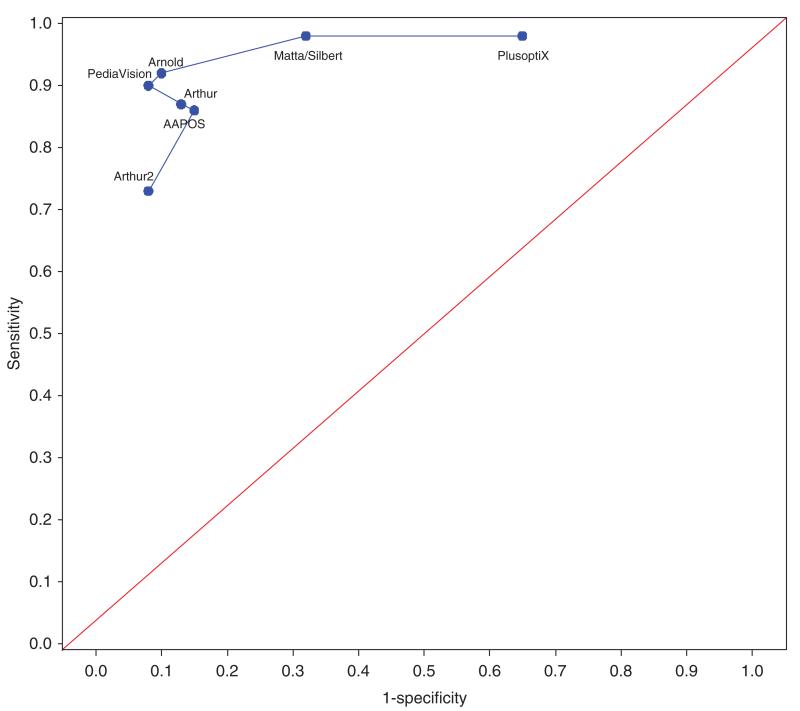
Results: 109 children were examined with a thorough pediatric ophthalmic exam and with the plusoptiX photoscreener. Of these, 58 (53%) were confirmed to demonstrate amblyopia risk factors, according to 2003 AAPOS criteria. The plusoptiX referral criteria were adjusted to match 7 different published plusoptiX referral paradigms so that the differing referral paradigms could be analyzed for sensitivity and specificity. When comparing the differing plusoptiX referral paradigms to 2003 AAPOS criteria, the sensitivity/specificity of the 7 different paradigms were respectively: Matta/Silbert 98%/80%, Arthur (2) 67%/96%, Arnold 81%/96%, Arthur 81%/92%, PediaVision 80%/94%, plusoptiX 98%/41%, AAPOS 74%/86%. When comparing the 7 differing referral paradigms to the newly approved (2013) AAPOS criteria, the sensitivity/specificity were respectively: Matta/Silbert 98%/68%, Arthur (2) 73%/92%, Arnold 92%/90%, Arthur 86%/85%, PediaVision 90%/92%, plusoptiX 98%/35%, AAPOS 87%/87%.
Conclusion: There are multiple referral criteria available for the plusoptiX photoscreener. Screening programs need to evaluate their own requirements with respect to desired sensitivity and specificity and decide on the most appropriate referral criteria for their program. The "Arnold" criteria is the best at maximizing sensitivity and specificity utilizing the 2003 "AAPOS" criteria and the "Arnold" and "PediaVision" were best at maximizing sensitivity and specificity for the newly accepted AAPOS referral criteria. Screening programs will need to decide the level of sensitivity and specificity that they wish to obtain, but for most screening programs the "Arnold" criteria may be preferred.
Figures
References
-
- PlusOptix . S04 Hand-Held Binocular Auto Refractometer Instruction Manual, Version 4.6.11. PlusOptix; Nuremberg, Germany: 2005.
-
- Pediavision Website [Accessed August 8, 2013];PediaVision Assessment Solution: Early Vision Screening Program – Overview. http://pediavision.com/downloadcentral/plusoptix_S04_S08/S04_Users_Guide....
-
- Alaska Blind Child Discovery Research Project [Accessed August 18, 2013];Founded and Directed by Dr. Robert W. Arnold. http://www.abcd-vision.org/vision-screening/PlusOpitX-Criteria.html.
-
- Arthur BW, Riyaz R, Rodriguez S, Wong J. Field testing of the plusoptiX S04 photoscreener. J AAPOS. 2009;13:51–57. - PubMed
-
- Matta NS, Singman EL, Silbert DI. Performance of the PlusOptix vision screener for the detection of amblyopia risk factors in children. J AAPOS. 2008;12:490–492. - PubMed
Publication types
MeSH terms
Grants and funding
LinkOut - more resources
Full Text Sources
Other Literature Sources
Medical
