


Development and use of active clinical decision support for preemptive pharmacogenomics
- PMID: 23978487
- PMCID: PMC3957400
- DOI: 10.1136/amiajnl-2013-001993
Development and use of active clinical decision support for preemptive pharmacogenomics
Abstract
Background: Active clinical decision support (CDS) delivered through an electronic health record (EHR) facilitates gene-based drug prescribing and other applications of genomics to patient care.
Objective: We describe the development, implementation, and evaluation of active CDS for multiple pharmacogenetic test results reported preemptively.
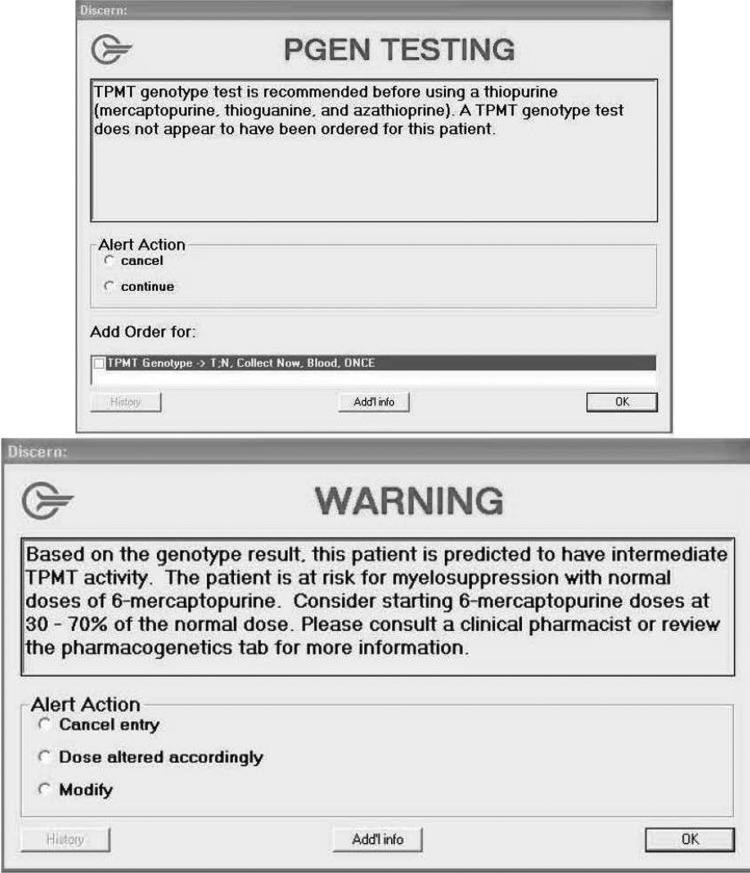
Materials and methods: Clinical pharmacogenetic test results accompanied by clinical interpretations are placed into the patient's EHR, typically before a relevant drug is prescribed. Problem list entries created for high-risk phenotypes provide an unambiguous trigger for delivery of post-test alerts to clinicians when high-risk drugs are prescribed. In addition, pre-test alerts are issued if a very-high risk medication is prescribed (eg, a thiopurine), prior to the appropriate pharmacogenetic test result being entered into the EHR. Our CDS can be readily modified to incorporate new genes or high-risk drugs as they emerge.
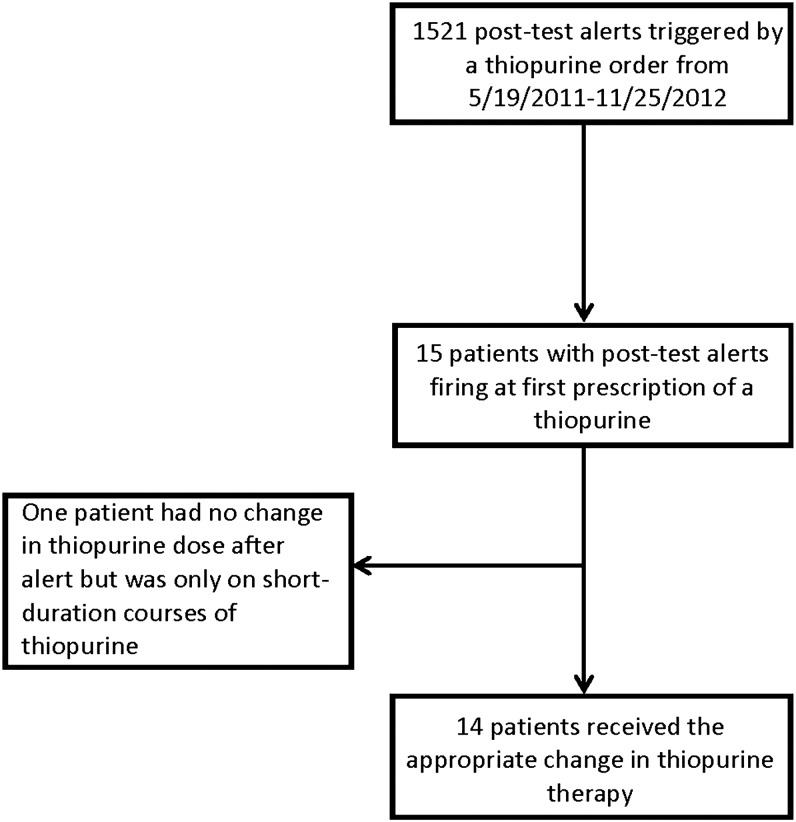
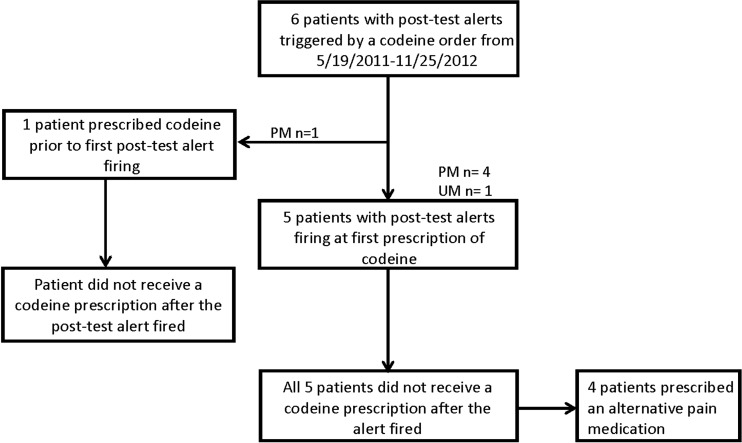
Results: Through November 2012, 35 customized pharmacogenetic rules have been implemented, including rules for TPMT with azathioprine, thioguanine, and mercaptopurine, and for CYP2D6 with codeine, tramadol, amitriptyline, fluoxetine, and paroxetine. Between May 2011 and November 2012, the pre-test alerts were electronically issued 1106 times (76 for thiopurines and 1030 for drugs metabolized by CYP2D6), and the post-test alerts were issued 1552 times (1521 for TPMT and 31 for CYP2D6). Analysis of alert outcomes revealed that the interruptive CDS appropriately guided prescribing in 95% of patients for whom they were issued.
Conclusions: Our experience illustrates the feasibility of developing computational systems that provide clinicians with actionable alerts for gene-based drug prescribing at the point of care.
Keywords: clinical decision support; electronic health record; personalized medicine; pharmacogenetics.
Figures
References
-
- Troiano D, Jones MA, Smith AH, et al. The need for collaborative engagement in creating clinical decision-support alerts. Am J Health-Syst Pharm 2013;70:150–3 - PubMed
-
- Kaushal R, Shojania KG, Bates DW. Effects of computerized physician order entry and clinical decision support systems on medication safety: a systematic review. Arch Intern Med 2003;163:1409–16 - PubMed
Publication types
MeSH terms
Grants and funding
LinkOut - more resources
Full Text Sources
Other Literature Sources
