Cost-effectiveness analysis of introducing RDTs for malaria diagnosis as compared to microscopy and presumptive diagnosis in central and peripheral public health facilities in Ghana
- PMID: 23980131
- PMCID: PMC3795104
- DOI: 10.4269/ajtmh.13-0033
Cost-effectiveness analysis of introducing RDTs for malaria diagnosis as compared to microscopy and presumptive diagnosis in central and peripheral public health facilities in Ghana
Abstract
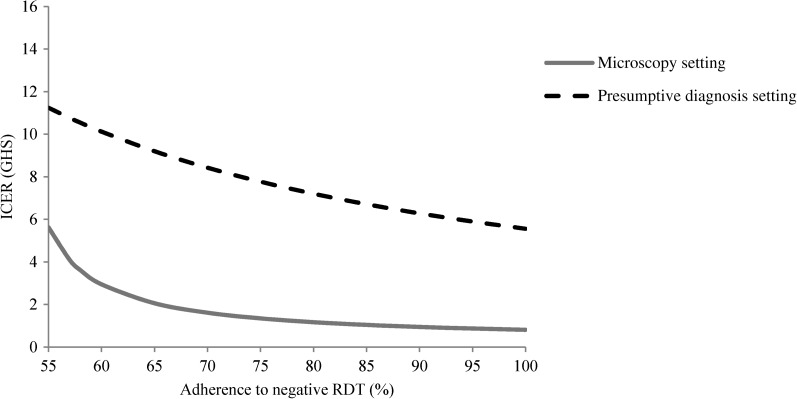
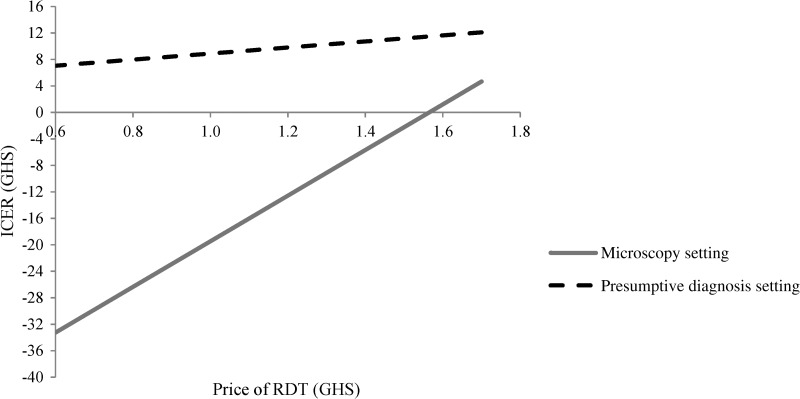
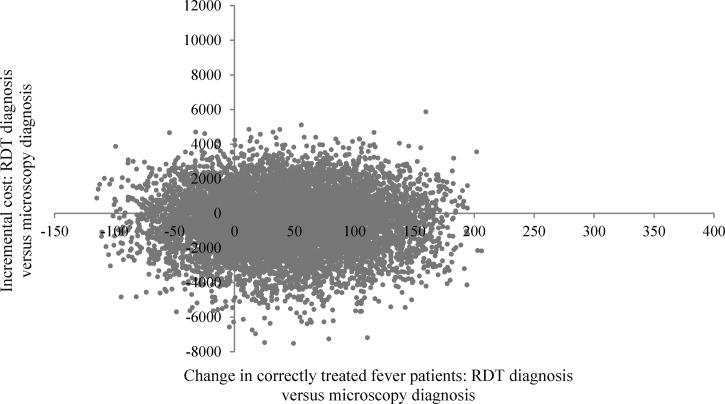
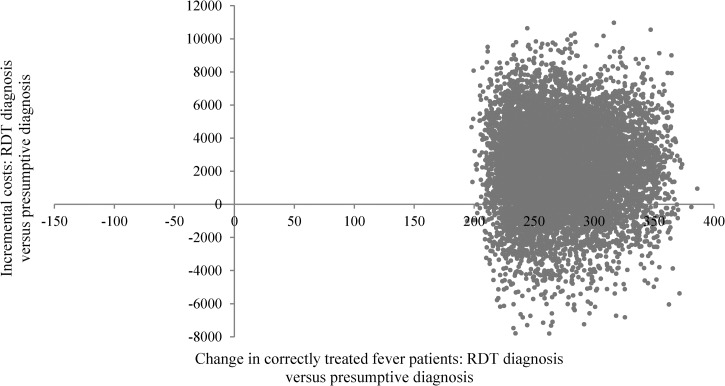
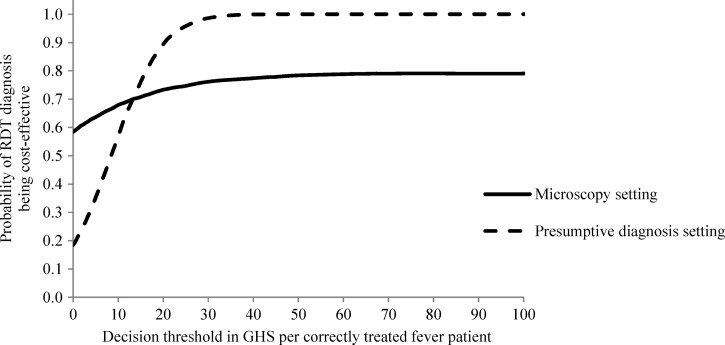
Cost-effectiveness information on where malaria rapid diagnostic tests (RDTs) should be introduced is limited. We developed incremental cost-effectiveness analyses with data from rural health facilities in Ghana with and without microscopy. In the latter, where diagnosis had been presumptive, the introduction of RDTs increased the proportion of patients who were correctly treated in relation to treatment with antimalarials, from 42% to 65% at an incremental societal cost of Ghana cedis (GHS)12.2 (US$8.3) per additional correctly treated patients. In the "microscopy setting" there was no advantage to replacing microscopy by RDT as the cost and proportion of correctly treated patients were similar. Results were sensitive to a decrease in the cost of RDTs, which cost GHS1.72 (US$1.17) per test at the time of the study and to improvements in adherence to negative tests that was just above 50% for both RDTs and microscopy.
Figures
References
-
- Amexo M, Tolhurst R, Barnish G, Bates I. Malaria misdiagnosis: effects on the poor and vulnerable. Lancet. 2004;364:1896–1898. - PubMed
-
- Chandramohan D, Jaffar S, Greenwood B. Use of clinical algorithms for diagnosing malaria. Trop Med Int Health. 2002;7:45–52. - PubMed
-
- Kallander K, Nsungwa-Sabiiti J, Peterson S. Symptom overlap for malaria and pneumonia–policy implications for home management strategies. Acta Trop. 2004;90:211–214. - PubMed
Publication types
MeSH terms
Substances
LinkOut - more resources
Full Text Sources
Other Literature Sources
Medical