


Pruritus in patients treated with targeted cancer therapies: systematic review and meta-analysis
- PMID: 23981682
- PMCID: PMC4181350
- DOI: 10.1016/j.jaad.2013.06.038
Pruritus in patients treated with targeted cancer therapies: systematic review and meta-analysis
Abstract
Background: Pruritus has been anecdotally described in association with targeted cancer therapies. The risk of pruritus has not been systematically ascertained.
Objective: A systematic review and meta-analysis of the literature was conducted for axitinib, cetuximab, dasatinib, erlotinib, everolimus, gefitinib, imatinib, ipilimumab, lapatinib, nilotinib, panitumumab, pazopanib, rituximab, sorafenib, temsirolimus, tositumomab, vandetanib, and vemurafenib.
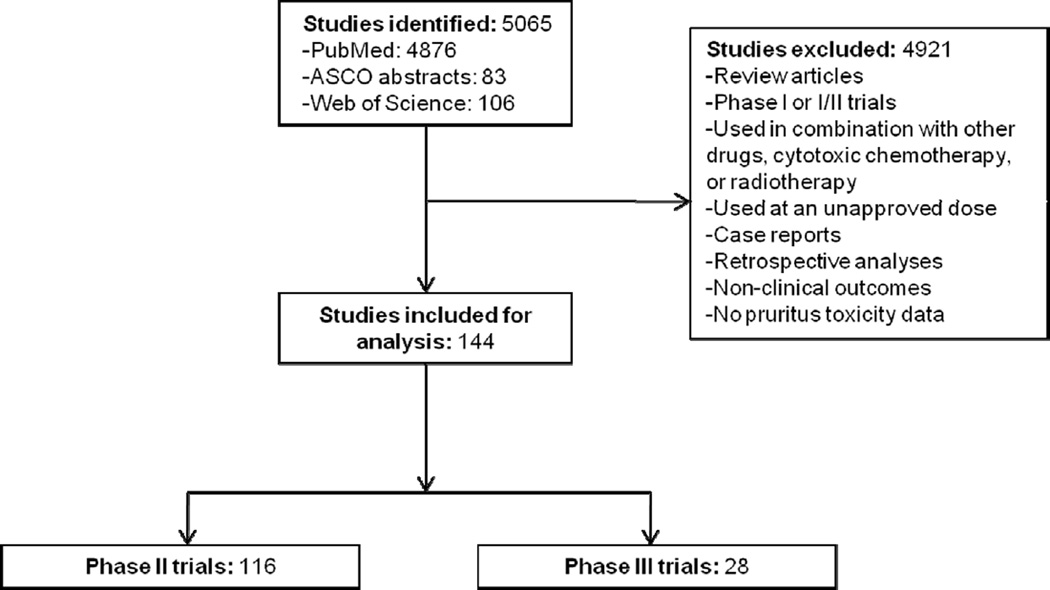
Methods: Databases from PubMed, Web of Science (January 1998 through July 2012), and American Society of Clinical Oncology abstracts (2004 through 2012) were searched. Incidence and relative risk of pruritus were calculated using random- or fixed-effects model.
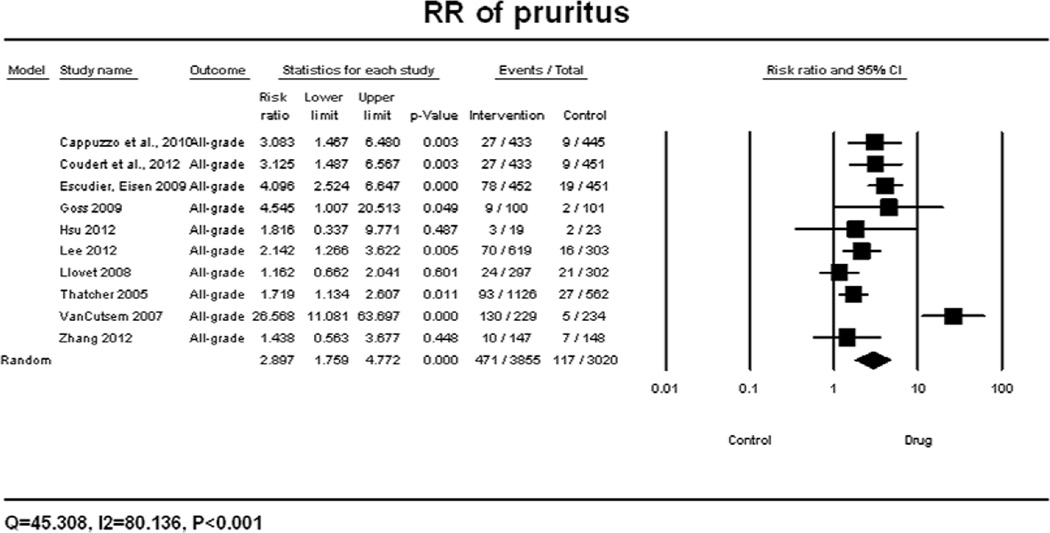
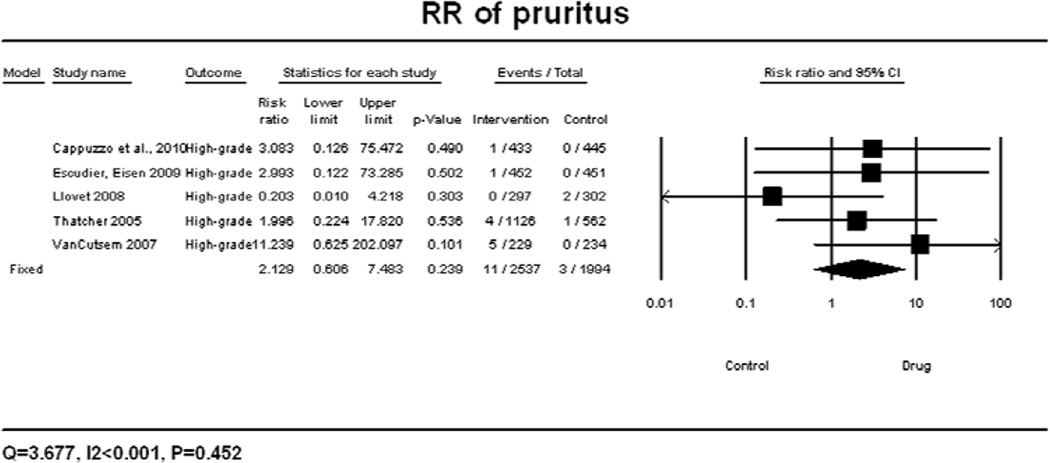
Results: The incidences of all-grade and high-grade pruritus were 17.4% (95% confidence interval 16.0%-19.0%) and 1.4% (95% confidence interval 1.2%-1.6%), respectively. There was an increased risk of all-grade pruritus (relative risk 2.90 [95% confidence interval 1.76-4.77, P < .001]) and variation among different drugs (P < .001).
Limitations: The reporting of pruritus may vary, resulting from concomitant medications, comorbidities, and underlying malignancies. We found a higher incidence of pruritus in patients with solid tumors, concordant with those targeted therapies with the highest pruritus incidences.
Conclusion: There is a significant risk of developing pruritus in patients receiving targeted therapies. To prevent suboptimal dosing and decreased quality of life, patients should be counseled and treated against this untoward symptom.
Keywords: AE; B-lymphocyte antigen cluster of differentiation 20; Bcr-Abl; CD20; CI; CTLA4; EGFR; EGFRIs; HER2; QoL; RR; Raf; T-lymphocyte antigen 4; VEGFR; adverse events; cancer; confidence interval; epidermal growth factor receptor; epidermal growth factor receptor inhibitors; human epidermal growth factor receptor 2; inhibitor; itch; mammalian target of rapamycin; pruritus; quality of life; relative risk; vascular endothelial growth factor receptor.
Copyright © 2013 American Academy of Dermatology, Inc. Published by Mosby, Inc. All rights reserved.
Conflict of interest statement
Dr. Lacouture has a consultant role with AstraZeneca, Roche, Bayer, Exelixis, and Advancell. He is also receiving research funding from Berg, Roche. Dr. Wu has received honoraria from Onyx Pharmaceuticals, Pfizer, Jansen, and Novartis, and is a speaker for Onyx, Pfizer, Jansen, and Novartis.
Figures
Comment in
-
Adverse cutaneous reactions to the new second-generation tyrosine kinase inhibitors (dasatinib, nilotinib) in chronic myeloid leukemia.J Am Acad Dermatol. 2013 Nov;69(5):839-840. doi: 10.1016/j.jaad.2013.07.025. J Am Acad Dermatol. 2013. PMID: 24124828 No abstract available.
References
-
- Ricciardi S, Tomao S, de Marinis F. Toxicity of targeted therapy in non-small-cell lung cancer management. Clinical lung cancer. 2009;10:28–35. - PubMed
-
- Balagula Y, Lacouture ME, Cotliar JA. Dermatologic toxicities of targeted anticancer therapies. The journal of supportive oncology. 2010;8:149–161. - PubMed
-
- Wagner LI, Berg SR, Gandhi M, Hlubocky FJ, Webster K, Aneja M, et al. The development of a Functional Assessment of Cancer Therapy (FACT) questionnaire to assess dermatologic symptoms associated with epidermal growth factor receptor inhibitors (FACT-EGFRI-18) Supportive care in cancer : official journal of the Multinational Association of Supportive Care in Cancer. 2012 - PubMed
-
- Boone SL, Rademaker A, Liu D, Pfeiffer C, Mauro DJ, Lacouture ME. Impact and management of skin toxicity associated with anti-epidermal growth factor receptor therapy: survey results. Oncology. 2007;72:152–159. - PubMed
-
- Gandhi M, Oishi K, Zubal B, Lacouture ME. Unanticipated toxicities from anticancer therapies: survivors’ perspectives. Supportive care in cancer : official journal of the Multinational Association of Supportive Care in Cancer. 2010;18:1461–1468. - PubMed
Publication types
MeSH terms
Grants and funding
LinkOut - more resources
Full Text Sources
Other Literature Sources
Medical
Research Materials
Miscellaneous
