


Impact of breast cancer surgery on angiogenesis circulating biomarkers: a prospective longitudinal study
- PMID: 23981902
- PMCID: PMC3846614
- DOI: 10.1186/1477-7819-11-213
Impact of breast cancer surgery on angiogenesis circulating biomarkers: a prospective longitudinal study
Abstract
Background: Debate about the potential effects that surgery might have on cancer cells dormancy and angiogenesis prompted us to investigate the impact of breast surgery on circulating angiogenesis modulating gene transcripts and proteins.
Methods: Blood samples from 10 female patients diagnosed with breast cancer and 6 with fibroadenoma were collected before surgery and post-operatively on days 3 and 7 (breast cancer patients only). A set of 84 angiogenesis-associated transcripts were assessed using quantitative PCR arrays, and circulating protein levels (vascular endothelial growth factor A (VEGFA), IL8 and fibroblast growth factor 2 (FGF2) were measured using ELISA in the same samples. The results were investigated against clinicopathological data and patient outcome.
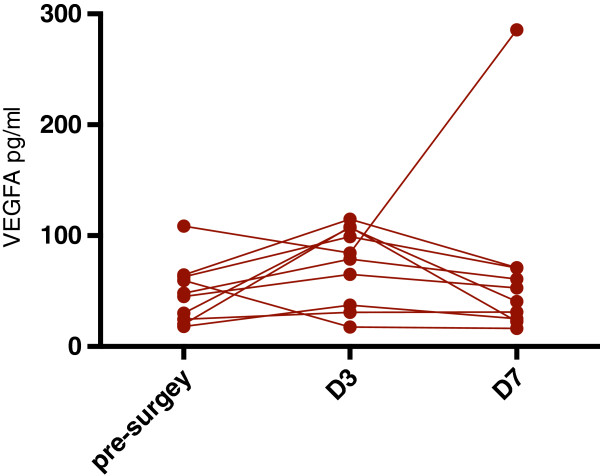
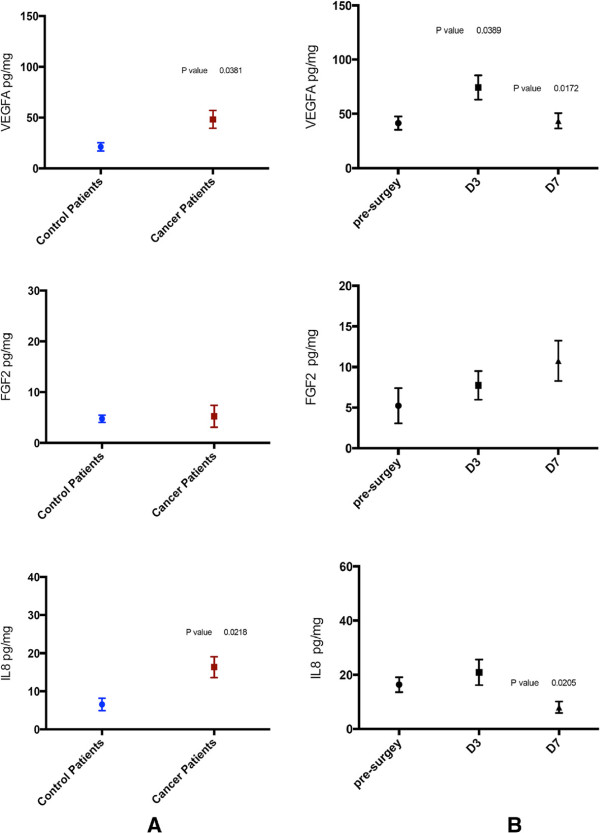
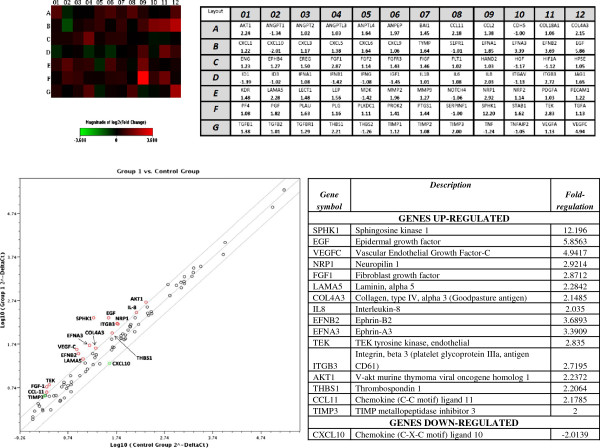
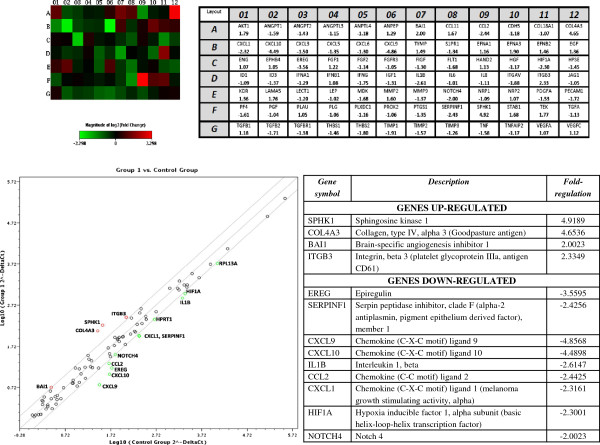
Results: Plasma levels of VEGFA and IL8 after surgery were significantly elevated in the breast cancer group compared to the control group (P = 0.038 and P = 0.021, respectively). In the cohort of breast cancer patients, VEGFA increased on day 3 (P = 0.038) and declined on day 7 (P= 0.017), while IL8 did not change on day 3 but showed a significant decline on day 7 (P = 0.02). FGF2 levels did not change significantly over time. Regarding gene transcripts, we detected upregulation of a significant number of angiogenesis-specific genes in patients with breast cancer versus controls: sphingosine kinase 1(SPHK1), epidermal growth factor (EGF), vascular endothelial growth factor C (VEGFC), neuropilin 1 (NRP1), fibroblast growth factor (FGF1), laminin alpha 5 (LAMA5), collagen type IV alpha 3 (COL4A3), IL8, ephrin B2 (EFNB2), ephrin A3 (EFNA3), tyrosine endothelial kinase (TEK), integrin beta 3 (ITGB3), AKT1, thrombospondin 1 (THBS1), chemokine (C-C motif) ligand 11 (CCL11) and TIMP metallopeptidase inhibitor 3 (TIMP3). Surgery induced an altered expression in several keygenes in breast cancer patients. We identified an upregulation of COL4A3 and downregulation of chemokine (C-X-C motif) ligand 9 (CXCL9), EGF, FGF1, Kinase insert domain receptor (KDR), Placental growth factor (PGF), TIMP3 and VEGFC.
Conclusion: Breast cancer patients have a different expression profile of circulating angiogenesis biomarkers compared to patients with fibroadenoma. Moreover, mastectomy promotes a transient increase of VEGFA and a shift in the expression patterns of a broad panel of angiogenesis-related circulating gene transcripts.
Figures
References
-
- Demicheli R, Miceli R, Moliterni A, Zambetti M, Hrushesky WJ, Retsky MW, Valagussa P, Bonadonna G. Breast cancer recurrence dynamics following adjuvant CMF is consistent with tumor dormancy and mastectomy-driven acceleration of the metastatic process. Ann Oncol. 2005;11:1449–1457. doi: 10.1093/annonc/mdi280. - DOI - PubMed
-
- Retsky M, Bonadonna G, Demicheli R, Folkman J, Hrushesky WJ, Valagussa P. Hypothesis: Induced angiogenesis after surgery in premenopausal node-positive breast cancer patients is a major underlying reason why adjuvant chemotherapy works particularly well for those patients. Breast Cancer Res. 2004;11:R372–R374. doi: 10.1186/bcr804. - DOI - PMC - PubMed
-
- Braun S, Vogl FD, Naume B, Janni W, Osborne MP, Coombes RC, Schlimok G, Diel IJ, Gerber B, Gebauer G, Pierga JY, Marth C, Oruzio D, Wiedswang G, Solomayer EF, Kundt G, Strobl B, Fehm T, Wong GY, Bliss J, Vincent-Salomon A, Pantel K. A pooled analysis of bone marrow micrometastasis in breast cancer. N Engl J Med. 2005;11:793–802. doi: 10.1056/NEJMoa050434. - DOI - PubMed
Publication types
MeSH terms
Substances
LinkOut - more resources
Full Text Sources
Other Literature Sources
Medical
Research Materials
Miscellaneous
