


Do we really need closed-suction drainage in total hip arthroplasty? A meta-analysis
- PMID: 23982636
- PMCID: PMC3824906
- DOI: 10.1007/s00264-013-2053-8
Do we really need closed-suction drainage in total hip arthroplasty? A meta-analysis
Abstract
Purpose: The clinical use of closed-suction drainage, which aims to reduce postoperative wound haematomas and infection, is common. This study was performed to determine whether closed-suction drainage is safe and effective in promoting wound healing and reducing blood loss and other complications compared with no-drainage in total hip arthroplasty.
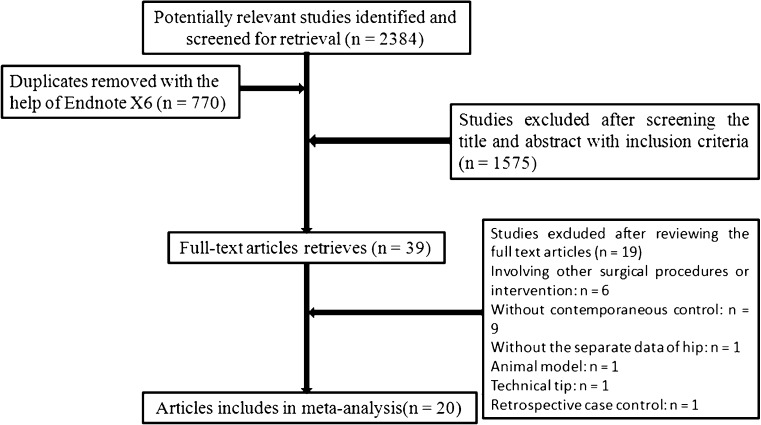
Methods: The literature search was based on PubMed, the Cochrane Library, MEDLINE, and EMBASE. The data were evaluated using the generic evaluation tool designed by the Cochrane Bone, Joint and Muscle Trauma Group, and then analysed using RevMan 5.0. Twenty randomised controlled trials involving 3,186 patients were included in our analysis.
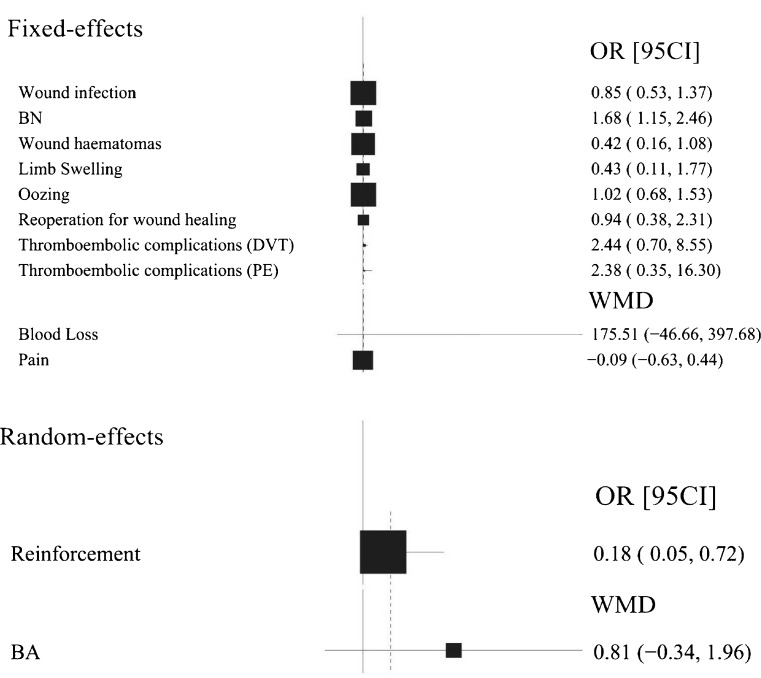
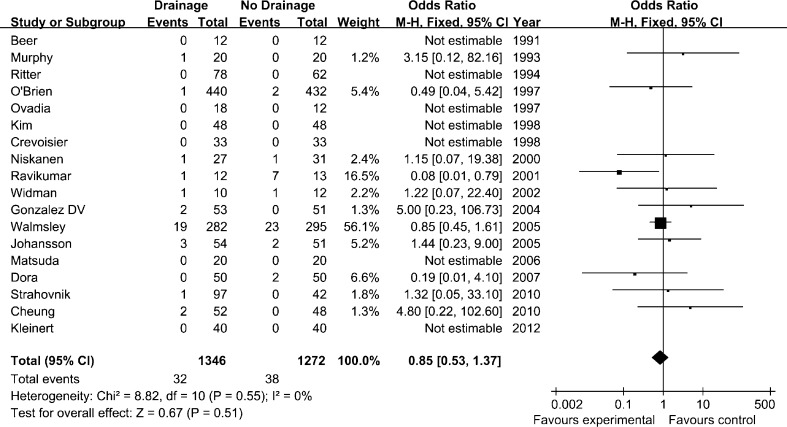
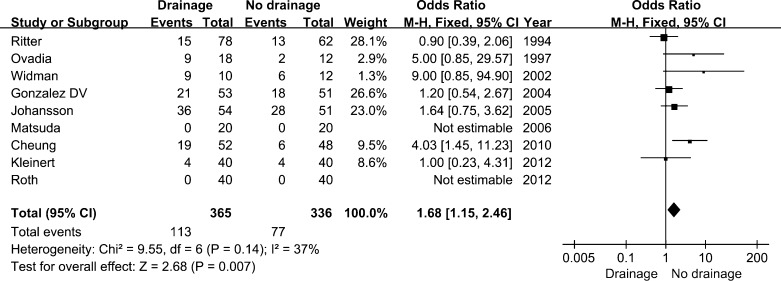
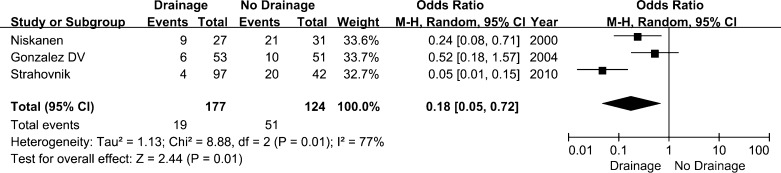
Results: The results of our meta-analysis indicate that closed-suction drainage reduces the requirement for dressing reinforcement, but increases the rate of homologous blood transfusion. No significant difference was observed in the incidence of infection, blood loss, changes in haemoglobin and haematocrit, functional assessment, or other complications when the drainage group was compared with the no-drainage group.
Conclusions: Our results of the comparison between closed-suction drainage and no drainage in THA have indicated that the routine use of closed-suction drainage for elective total hip arthroplasty may be of more harm than benefit.
Figures
Comment in
-
Comment on Zhou et al.: Do we really need closed-suction drainage in total hip arthroplasty? A meta-analysis.Int Orthop. 2013 Dec;37(12):2529. doi: 10.1007/s00264-013-2124-x. Epub 2013 Oct 2. Int Orthop. 2013. PMID: 24085149 Free PMC article. No abstract available.
-
Reply to Comment on Zhou et al.: Do we really need closed-suction drainage in total hip arthroplasty? A meta-analysis.Int Orthop. 2013 Dec;37(12):2531-2. doi: 10.1007/s00264-013-2125-9. Epub 2013 Oct 11. Int Orthop. 2013. PMID: 24114245 Free PMC article. No abstract available.
References
-
- Holt BT, Parks NL, Engh GA, Lawrence JM (1997) Comparison of closed-suction drainage and no drainage after primary total knee arthroplasty. Orthopedics 20(12):1121–1124, discussion 1124–1125 - PubMed
-
- Beer KJ, Lombardi AV, Jr, Mallory TH, Vaughn BK. The efficacy of suction drains after routine total joint arthroplasty. J Bone Joint Surg Am. 1991;73(4):584–587. - PubMed
-
- Ritter MA, Keating EM, Faris PM. Closed wound drainage in total hip or total knee replacement. A prospective, randomized study. J Bone Joint Surg Am. 1994;76(1):35–38. - PubMed
Publication types
MeSH terms
LinkOut - more resources
Full Text Sources
Other Literature Sources
Medical
