


Predictors of early mortality after hip fracture surgery
- PMID: 23982637
- PMCID: PMC3824905
- DOI: 10.1007/s00264-013-2068-1
Predictors of early mortality after hip fracture surgery
Abstract
Purpose: The aim of this study was to examine causes and potential risk factors for 30-day mortality after hip fracture surgery (HFS) at a high-volume tertiary-care hospital.
Methods: We retrospectively reviewed 467 patients who underwent HFS at our institution. Multivariate analysis was undertaken to identify potential predictors of early mortality.
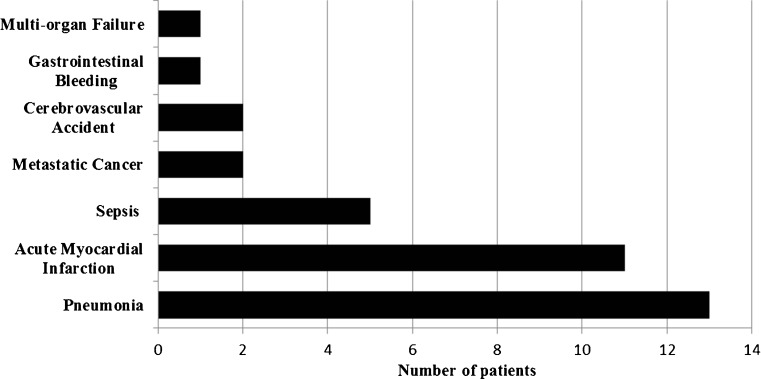
Results: The 30-day mortality rate was 7.5% (35/467). The most common causes of death were pneumonia (37.1%, 13/35), acute coronary syndrome (31.4%, 11/35) and sepsis (14.3%, 5/35). Surgery after 48 hours of admission had a significantly higher 30-day mortality rate (11 % versus 4%, p = 0.006). There was a significant difference in age (p = 0.034), admission source (p < 0.001), preoperative haemoglobin (p < 0.001), walking ability (p = 0.004), number of comorbidities (p = 0.004) and pre-existing dementia (p = 0.01), cardiac disease (p < 0.001), chronic obstructive pulmonary disorder (COPD) (p = 0.036) and renal failure (p = 0.007) between the 30-day mortality group and the rest of the cohort. Surgical delay greater than 48 hours, admission source and pre-existing cardiac disease were identified as the strongest predictors of 30-day mortality.
Conclusion: Surgical delay is an important but avoidable determinant of early mortality after HFS. Respiratory and cardiac function needs to be optimised postoperatively with early intervention in patients with signs of cardiovascular compromise or infection.
Figures
References
MeSH terms
LinkOut - more resources
Full Text Sources
Other Literature Sources
Medical
