


Meeting physical activity guidelines and the risk of incident knee osteoarthritis: a population-based prospective cohort study
- PMID: 23983187
- PMCID: PMC4309362
- DOI: 10.1002/acr.22120
Meeting physical activity guidelines and the risk of incident knee osteoarthritis: a population-based prospective cohort study
Abstract
Objective: Knee osteoarthritis (OA) is a leading cause of disability and joint pain. Although other risk factors of knee OA have been identified, how physical activity affects incident knee OA remains unclear.
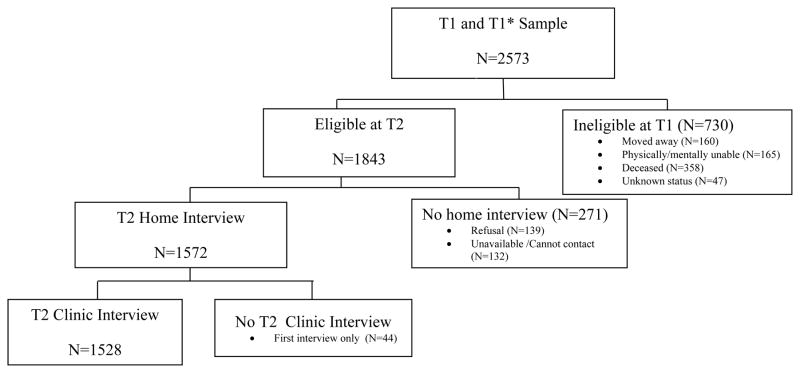
Methods: Using data from the first (1999-2004) and second (2005-2010) followup periods of the Johnston County Osteoarthritis Project study, we tested the association between meeting physical activity guidelines and incident knee outcomes among 1,522 adults ages ≥45 years. The median followup time was 6.5 years (range 4.0-10.2 years). Physical activity at baseline (moderate-equivalent physical activity minutes/week) was calculated using the Minnesota Leisure Time Physical Activity questionnaire. Incident knee radiographic OA (ROA) was defined as the development of Kellgren/Lawrence grade ≥2 in a knee at followup. Incident knee symptomatic ROA (sROA) was defined as the development of ROA and symptoms in at least 1 knee at followup. Weibull regression modeling was used to estimate hazard ratios (HRs) and 95% confidence intervals (95% CIs) for interval-censored data.
Results: In multivariable models, meeting the 2008 Department of Health and Human Services (HHS) physical activity guidelines (≥150 minutes/week) was not significantly associated with ROA (HR 1.20 [95% CI 0.92-1.56]) or sROA (HR 1.24 [95% CI 0.87-1.76]). Adults in the highest level (≥300 minutes/week) of physical activity had a higher risk of knee ROA and sROA compared with inactive (0 to <10 minutes/week) participants; however, these associations were not statistically significant (HR 1.62 [95% CI 0.97-2.68] and HR 1.42 [95% CI 0.76-2.65], respectively).
Conclusion: Meeting the HHS physical activity guidelines was not associated with incident knee ROA or sROA in a cohort of middle-aged and older adults.
Copyright © 2014 by the American College of Rheumatology.
Conflict of interest statement
All authors have no conflict of interest to declare
Figures
References
-
- Jinks C, Jordan K, Ong BN, Croft P. A brief screening tool for knee pain in primary care (KNEST). 2. Results from a survey in the general population aged 50 and over. Rheumatology. 2004;43(1):55–61. - PubMed
-
- Blagojevic M, Jinks C, Jeffery A, Jordan KP. Risk factors for onset of osteoarthritis of the knee in older adults: a systematic review and meta-analysis. Osteoarthritis and cartilage / OARS, Osteoarthritis Research Society. 2010;18(1):24–33. - PubMed
-
- Galois L, Etienne S, Grossin L, Cournil C, Pinzano A, Netter P, et al. Moderate-impact exercise is associated with decreased severity of experimental osteoarthritis in rats. Rheumatology. 2003;42(5):692–3. author reply 3–4. - PubMed
Publication types
MeSH terms
Grants and funding
LinkOut - more resources
Full Text Sources
Other Literature Sources
