


A comparison between acute pressure block of the sciatic nerve and acupressure: methodology, analgesia, and mechanism involved
- PMID: 23983488
- PMCID: PMC3749058
- DOI: 10.2147/JPR.S47693
A comparison between acute pressure block of the sciatic nerve and acupressure: methodology, analgesia, and mechanism involved
Abstract
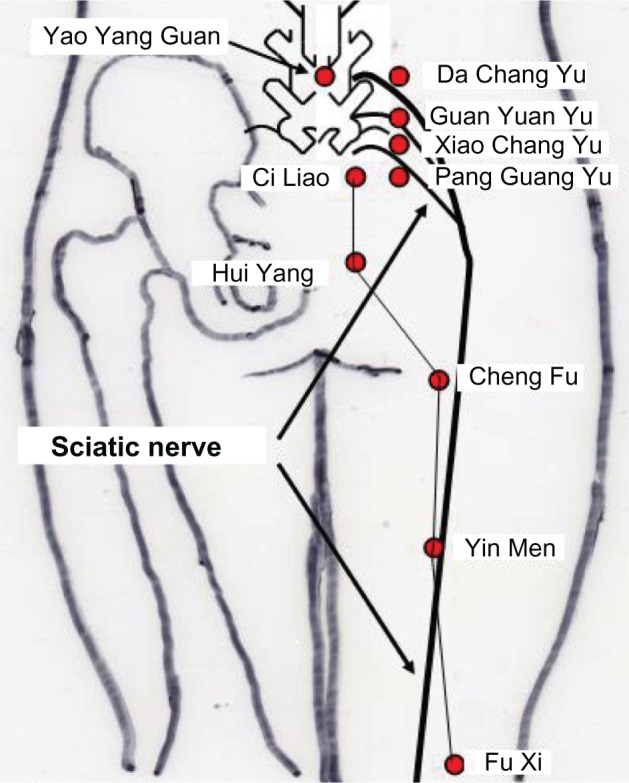
Acupressure is an alternative medicine methodology that originated in ancient China. Treatment effects are achieved by stimulating acupuncture points using acute pressure. Acute pressure block of the sciatic nerve is a newly reported analgesic method based on a current neuroscience concept: stimulation of the peripheral nerves increases the pain threshold. Both methods use pressure as an intervention method. Herein, we compare the methodology and mechanism of these two methods, which exhibit several similarities and differences. Acupressure entails variation in the duration of manipulation, and the analgesic effect achieved can be short-or long-term. The acute effect attained with acupressure presents a scope that is very different from that of the chronic effect attained after long-term treatment. This acute effect appears to have some similarities to that achieved with acute pressure block of the sciatic nerve, both in methodology and mechanism. More evidence is needed to determine whether there is a relationship between the two methods.
Keywords: acupressure; acute pressure block; pain; sciatic nerve.
Figures
References
-
- Nepp J, Wedrich A. Conjuctivitis sicca: a comparison of traditional Chinese and Western medical symptoms. Acupunct Med. 1994;12(2):88–92.
-
- Bertrand S W. Inroads to integrative health care: registered nurses’ personal use of traditional Chinese medicine affects professional identity and nursing practice. J Evid Based Complementary Altern Med. 2010;15(1):14–30.
-
- Dundee J W. Studies with acupuncture/acupressure as an antiemetic. Acupunct Med. 1988;5:22–24.
-
- Acupuncture National Institute of Health Consensus Development Conference Statement November3–519971551–34.Available at http://consensus.nih.gov/1997/1997acupuncture107html.htmAccessed July 3, 2013
-
- Li Z. Small Acupuncture Points, Big Health. Chinese Science Culture Publishing House; 2009. The point, Yao Yang Guan, prevents acute sciatica pain.
LinkOut - more resources
Full Text Sources
Other Literature Sources
