. 2013:2013:458727.
doi: 10.1155/2013/458727. Epub 2013 Aug 1.

Alternative splicing programs in prostate cancer

Affiliations

Alternative splicing programs in prostate cancer

Claudio Sette. Int J Cell Biol. 2013.

Abstract

Prostate cancer (PCa) remains one of the most frequent causes of death for cancer in the male population. Although the initial antiandrogenic therapies are efficacious, PCa often evolves into a hormone-resistant, incurable disease. The genetic and phenotypic heterogeneity of this type of cancer renders its diagnosis and cure particularly challenging. Mounting evidence indicates that alternative splicing, the process that allows production of multiple mRNA variants from each gene, contributes to the heterogeneity of the disease. Key genes for the biology of normal and neoplastic prostate cells, such as those encoding for the androgen receptor and cyclin D1, are alternatively spliced to yield protein isoforms with different or even opposing functions. This review illustrates some examples of genes whose alternative splicing regulation is relevant to PCa biology and discusses the possibility to exploit alternative splicing regulation as a novel tool for prognosis, diagnosis, and therapeutic approaches to PCa.


Figures
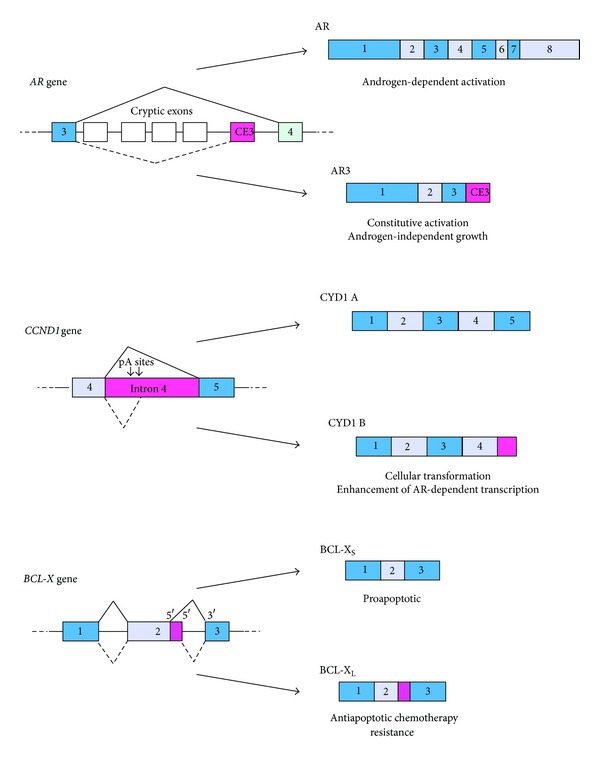
Figure 1
Figure 1
Representative examples of genes whose alternative splicing affects prostate cancer cell biology. The left side of the figure illustrates the genomic structure of the alternatively spliced regions of the AR, CCND1, and BCL-X genes. Solid and dashed lines show the alternative splicing events reported in the literature. On the right side, the alternative variants produced by splicing are shown. The specific features of the protein isoforms produced by alternative splicing are summarized under the scheme of each variant.
Figure 2
Figure 2
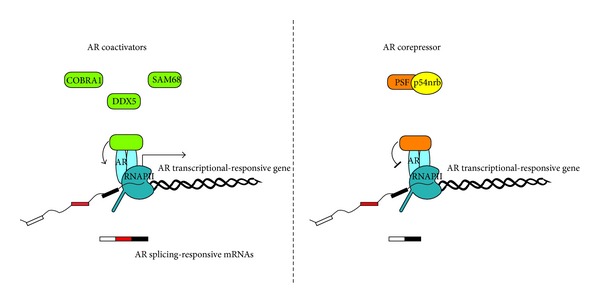
Regulation of cotranscriptional splicing by proteins interacting with the androgen receptor. Coregulators of the androgen receptor (AR) can affect splicing of target genes by direct interaction with AR and modulation of its activity. COBRA1, SAM68, and DDX5 appear to promote the transcriptional activity of AR but differentially act on splicing of variable exons (red box in the left side of the figure); PSF and its interacting protein p54 (right side of the figure) repress the transcriptional activity of AR, but their effect on splicing is currently unknown (see text for more details).

References

    1. Feldman BJ, Feldman D. The development of androgen-independent prostate cancer. Nature Reviews Cancer. 2001;1(1):34–45. - PubMed
    1. Kohli M, Tindall DJ. New developments in the medical management of prostate cancer. Mayo Clinic Proceedings. 2010;85(1):77–86. - PMC - PubMed
    1. Knudsen KE, Scher HI. Starving the addiction: new opportunities for durable suppression of AR signaling in prostate cancer. Clinical Cancer Research. 2009;15(15):4792–4798. - PMC - PubMed
    1. Dehm SM, Tindall DJ. Alternatively spliced androgen receptor variants. Endocrine-Related Cancer. 2011;18(5):R183–R196. - PMC - PubMed
    1. Kalsotra A, Cooper TA. Functional consequences of developmentally regulated alternative splicing. Nature Reviews Genetics. 2011;12(10):715–729. - PMC - PubMed

LinkOut - more resources