


Types and causes of medication errors from nurse's viewpoint
- PMID: 23983760
- PMCID: PMC3748543
Types and causes of medication errors from nurse's viewpoint
Abstract
Background: The main professional goal of nurses is to provide and improve human health. Medication errors are among the most common health threatening mistakes that affect patient care. Such mistakes are considered as a global problem which increases mortality rates, length of hospital stay, and related costs. This study was conducted to evaluate the types and causes of nursing medication errors.
Materials and methods: This cross-sectional study was conducted in 2009. A total number of 237 nurses were randomly selected from nurses working in Imam Khomeini Hospital (Tehran, Iran). They filled out a questionnaire including 10 items on demographic characteristics and 7 items about medication errors. Data were analyzed using descriptive and inferential statistics in SPSS for Windows 16.0.
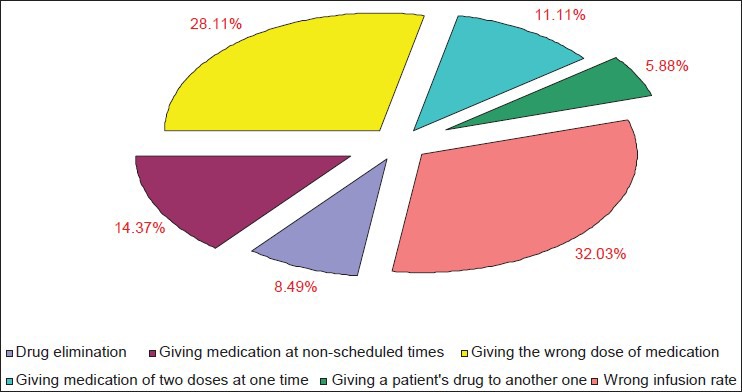
Results: Medication errors had been made by 64.55% of the nurses. In addition, 31.37% of the participants reported medication errors on the verge of occurrence. The most common types of reported errors were wrong dosage and infusion rate. The most common causes were using abbreviations instead of full names of drugs and similar names of drugs. Therefore, the most important cause of medication errors was lack of pharmacological knowledge. There were no statistically significant relationships between medication errors and years of working experience, age, and working shifts. However, a significant relationship was found between errors in intravenous injections and gender. Likewise, errors in oral administration were significantly related with number of patients.
Conclusion: Medication errors are a major problem in nursing. Since most cases of medication errors are not reported by nurses, nursing managers must demonstrate positive responses to nurses who report medication errors in order to improve patient safety.
Keywords: Medicinal errors; nursing profession; reporting; safety.
Conflict of interest statement
Figures
References
-
- Marc G. Nursingerror and human nature. J Nurs Law. 2004;9:37–44.
-
- Cheraghi MA, Nikbakhat Nasabadi AR, Mohammad Nejad E, Salari A, Ehsani Kouhi Kheyli SR. Medication Errors Among Nurses in Intensive Care Unites (ICU) J Mazandaran Univ Med Sci. 2012;22(Suppl 1):115–9.
-
- Tang FI, Sheu SJ, Yu S, Wei IL, Chen CH. Nurses relate the contributing factors involved in medication errors. J Clin Nurs. 2007;16:447–55. - PubMed
-
- Marin HF. Improving patient safety with technology. Int J Med Inform. 2004;73:543–6. - PubMed
-
- Stratton KM, Blegen MA, Pepper G, Vaughn T. Reporting of medication errors by pediatric nurses. J Pediatr Nurs. 2004;19:385–92. - PubMed
LinkOut - more resources
Full Text Sources