


Complements and the wound healing cascade: an updated review
- PMID: 23984063
- PMCID: PMC3741993
- DOI: 10.1155/2013/146764
Complements and the wound healing cascade: an updated review
Abstract
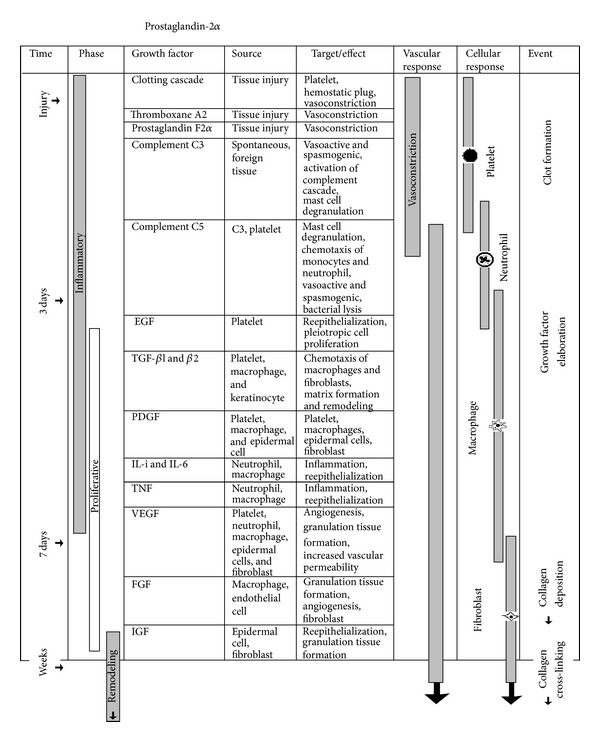
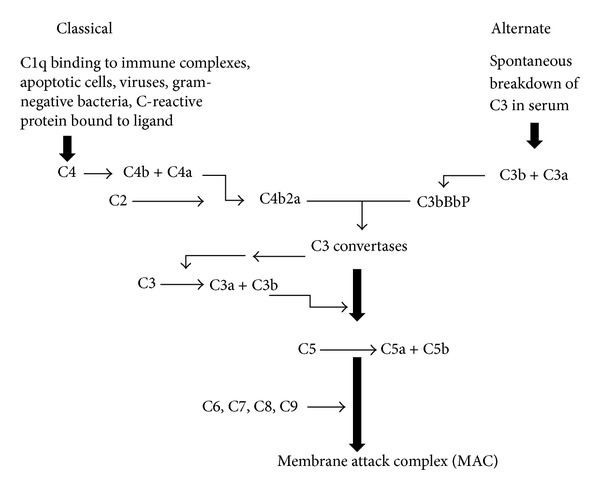
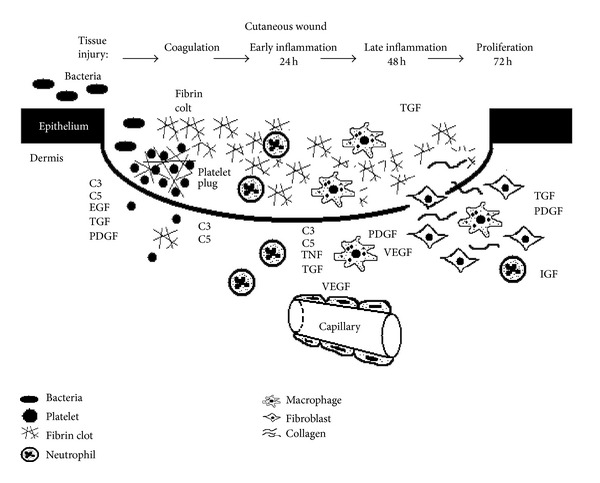
Wound healing is a complex pathway of regulated reactions and cellular infiltrates. The mechanisms at play have been thoroughly studied but there is much still to learn. The health care system in the USA alone spends on average 9 billion dollars annually on treating of wounds. To help reduce patient morbidity and mortality related to abnormal or prolonged skin healing, an updated review and understanding of wound healing is essential. Recent works have helped shape the multistep process in wound healing and introduced various growth factors that can augment this process. The complement cascade has been shown to have a role in inflammation and has only recently been shown to augment wound healing. In this review, we have outlined the biology of wound healing and discussed the use of growth factors and the role of complements in this intricate pathway.
Figures
References
-
- Brigham PA, McLoughlin E. Burn incidence and medical care use in the United States: estimates, trends, and data sources. Journal of Burn Care and Rehabilitation. 1996;17(2):95–107. - PubMed
-
- U.S. markets for wound management products. Medical Data International, Irvine, Calif, USA, August 1997.
-
- Ashcroft GS, Mills SJ, Ashworth JJ. Ageing and wound healing. Biogerontology. 2002;3(6):337–345. - PubMed
-
- Heldin C-H, Westermark B. Role of Platelet-Derived Growth Factor in Vivo. 2nd edition. New York, NY, USA: Plenum Press; 1996.
-
- Bjork J, Hugli TE, Smedegard G. Microvascular effects of anaphylatoxins C3a and C5a. Journal of Immunology. 1985;134(2):1115–1119. - PubMed
LinkOut - more resources
Full Text Sources
Other Literature Sources
Medical
