


Treatment of Uterine Myoma with 2.5 or 5 mg Mifepristone Daily during 3 Months with 9 Months Posttreatment Followup: Randomized Clinical Trial
- PMID: 23984082
- PMCID: PMC3747426
- DOI: 10.1155/2013/649030
Treatment of Uterine Myoma with 2.5 or 5 mg Mifepristone Daily during 3 Months with 9 Months Posttreatment Followup: Randomized Clinical Trial
Abstract
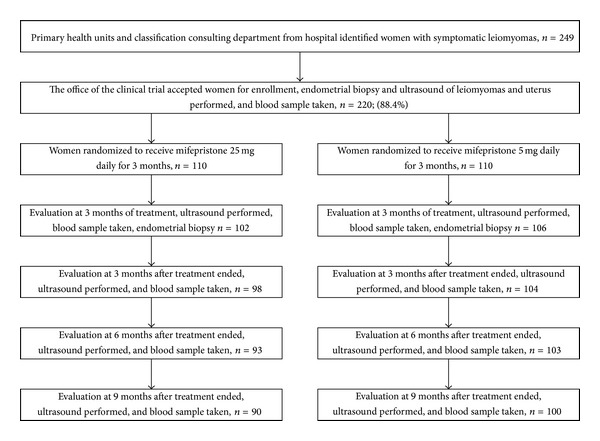
Objectives. To evaluate the efficacy, safety, and quality of life by using 2.5 and mifepristone 5 mg daily doses to treat uterine fibroids over 3 months with a 9-month followup period. Design. Randomized clinical trial. Place. "Eusebio Hernández" Hospital, Havana, Cuba. Subjects. 220 women with symptomatic uterine fibroids. Treatment. One-half (2.5 mg) or one-whole 5 mg mifepristone tablet. Variables to Evaluate Efficacy. Changes in fibroid and uterine volumes, in symptomatic prevalence and intensity, and in quality of life. Results. After 3-month treatment, fibroid volume decreased by 27.9% (CI 95% 20-35) and 45.5% (CI 95% 37-62), in the 2.5 and 5 mg groups, respectively, P = 0.003. There was no difference in the prevalence of symptoms at the end of treatment, unlike after 6- and 9-month followup when there was a difference. Amenorrhea was significantly higher in the 5 mg group, P = 0.001. There were no significant differences in mifepristone side effects between the groups. Both groups displayed a similar improvement in quality of life. Conclusions. The 2.5 mg dosage resulted in a lesser reduction in fibroid size but a similar improvement in quality of life when compared to the 5 mg dose. This trial is registered with ClinicalTrials.gov NCT01786226.
References
-
- Chabbert-Buffet N, Meduri G, Bouchard P, Spitz IM. Selective progesterone receptor modulators and progesterone antagonists: mechanisms of action and clinical applications. Human Reproduction Update. 2005;11(3):293–307. - PubMed
-
- Spitz IM. Mifepristone: where do we come from and where are we going? Clinical development over a quarter of a century. Contraception. 2010;82(5):442–452. - PubMed
-
- Eisinger SH, Meldrum S, Fiscella K, Le Roux HD, Guzick DS. Low-dose mifepristone for uterine leiomyomata. Obstetrics and Gynecology. 2003;101(2):243–250. - PubMed
Associated data
LinkOut - more resources
Full Text Sources
Other Literature Sources
Medical
