


Molecular epidemiology of serotype 19A Streptococcus pneumoniae among invasive isolates from Alaska, 1986-2010
- PMID: 23984273
- PMCID: PMC3753058
- DOI: 10.3402/ijch.v72i0.20854
Molecular epidemiology of serotype 19A Streptococcus pneumoniae among invasive isolates from Alaska, 1986-2010
Abstract
Background: After the introduction of the 7-valent pneumococcal conjugate vaccine (PCV7) in Alaska, the incidence of invasive pneumococcal disease (IPD) due to non-vaccine serotypes, particularly serotype 19A, increased. The aim of this study was to describe the molecular epidemiology of IPD due to serotype 19A in Alaska.
Methods: IPD data were collected from 1986 to 2010 through population-based laboratory surveillance. Isolates were serotyped by the Quellung reaction and MICs determined by broth microdilution. Genotypes were assessed by multilocus sequence typing.
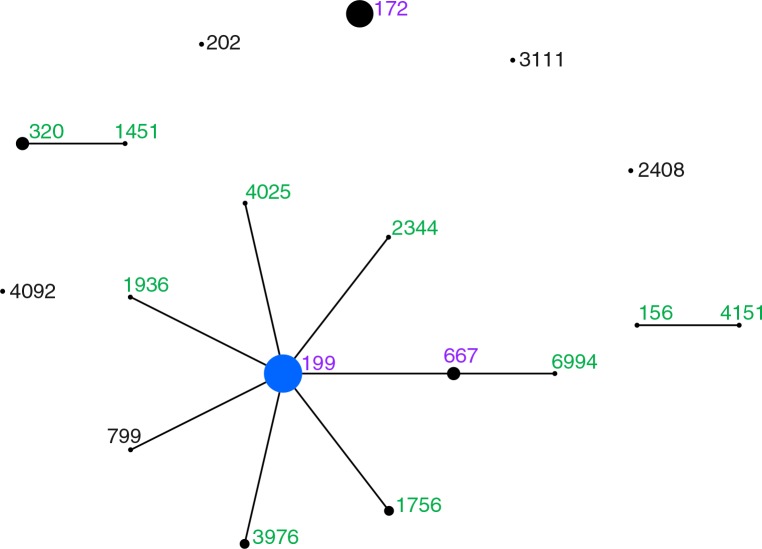
Results: Among 3,294 cases of laboratory-confirmed IPD, 2,926 (89%) isolates were available for serotyping, of which 233 (8%) were serotype 19A. Across all ages, the proportion of IPD caused by serotype 19A increased from 3.5% (63/1823) pre-PCV7 (1986-2000) to 15.4% (170/1103) post-PCV7 (2001-2010) (p < 0.001); among children < 5 years of age, the proportion increased from 5.0% (39/776) to 33.0% (76/230) (p < 0.001). The annual incidence rate of IPD due to serotype 19A (all ages) increased from 0.73 cases pre-PCV7 to 2.56 cases/100,000 persons post-PCV7 (p < 0.001); rates among children < 5 years of age increased from 4.84 cases to 14.1 cases/100,000 persons (p < 0.001). Among all IPD isolates with reduced susceptibility to penicillin, 17.8% (32/180) were serotype 19A pre-PCV7 and 64% (121/189) were serotype 19A post-PCV7 (p < 0.001). Eighteen different sequence types (STs) were identified; ST199 or single locus variants of ST199 (n = 150) and ST172 (n = 59) accounted for the majority of isolates. Multidrug-resistant isolates were clustered in ST199 and ST320.
Conclusion: While PCV13 should significantly reduce the burden of disease due to 19A, these data highlight the need to continue surveillance for IPD to monitor the effects of vaccination on the expansion and emergence of non-PCV strains.
Keywords: Alaska; MLST; Streptococcus pneumoniae; invasive disease; serotype 19A.
Figures
References
-
- Whitney CG, Farley MM, Hadler J, Harrison LH, Bennett NM, Lynfield R, et al. Decline in invasive pneumococcal disease after the introduction of protein-polysaccharide conjugate vaccine. N Engl J Med. 2003;348:1737–46. - PubMed
-
- Kaplan SL, Mason EO, Jr, Wald ER, Schutze GE, Bradley JS, Tan TQ, et al. Decrease of invasive pneumococcal infections in children among 8 children's hospitals in the United States after the introduction of the 7-valent pneumococcal conjugate vaccine. Pediatrics. 2004;113:443–9. - PubMed
-
- Lexau CA, Lynfield R, Danila R, Pilishvili T, Facklam R, Farley MM, et al. Changing epidemiology of invasive pneumococcal disease among older adults in the era of pediatric pneumococcal conjugate vaccine. JAMA. 2005;294:2043–51. - PubMed
-
- Hicks L, Harrison L, Flannery B, Hadler JL, Schaffner W, Craig AS, et al. Incidence of pneumococcal disease due to non-pneumococcal conjugate vaccine (PCV7) serotypes in the United States during the era of widespread PCV7 vaccination, 1998–2004. J Infect Dis. 2007;196:1346–54. - PubMed
-
- Pai R, Moore MR, Pilishvili T, Gertz RE, Whitney CG, Beall B. Post-vaccine genetic structure of Streptococcus pneumoniae serotype 19A from children in the United States. J Infect Dis. 2005;192:1988–95. - PubMed
MeSH terms
Substances
LinkOut - more resources
Full Text Sources
Other Literature Sources
Medical
